

What to Put on a Patio Before Pressure Washing
Pressure washing is one of the fastest and most effective ways to restore a patio’s appearance. But blasting away dirt with water alone often won’t give the best results — and in some cases, it can even damage the surface or leave behind stubborn stains.
The secret to a great clean is what you put on the patio beforehand. Applying the right pre-treatment not only helps loosen grime but also protects the surface, controls moss and algae regrowth, and reduces the water pressure you’ll need to use.
In this guide, we’ll cover:
-
Why pre-treatment matters
-
Different types of pre-washing solutions
-
How to choose the right cleaner for your patio type
-
How to apply pre-treatments effectively
-
Safety and environmental considerations
-
Stain-specific pre-treatments
-
Cost comparisons for DIY vs. commercial products
1. Why Pre-Treatment Before Pressure Washing Matters
Many people go straight to pressure washing, but skipping the pre-treatment step can lead to:
-
Needing higher PSI (which risks surface damage)
-
Missed stains that require extra passes
-
Incomplete removal of moss/algae roots (leading to fast regrowth)
-
Wasting time and water
Pre-treatment benefits:
-
Loosens dirt and biological growth before water hits
-
Allows lower pressure cleaning, safer for pavers or natural stone
-
Reduces streaking and patchy cleaning results
-
Kills spores and prevents immediate regrowth
| Without Pre-Treatment | With Pre-Treatment |
|---|---|
| Higher PSI needed | Lower PSI possible |
| More time washing | Less time washing |
| May leave behind algae/moss roots | Kills growth at root |
| Greater risk of surface damage | Safer cleaning |
2. Types of Pre-Treatment Solutions
Here are the main categories of products you might put on your patio before pressure washing:
| Category | Purpose | Example Ingredients | Suitable Surfaces |
|---|---|---|---|
| General cleaners | Loosen dirt, grime | Mild detergents, degreasers | Most patio types |
| Algae & moss killers | Kill growth at root | Benzalkonium chloride, quaternary ammonium compounds | Stone, concrete, block paving |
| Degreasers | Break down oil/fat | Citrus solvent, sodium hydroxide | Concrete, sealed stone |
| Rust removers | Dissolve iron stains | Oxalic acid | Concrete, some stones |
| Eco-friendly cleaners | Safe near plants | Plant-based surfactants | All |
3. Choosing the Right Cleaner for Your Patio Material
Not all patio surfaces can tolerate the same chemicals. Here’s a quick reference:
| Patio Material | Best Pre-Treatment | Avoid |
|---|---|---|
| Concrete | Algae/moss killer or degreaser | Strong acids unless for rust removal |
| Natural stone (slate, granite) | pH-neutral cleaner | Bleach, strong acids |
| Limestone/sandstone | Algae/moss killer (low acid) | Acidic rust removers |
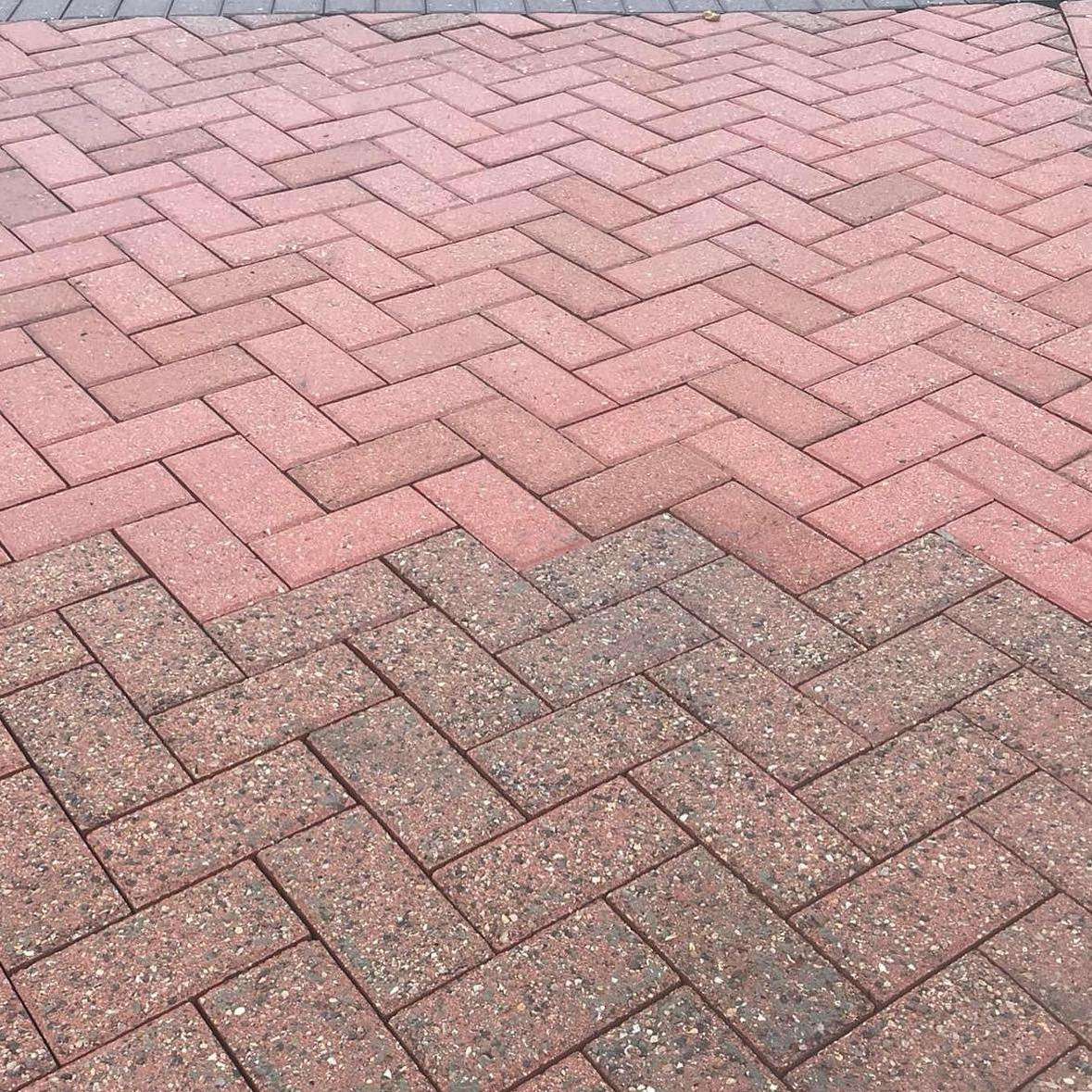
| Block paving | Weed killer + algae/moss killer | Harsh degreasers on unsealed blocks |
| Porcelain tiles | Mild detergent | Abrasive cleaners |
4. Step-by-Step Pre-Treatment Process
Step 1: Clear the Patio
-
Remove furniture, pots, and loose items
-
Sweep away leaves, loose dirt, and debris
Step 2: Wet Surrounding Plants
-
Rinse any nearby grass, flowers, or shrubs to protect from overspray
Step 3: Mix or Prepare Solution
-
Follow manufacturer dilution instructions exactly
Step 4: Apply Evenly
-
Use a pump sprayer for even coverage
-
Work in sections for large patios
Step 5: Allow Dwell Time
-
Leave solution to sit for 10–30 minutes (longer for moss/algae killers)
-
Do not let it dry out — mist lightly if needed
Step 6: Begin Pressure Washing
-
Start at a low PSI and adjust only as necessary
5. Common Pre-Treatment Chemicals & What They Do
| Chemical | What It Targets | Notes |
|---|---|---|
| Sodium hypochlorite | Algae, mildew | Strong bleach, can damage plants |
| Benzalkonium chloride | Algae, moss | Long-lasting, less corrosive |
| Oxalic acid | Rust stains | Safe for some stones, not all |
| Sodium hydroxide | Grease, oil | Caustic — rinse well |
| Citric acid | Mild rust & dirt | Eco-friendly option |
6. Safety Precautions
Personal Safety:
-
Wear gloves, goggles, and old clothes
-
Avoid breathing in spray mist
-
Never mix chemicals unless directed by manufacturer
Property & Environmental Safety:
-
Protect plants and soil with water rinse or tarp
-
Avoid letting runoff enter drains unless safe
-
Always check product’s biodegradability rating
7. Stain-Specific Pre-Treatments
| Stain | Best Pre-Treatment | Application Tip |
|---|---|---|
| Green algae film | Algae/moss killer | Apply 2–3 days before washing for maximum kill |
| Black lichen spots | Biocide | Multiple treatments may be needed |
| BBQ grease | Degreaser | Scrub lightly before rinsing |
| Rust marks under furniture | Oxalic acid | Apply directly, scrub gently |
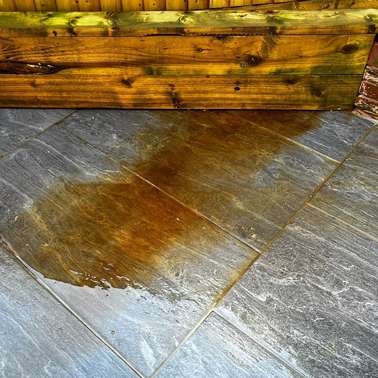
| Leaf tannin stains | Mild detergent + oxygen bleach | Avoid chlorine bleach on natural stone |
8. DIY vs. Commercial Pre-Treatments
| Option | Pros | Cons |
|---|---|---|
| DIY (soap, vinegar, baking soda) | Cheap, eco-friendly | Less effective on heavy moss/algae |
| Off-the-shelf patio cleaner | Balanced for patio use, easy to apply | £10–£25 per bottle |
| Professional-grade biocide | Long-lasting, very effective | More expensive (£30–£60), safety handling required |
9. Cost of Pre-Treatment
| Patio Size | DIY Cost | Store-Bought Cost | Pro-Grade Cost |
|---|---|---|---|
| Small (10m²) | £1–£3 | £5–£10 | £10–£20 |
| Medium (30m²) | £3–£8 | £10–£20 | £20–£40 |
| Large (50m²) | £5–£12 | £20–£30 | £30–£60 |
10. Mistakes to Avoid
| Mistake | Why It’s Bad | How to Avoid |
|---|---|---|
| Skipping pre-treatment | Poor cleaning result, faster regrowth | Always pre-treat |
| Letting solution dry out | Reduces effectiveness | Keep surface damp |
| Using wrong chemical for surface | Can cause staining/damage | Check product label |
| Applying too much | Wasteful, can damage plants | Follow dilution instructions |
11. Environmentally Friendly Pre-Treatment Options
-
Vinegar & water mix — good for light algae
-
Baking soda paste — spot treat stains
-
Plant-based surfactants — commercial “green” patio cleaners
-
Oxygen bleach — kills moss/algae without chlorine smell
| Option | Effective On | Limitations |
|---|---|---|
| Vinegar | Light green growth | Not strong enough for heavy infestations |
| Baking soda | Grease/oil | Not ideal for large areas |
| Oxygen bleach | Algae, lichen | May need repeat application |
| Plant-based cleaner | General dirt | Often pricier than standard |
12. Timing Your Pre-Treatment
-
For light dirt/algae: Apply 15–30 mins before pressure washing
-
For heavy moss/lichen: Apply 1–3 days before for full kill effect
-
Avoid hot sunny days where solution dries too fast
-
Best results in mild, dry weather
13. Tools for Applying Pre-Treatment
| Tool | Pros | Cons |
|---|---|---|
| Pump sprayer | Even coverage, easy to use | Needs pumping for pressure |
| Watering can | Simple, quick | Less precise coverage |
| Garden sprayer attachment | Connects to hose | Dilution fixed, less control |
14. Preparing a Weed-Free Base Before Washing
If weeds are growing between pavers:
-
Apply weed killer 1–2 weeks before washing
-
Pull large weeds manually
-
Pressure washing alone may scatter seeds rather than kill them
15. Commercial Pre-Treatment Brands (UK Examples)
| Brand | Type | Price Range |
|---|---|---|
| Wet & Forget | Algae/moss killer | £20–£35 |
| Patio Magic! | Biocide | £10–£25 |
| SmartSeal Patio Clean Xtreme | Heavy-duty cleaner | £25–£40 |
| Algon Organic | Eco-friendly algae killer | £10–£20 |
16. Preparing Different Patio Types
Block Paving:
-
Weed killer + moss killer
-
Degreaser for oil spots
Natural Stone:
-
pH-neutral cleaner
-
Avoid acids unless for rust
Concrete Slab:
-
Moss killer
-
Degreaser for BBQ/oil
17. Preventing Future Growth
After pressure washing:
-
Apply residual biocide to deter algae/moss regrowth
-
Re-sand block paving joints with kiln-dried sand
-
Seal surface if appropriate
18. Weather & Seasonal Considerations
| Season | Pros for Pre-Treatment | Cons |
|---|---|---|
| Spring | Ideal growth-kill timing | Pollen may re-dirty surface quickly |
| Summer | Fast drying | Can dry too quickly in hot sun |
| Autumn | Prepares for winter | Cold slows chemical action |
| Winter | Not recommended | Chemicals may freeze, ineffective |
19. Professional vs. DIY Application
| Factor | DIY | Professional |
|---|---|---|
| Cost | Low | Higher |
| Effectiveness | Varies | Consistently high |
| Time | More personal time | Faster |
| Safety | You handle chemicals | Trained handling |
20. Final Checklist Before Pressure Washing
✅ Remove loose debris & furniture
✅ Protect plants with water/tarp
✅ Select correct cleaner for surface & stains
✅ Apply evenly with sprayer or watering can
✅ Allow correct dwell time
✅ Keep surface damp during dwell
✅ Rinse lightly if required before pressure washing
Bottom line:
What you put on your patio before pressure washing makes all the difference. Whether it’s a mild detergent for a quick spruce-up or a professional-grade biocide for deep moss removal, pre-treating is the key to a safe, effective, and long-lasting clean.
Tags: Patio cleaning, Driveway cleaning, pressure washing, Roof Cleaning, business, pressure washing business, gutter cleaning
 Artificial and Sports Surfaces
 Awnings / Canopies / Gazebos
 Block Paving
 Brickwork
 Composite Surfaces
 Decking / Timber
 Granite
 Imprinted Concrete
 Internal Masonry
 Limestone
 Marble
 Metal Cladding
 Polished or Honed Stone
 Porcelain
 Render
 Resin Bond
 Road and Rail Signs
 Roof Tiles / Slates
 Sandstone
 Slate
Slate Solar Panels and Glass
 Stone Sills and Pier Caps
 Tarmac and Asphalt
 Gutters & UPVC
 Acid Damage
 Biofilm
 Bitumen
 Blood
Blood Carbon
 Concrete / Grout / Mortar
 Copper Oxide
 Efflorescence
 Egg
Egg Failed Sealer
 Fire Damage
 Fuel / Oil
 Graffiti
 Grease / Fat / Cooking Oil
 Lawn Fertiliser
 Lead Carbonate
 Lead Oxide
 Paint Splashes
 Rust
Rust Tar & Glue
 Tannin Removers
 Traffic Film Removers
 Trapped Moisture / Sealer Repairs
 Urine Neutralisers