
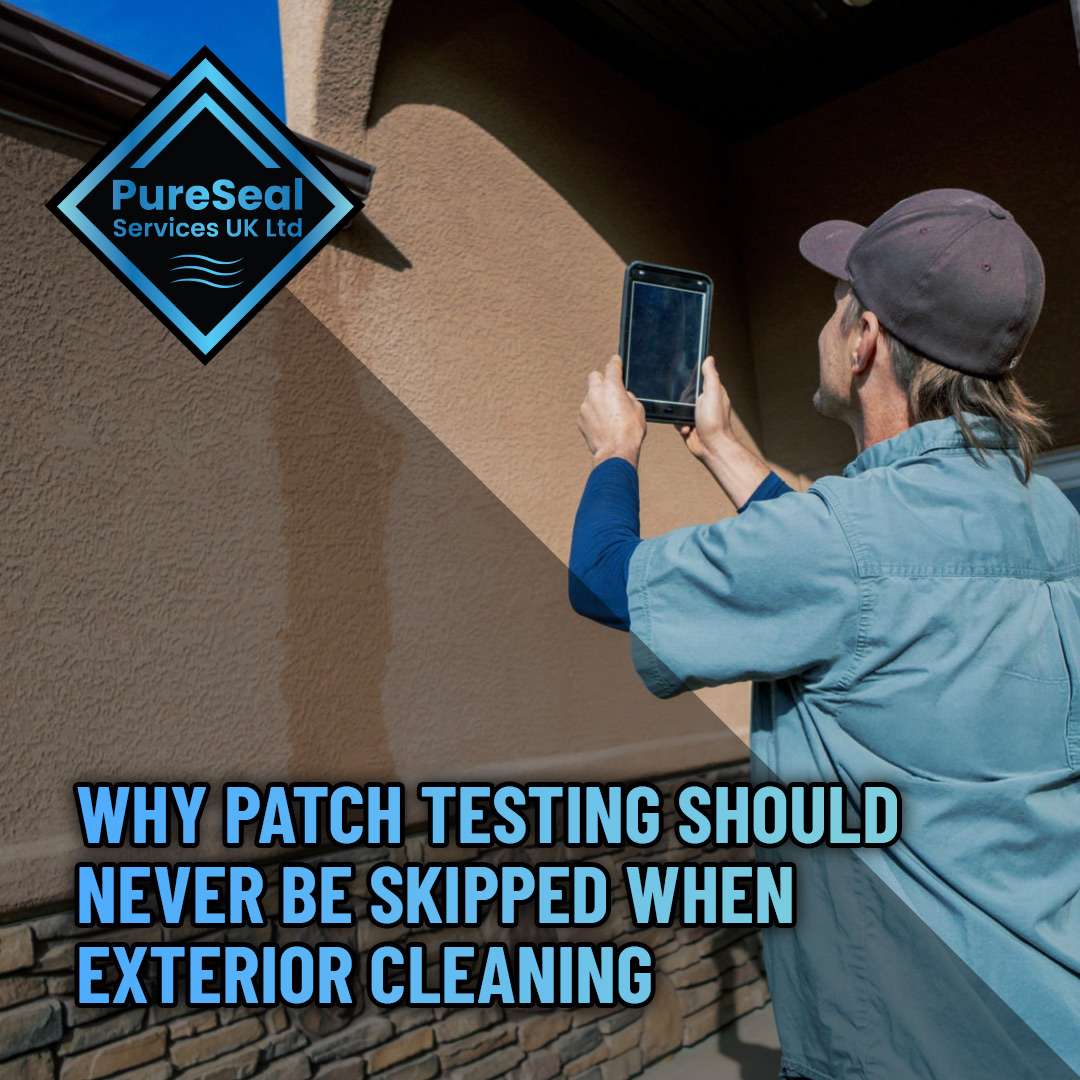
Why Patch Testing Should Never Be Skipped When Exterior Cleaning
A comprehensive guide for UK exterior cleaning professionals
Exterior cleaning can transform the appearance of a property, restoring patios, driveways, roofs and render to a much cleaner condition. However, achieving professional results requires more than simply applying chemicals and rinsing them away. One of the most important steps in the cleaning process — and one that is frequently overlooked — is patch testing.
Patch testing involves applying a small amount of cleaning chemical to an inconspicuous area of the surface before treating the entire area. This allows cleaning professionals to observe how the surface reacts to the chemical and whether the dilution ratio is appropriate.
Skipping this step may save a few minutes at the start of a job, but it can lead to serious problems later. Surface discolouration, chemical staining, etching and uneven cleaning results are all common outcomes when patch testing is ignored.
For exterior cleaning businesses, these problems can lead to customer complaints, return visits and costly refunds.
This guide explains:
-
What patch testing is and why it is essential
-
The risks of skipping patch testing
-
Surfaces most vulnerable to chemical reactions
-
The financial impact of mistakes
-
Best practices for patch testing
-
Why professional-grade chemicals improve reliability
For exterior cleaning professionals looking for reliable chemical products designed specifically for the industry, suppliers such as Pure Seal provide professional exterior cleaning chemicals developed for contractors.
Learn more here:
https://puresealservices.co.uk/
What Is Patch Testing?
Patch testing is the process of testing a cleaning chemical on a small area of a surface before applying it across the entire area.
The purpose of patch testing is to identify potential problems before they affect the whole surface.
Patch testing helps determine:
-
Whether the chemical is compatible with the material
-
Whether the dilution ratio is appropriate
-
Whether the cleaning result meets expectations
| Patch Testing Purpose | Benefit |
|---|---|
| Surface compatibility | Prevents chemical damage |
| Correct dilution | Avoids staining |
| Cleaning effectiveness | Ensures desired results |
A simple patch test can prevent significant problems later in the cleaning process.
Why Skipping Patch Testing Is Risky
Exterior surfaces vary greatly in composition. Even surfaces that look similar can react differently to cleaning chemicals.
Skipping patch testing means applying chemicals across the entire surface without knowing how the material will react.
This can result in:
-
Surface discolouration
-
Etching of natural stone
-
Streaking or patchy cleaning
-
Chemical burns on delicate surfaces
| Risk | Result |
|---|---|
| Chemical reaction | Surface staining |
| Incorrect dilution | Damage or residue |
| Material sensitivity | Discolouration |
A few minutes spent patch testing can prevent hours of corrective work later.
Surfaces That Require Patch Testing
Certain surfaces are particularly sensitive to cleaning chemicals.
| Surface Type | Patch Testing Importance |
|---|---|
| Sandstone | Very high |
| Limestone | Very high |
| Natural stone paving | High |
| Coloured concrete | Medium |
| Render | Medium |
| Roof tiles | Medium |
Porous materials absorb chemicals more easily, which increases the risk of chemical reactions.
How Chemical Reactions Occur
Exterior cleaning chemicals often contain active ingredients designed to break down organic growth or stains.
Common ingredients include:
-
Sodium hypochlorite
-
Alkaline degreasers
-
Acid-based cleaners
-
Surfactants
These chemicals may react differently depending on the surface composition.
| Chemical Type | Potential Reaction |
|---|---|
| Sodium hypochlorite | Colour lightening |
| Acid cleaners | Etching on stone |
| Alkaline cleaners | Surface residue |
| Surfactants | Streaking |
Patch testing reveals these reactions before large areas are treated.
The Financial Impact of Skipping Patch Testing
Mistakes caused by skipping patch testing can be expensive.
Consider the financial impact of a typical patio cleaning job.
| Job Description | Value (£) |
|---|---|
| Patio cleaning | £160 |
| Job Costs | Amount (£) |
|---|---|
| Labour | £70 |
| Fuel | £15 |
| Chemicals | £12 |
| Equipment wear | £8 |
| Total cost | £105 |
| Profit | Amount (£) |
|---|---|
| Revenue | £160 |
| Expenses | £105 |
| Net profit | £55 |
If chemical damage occurs and a refund is required:
| Financial Impact | Amount (£) |
|---|---|
| Refund issued | £160 |
| Labour already paid | £70 |
| Fuel cost | £15 |
| Chemicals used | £12 |
| Total loss | £257 |
Skipping patch testing can therefore turn a profitable job into a significant loss.
Patch Testing Helps Identify Correct Dilution Ratios
Different surfaces require different chemical strengths.
Patch testing allows contractors to adjust dilution ratios before applying chemicals across the entire area.
| Dilution Issue | Possible Outcome |
|---|---|
| Too strong | Surface damage |
| Too weak | Poor cleaning results |
| Uneven mixture | Patchy cleaning |
Testing a small area ensures the correct balance between cleaning effectiveness and surface safety.
Weather Conditions and Chemical Reactions
Weather conditions can also affect chemical performance.
Hot weather may accelerate chemical reactions, increasing the risk of surface damage.
| Weather Condition | Effect on Chemicals |
|---|---|
| High temperature | Faster chemical reaction |
| Direct sunlight | Rapid drying |
| Windy conditions | Uneven application |
Patch testing helps determine how chemicals behave under current weather conditions.
Patch Testing Improves Customer Confidence
Performing a patch test can also help build customer confidence.
When customers see a professional testing the surface first, they are more likely to trust the cleaning process.
| Customer Benefit | Impact |
|---|---|
| Visible professionalism | Increased trust |
| Clear demonstration | Shows expected results |
| Reduced risk | Fewer complaints |
Patch testing can therefore improve customer satisfaction.
How to Perform a Proper Patch Test
A patch test should be performed on a small, inconspicuous area of the surface.
Typical patch testing process:
-
Select a hidden or less visible area
-
Apply the chemical at the intended dilution
-
Allow the correct dwell time
-
Rinse thoroughly
-
Allow the area to dry completely
-
Inspect the results
| Patch Testing Step | Purpose |
|---|---|
| Apply chemical | Test compatibility |
| Allow dwell time | Observe reaction |
| Rinse thoroughly | Remove residue |
| Inspect surface | Identify issues |
Waiting for the test area to dry is essential before proceeding.
Patch Testing Helps Prevent Streaking and Residue
Patch testing can reveal problems such as:
-
Chemical residue
-
Surface streaking
-
Colour changes
-
Uneven cleaning
These issues may not be visible immediately after rinsing but can appear once the surface dries.
Testing beforehand helps prevent large-scale problems.
The Role of Professional Chemicals
Professional-grade exterior cleaning chemicals are formulated to provide predictable and consistent results.
Benefits include:
✔ Reliable chemical strength
✔ Clear dilution guidance
✔ Reduced risk of surface damage
✔ Consistent cleaning performance
Using professional products helps reduce the risk of unexpected reactions.
Suppliers such as Pure Seal provide exterior cleaning chemicals developed specifically for professional contractors.
Explore their products here:
https://puresealservices.co.uk/
Staff Training and Chemical Awareness
Many mistakes in exterior cleaning occur because operators lack experience with chemical products.
Training staff in patch testing procedures helps prevent costly errors.
| Training Area | Importance |
|---|---|
| Chemical dilution | Prevents damage |
| Surface identification | Ensures compatibility |
| Patch testing methods | Reduces risk |
| Application techniques | Improves results |
Well-trained teams deliver more consistent cleaning outcomes.
Patch Testing and Risk Management
From a business perspective, patch testing is also a form of risk management.
It allows exterior cleaning professionals to identify potential problems before committing to a full cleaning process.
| Risk Prevention | Benefit |
|---|---|
| Identify surface reactions | Prevent damage |
| Confirm dilution ratio | Avoid residue |
| Test cleaning effectiveness | Improve results |
Taking preventative steps reduces the likelihood of complaints.
Why Reliable Chemical Suppliers Matter
Using reliable chemical suppliers ensures consistent product performance.
Professional suppliers offer:
-
Tested chemical formulations
-
Clear usage instructions
-
Products designed specifically for exterior surfaces
Many exterior cleaning professionals rely on specialist suppliers such as Pure Seal, which provide chemicals developed specifically for contractors.
Learn more here:
https://puresealservices.co.uk/
Final Thoughts
Patch testing is one of the simplest yet most important steps in exterior cleaning. Taking a few minutes to test chemicals on a small area can prevent significant problems later in the job.
Skipping patch testing increases the risk of:
-
Surface staining
-
Chemical damage
-
Patchy cleaning results
-
Customer complaints
-
Refund requests
For exterior cleaning businesses, these issues can result in lost profits and damage to reputation.
By performing proper patch testing, using reliable chemicals and following professional cleaning procedures, exterior cleaning professionals can deliver consistent, high-quality results.
Professional-grade products from suppliers such as Pure Seal help ensure predictable chemical performance and reduce the risk of costly mistakes.
You can explore their exterior cleaning chemical range here:
https://puresealservices.co.uk/
With the right preparation, knowledge and products, patch testing becomes a simple step that protects both the surface being cleaned and the reputation of the cleaning business.
Tags: Roof Cleaning, Exterior cleaning, gutter cleaning, window cleaning, Patio cleaning, Driveway cleaning, pressure washing
 Artificial and Sports Surfaces
 Awnings / Canopies / Gazebos
 Block Paving
 Brickwork
 Composite Surfaces
 Decking / Timber
 Granite
 Imprinted Concrete
 Internal Masonry
 Limestone
 Marble
 Metal Cladding
 Polished or Honed Stone
 Porcelain
 Render
 Resin Bond
 Road and Rail Signs
 Roof Tiles / Slates
 Sandstone
 Slate
Slate Solar Panels and Glass
 Stone Sills and Pier Caps
 Tarmac and Asphalt
 Gutters & UPVC
 Acid Damage
 Biofilm
 Bitumen
 Blood
Blood Carbon
 Concrete / Grout / Mortar
 Copper Oxide
 Efflorescence
 Egg
Egg Failed Sealer
 Fire Damage
 Fuel / Oil
 Graffiti
 Grease / Fat / Cooking Oil
 Lawn Fertiliser
 Lead Carbonate
 Lead Oxide
 Paint Splashes
 Rust
Rust Tar & Glue
 Tannin Removers
 Traffic Film Removers
 Trapped Moisture / Sealer Repairs
 Urine Neutralisers