
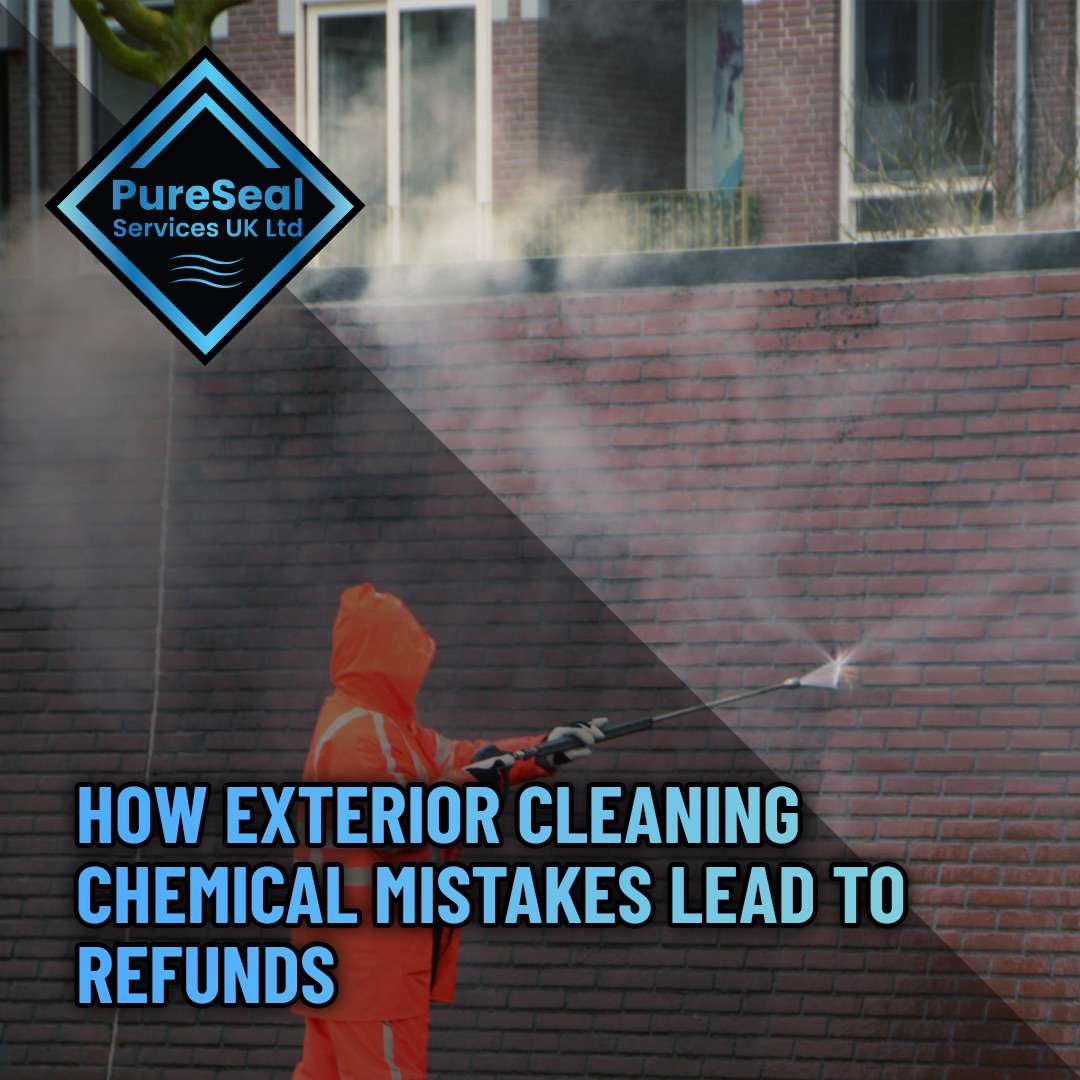
How Exterior Cleaning Chemical Mistakes Lead to Refunds
A detailed UK guide for exterior cleaning companies on avoiding costly chemical errors
Running a successful exterior cleaning business involves much more than owning a pressure washer and advertising your services. One of the most important aspects of delivering professional results is understanding how to use cleaning chemicals correctly.
Exterior cleaning professionals rely heavily on chemical products to break down organic growth, remove staining and restore surfaces such as driveways, patios, roofs, render and cladding. When these chemicals are used properly, they can produce impressive results that keep customers satisfied and help businesses grow.
However, when chemicals are used incorrectly, the consequences can be expensive. Poor chemical choices, incorrect dilution ratios or rushed application can lead to unsatisfactory results or even damage to the surface being cleaned.
When customers are unhappy with the outcome of a job, refunds often follow.
Refunds do not just reduce profit on a single job. They can also lead to return visits, additional labour costs and reputational damage that affects future business.
This guide explains:
-
Why chemical mistakes are common in exterior cleaning
-
How these mistakes lead to refund requests
-
The financial impact of poor chemical use
-
The most common chemical errors made by cleaning companies
-
How professional-grade chemicals improve reliability
-
Practical steps to reduce chemical mistakes
For exterior cleaning professionals seeking reliable products designed specifically for the industry, specialist suppliers such as Pure Seal provide professional-grade cleaning chemicals developed for exterior surfaces.
Learn more here:
https://puresealservices.co.uk/
Why Chemicals Are Essential in Exterior Cleaning
Exterior surfaces are constantly exposed to environmental contamination. Over time, these surfaces accumulate a variety of organic and mineral deposits.
Common contaminants include:
-
Algae
-
Moss
-
Lichen
-
Black spot
-
Traffic film
-
Rust stains
-
Oil stains
Pressure washing alone often cannot remove these contaminants effectively. Chemicals are needed to break down the substances that cause staining and organic growth.
| Surface | Common Contaminants |
|---|---|
| Patios | Algae, black spot, moss |
| Roofs | Moss, lichen, algae |
| Driveways | Oil stains, tyre marks |
| Render | Algae, atmospheric pollution |
| Decking | Mould, organic growth |
Without the correct chemical treatment, these surfaces may still look dirty even after pressure washing.
The Financial Impact of Refunds
Exterior cleaning businesses operate on relatively tight margins. When a job goes wrong and a refund is issued, the financial impact can be much larger than expected.
Consider a typical residential driveway cleaning job.
| Job Description | Value (£) |
|---|---|
| Driveway cleaning service | £180 |
| Job Expenses | Cost (£) |
|---|---|
| Labour | £70 |
| Fuel | £20 |
| Chemicals | £15 |
| Equipment wear | £10 |
| Total cost | £115 |
| Profit | Amount (£) |
|---|---|
| Revenue | £180 |
| Expenses | £115 |
| Profit | £65 |
If a customer requests a full refund due to poor results:
| Financial Impact | Amount (£) |
|---|---|
| Refund issued | £180 |
| Labour already paid | £70 |
| Fuel used | £20 |
| Chemicals used | £15 |
| Equipment wear | £10 |
| Total loss | £295 |
One chemical mistake can therefore cost almost five times the original profit from the job.
How Chemical Mistakes Lead to Refund Requests
Most refunds in exterior cleaning occur because customers are dissatisfied with the final appearance of the surface.
Common issues include:
-
Stains returning quickly
-
Uneven cleaning results
-
Surface damage
-
Persistent organic growth
These problems are frequently linked to chemical misuse.
| Customer Complaint | Possible Chemical Cause |
|---|---|
| Stains returned after a few weeks | Weak chemical solution |
| Patchy appearance | Uneven chemical application |
| Surface discolouration | Incorrect chemical used |
| Algae regrowth | Insufficient treatment |
Understanding how chemicals behave on different surfaces is essential for avoiding these issues.
Common Chemical Mistakes in Exterior Cleaning
Several chemical mistakes are particularly common among newer exterior cleaning businesses.
1. Using the Wrong Chemical for the Surface
Different materials react differently to cleaning chemicals.
| Surface Type | Recommended Chemical Type |
|---|---|
| Natural stone | Non-acidic cleaner |
| Concrete | Alkaline degreaser |
| Roof tiles | Softwash biocide |
| Render | Gentle algae treatment |
Using an inappropriate chemical can cause:
-
Etching
-
Discolouration
-
Surface weakening
These issues often lead to customer complaints.
2. Incorrect Dilution Ratios
Many professional exterior cleaning chemicals are supplied in concentrated form. This allows contractors to control strength and reduce transport costs.
However, incorrect dilution can cause serious problems.
| Dilution Error | Result |
|---|---|
| Too strong | Surface damage |
| Too weak | Poor cleaning performance |
| Inconsistent mix | Uneven results |
A weak chemical mix may initially appear to work but fail to kill organic spores, causing rapid regrowth.
3. Rushing Chemical Application
Exterior cleaning chemicals require time to break down contaminants.
This period is known as dwell time.
If chemicals are rinsed off too quickly, they cannot perform effectively.
| Application Mistake | Result |
|---|---|
| Immediate rinsing | Poor stain removal |
| Uneven spraying | Patchy cleaning |
| Short dwell time | Incomplete treatment |
Customers may request refunds when results appear inconsistent.
4. Using Low-Quality Chemicals
Many new cleaning businesses attempt to reduce costs by purchasing cheaper chemical products.
However, low-quality chemicals often deliver weaker performance.
| Low-Quality Chemical Problem | Result |
|---|---|
| Inconsistent formulation | Unpredictable results |
| Weak cleaning power | Multiple applications required |
| Lower concentration | Higher usage rates |
Professional products provide more reliable performance and predictable outcomes.
5. Not Testing Chemicals on Surfaces
Some surfaces react unexpectedly to chemicals.
Testing a small area before full application is important.
| Test Area Benefit | Reason |
|---|---|
| Identifies chemical reactions | Prevents damage |
| Confirms correct dilution | Ensures effectiveness |
| Shows expected results | Sets customer expectations |
Skipping this step increases the risk of mistakes.
Reputation Damage From Refunds
Refunds rarely affect just one job. They can also affect future business.
Many exterior cleaning companies rely heavily on online reviews and customer referrals.
| Scenario | Potential Impact |
|---|---|
| Customer unhappy with results | Negative review |
| Refund issued | Reduced credibility |
| Poor work visible locally | Loss of referrals |
Reputation damage can have a long-term impact on business growth.
Hidden Costs of Chemical Errors
Chemical mistakes can lead to several indirect costs.
| Hidden Cost | Example (£) |
|---|---|
| Return visit labour | £70 |
| Additional chemicals | £20 |
| Fuel costs | £15 |
| Lost working time | £100+ |
| Potential refund | £180 |
These costs can quickly add up.
Why Professional-Grade Chemicals Improve Results
Professional exterior cleaning chemicals are designed to provide consistent and reliable performance.
Benefits include:
✔ Predictable cleaning strength
✔ Consistent formulation
✔ Clear dilution instructions
✔ Reliable stain removal
Using specialist products reduces the likelihood of mistakes.
Suppliers such as Pure Seal provide professional-grade chemicals developed specifically for exterior cleaning professionals.
Their range includes products for:
-
Organic growth removal
-
Rust stain treatment
-
Surface cleaning
-
Post-clean protection
Explore their range here:
https://puresealservices.co.uk/
Staff Training and Chemical Knowledge
Many chemical mistakes occur because operators lack sufficient knowledge.
Exterior cleaning companies should understand:
-
Chemical reactions
-
Surface compatibility
-
Dilution ratios
-
Application techniques
| Knowledge Area | Importance |
|---|---|
| Dilution ratios | Prevents surface damage |
| Surface compatibility | Avoids staining |
| Chemical dwell time | Improves cleaning results |
| Application methods | Ensures even coverage |
Training staff helps reduce costly mistakes.
Creating a Standard Chemical Process
Many successful cleaning companies create standard procedures for chemical use.
A typical process might include:
-
Inspect surface condition
-
Identify contamination type
-
Select appropriate chemical
-
Prepare correct dilution ratio
-
Test small area
-
Apply evenly
-
Allow proper dwell time
-
Rinse thoroughly
Following this process ensures consistent results.
Example Exterior Cleaning Business Costs
Understanding job costs helps illustrate how refunds affect profitability.
| Job Type | Revenue (£) |
|---|---|
| Patio cleaning | £160 |
| Expense | Cost (£) |
|---|---|
| Labour | £70 |
| Fuel | £15 |
| Chemicals | £12 |
| Equipment wear | £8 |
| Total cost | £105 |
| Profit | Amount (£) |
|---|---|
| Revenue | £160 |
| Expenses | £105 |
| Net profit | £55 |
A refund removes profit and creates a financial loss.
Managing Customer Expectations
Not all stains can be completely removed.
Being honest with customers about expected results can prevent disputes.
| Surface Issue | Likely Outcome |
|---|---|
| Organic growth | Usually fully removable |
| Surface dirt | Fully removable |
| Oil stains | Partial improvement |
| Deep rust staining | May require specialist treatment |
Clear communication reduces refund requests.
Chemical Storage and Shelf Life
Improper storage can reduce chemical effectiveness.
Chemicals should be stored:
-
In sealed containers
-
Away from direct sunlight
-
In cool, dry areas
| Storage Issue | Result |
|---|---|
| Heat exposure | Reduced effectiveness |
| Open containers | Chemical degradation |
| Long-term storage | Lower cleaning power |
Fresh chemicals provide better cleaning results.
Choosing Reliable Chemical Suppliers
Working with reliable suppliers helps ensure consistent product performance.
Professional suppliers often provide:
-
Tested chemical formulations
-
Clear usage instructions
-
Consistent product strength
Exterior cleaning professionals commonly rely on specialist suppliers such as Pure Seal, which offers chemicals designed specifically for exterior cleaning applications.
You can explore their product range here:
https://puresealservices.co.uk/
Building a More Profitable Exterior Cleaning Business
Avoiding chemical mistakes helps improve profitability and customer satisfaction.
Key strategies include:
| Strategy | Benefit |
|---|---|
| Use professional chemicals | Consistent results |
| Train staff properly | Fewer errors |
| Follow chemical procedures | Reliable cleaning |
| Manage expectations | Fewer disputes |
These practices help protect both profit margins and reputation.
Final Thoughts
Chemical mistakes are one of the most common causes of refunds in the exterior cleaning industry. Incorrect chemical selection, poor dilution ratios and rushed application can all lead to unsatisfactory results and unhappy customers.
The true cost of these mistakes includes:
-
Refund payments
-
Lost labour time
-
Additional travel costs
-
Negative customer reviews
-
Damage to business reputation
By understanding chemical behaviour and using professional-grade products, exterior cleaning businesses can significantly reduce the risk of costly errors.
Specialist suppliers such as Pure Seal provide professional exterior cleaning chemicals designed to deliver reliable and consistent results.
Learn more here:
https://puresealservices.co.uk/
With the right products, knowledge and processes, exterior cleaning companies can deliver better results, maintain strong customer satisfaction and build a more profitable business.
Tags: Patio cleaning, Driveway cleaning, pressure washing, Roof Cleaning, Exterior cleaning, gutter cleaning, window cleaning
 Artificial and Sports Surfaces
 Awnings / Canopies / Gazebos
 Block Paving
 Brickwork
 Composite Surfaces
 Decking / Timber
 Granite
 Imprinted Concrete
 Internal Masonry
 Limestone
 Marble
 Metal Cladding
 Polished or Honed Stone
 Porcelain
 Render
 Resin Bond
 Road and Rail Signs
 Roof Tiles / Slates
 Sandstone
 Slate
Slate Solar Panels and Glass
 Stone Sills and Pier Caps
 Tarmac and Asphalt
 Gutters & UPVC
 Acid Damage
 Biofilm
 Bitumen
 Blood
Blood Carbon
 Concrete / Grout / Mortar
 Copper Oxide
 Efflorescence
 Egg
Egg Failed Sealer
 Fire Damage
 Fuel / Oil
 Graffiti
 Grease / Fat / Cooking Oil
 Lawn Fertiliser
 Lead Carbonate
 Lead Oxide
 Paint Splashes
 Rust
Rust Tar & Glue
 Tannin Removers
 Traffic Film Removers
 Trapped Moisture / Sealer Repairs
 Urine Neutralisers