
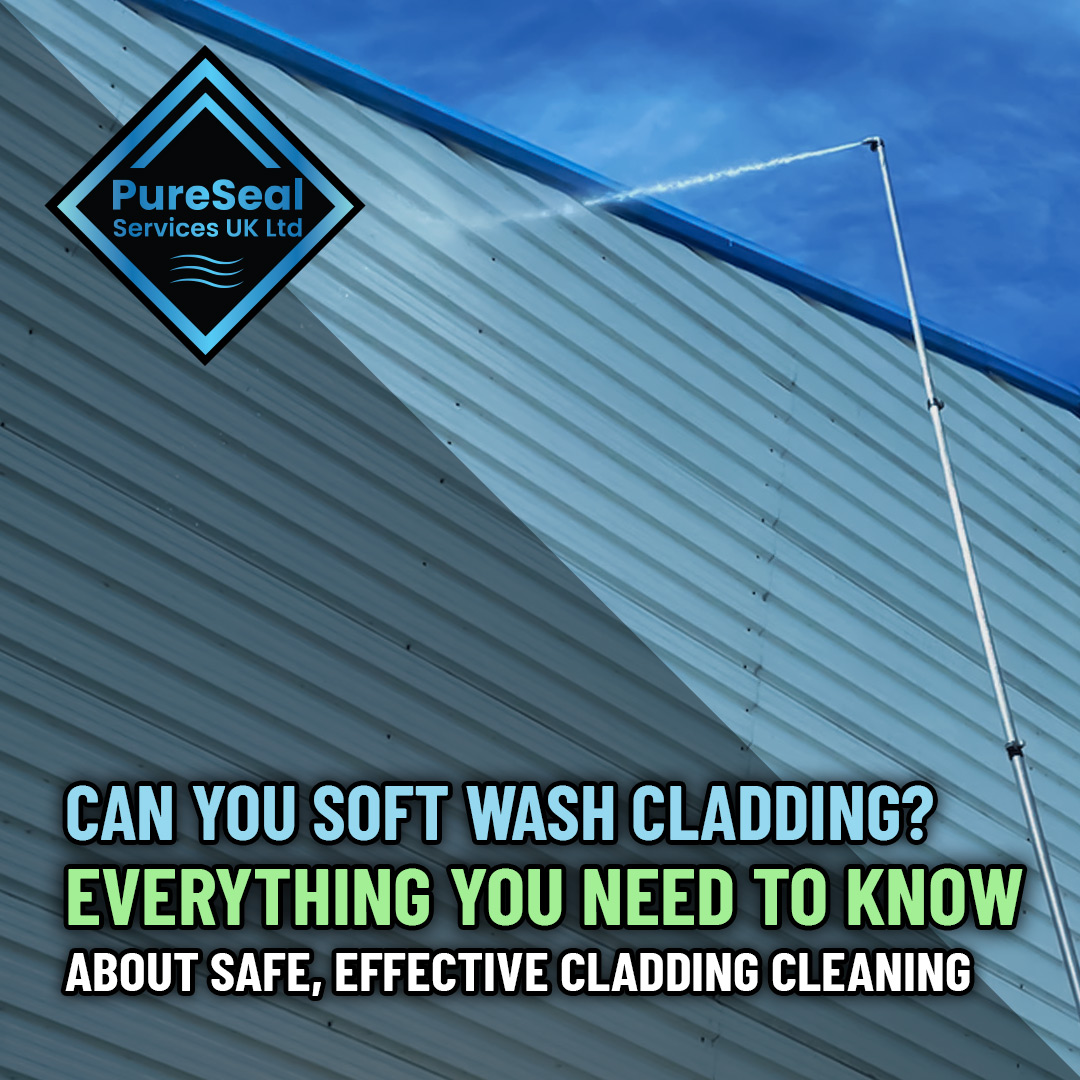
Can You Soft Wash Cladding? Everything You Need to Know About Safe, Effective Cladding Cleaning
Can You Soft Wash Cladding? 🏠✨
Cladding has become one of the most popular exterior finishes for residential, commercial, and industrial buildings across the UK. From modern composite panels to traditional uPVC and metal systems, cladding enhances appearance, protects structural elements, and improves energy efficiency. However, like all exterior surfaces, cladding is exposed to the elements—and over time, it accumulates dirt, algae, mould, pollution staining, and organic growth.
This leads to a common and important question:
Can you soft wash cladding?
The short answer is yes, soft washing is often one of the safest and most effective ways to clean many types of cladding. But the longer answer involves understanding materials, cleaning chemistry, pressure levels, safety considerations, and long-term maintenance.
This article explores soft washing cladding in depth—what it is, how it works, which cladding types it suits, benefits, limitations, costs, and best practices.
What Is Soft Washing? 💧
Soft washing is a low-pressure exterior cleaning method that relies primarily on specialist cleaning solutions rather than mechanical force. Instead of blasting dirt away with high pressure, soft washing uses:
-
Low-pressure water (similar to a garden hose)
-
Biocidal or surfactant-based detergents
-
Dwell time to break down contaminants
-
Gentle rinsing to remove residues
Key Characteristics of Soft Washing
| Feature | Description |
|---|---|
| Water pressure | Typically under 300 PSI |
| Cleaning action | Chemical-based, not force-based |
| Target contaminants | Algae, mould, lichen, mildew, bacteria |
| Surface impact | Minimal risk of damage |
| Longevity | Results often last longer than pressure washing |
Soft washing is especially valued for delicate or coated surfaces, which makes it highly relevant when discussing cladding.
Why Cladding Gets Dirty 🦠
Cladding is designed to face the elements year-round. Over time, environmental factors lead to visible and invisible contamination.
Common Causes of Cladding Soiling
-
Air pollution (traffic fumes, industrial fallout)
-
Organic growth such as algae and mould
-
Rainwater runoff carrying dirt and minerals
-
Shaded or north-facing elevations retaining moisture
-
Poor drainage or ventilation
-
Coastal salt deposits
Different materials react differently, but nearly all cladding types will eventually show signs of staining or discolouration if not maintained.
Is Soft Washing Suitable for All Cladding Types?
Soft washing is suitable for most cladding materials, but not all surfaces should be treated in the same way. Understanding material compatibility is critical.
Soft Wash Compatibility by Cladding Type
| Cladding Type | Soft Wash Suitable? | Notes |
|---|---|---|
| uPVC cladding | ✅ Yes | Very well suited; avoids scratching |
| Composite cladding | ✅ Yes | Preserves surface coatings |
| Aluminium cladding | ✅ Yes | Prevents oxidation damage |
| Painted metal cladding | ✅ Yes | Reduces paint stripping risk |
| Timber cladding | ⚠️ Sometimes | Requires specialist solutions |
| Fibre cement | ✅ Yes | Gentle cleaning recommended |
| Stone cladding | ⚠️ Depends | Porosity must be assessed |
| Brick slips | ⚠️ Limited | Mortar sensitivity |
In most cases, soft washing is preferred over pressure washing for cladding due to the reduced risk of surface damage.
Why Not Use High-Pressure Washing on Cladding? ⚠️
Pressure washing can be effective for some hard surfaces, but it presents several risks when used on cladding.
Potential Risks of Pressure Washing Cladding
-
Water ingress behind panels
-
Damage to seals and fixings
-
Etching or streaking on coated surfaces
-
Oxidation marks on metals
-
Delamination of composite materials
-
Premature fading of colours
Soft washing significantly reduces these risks by focusing on chemical cleaning rather than impact force.
How Soft Washing Cladding Works 🧪
The soft washing process follows a structured approach designed to clean thoroughly without causing harm.
Typical Soft Wash Process
-
Initial inspection
-
Identify material type
-
Check for existing damage
-
Assess organic growth levels
-
-
Pre-wetting
-
Prevents rapid chemical absorption
-
Protects surrounding areas
-
-
Application of cleaning solution
-
Low-pressure spray
-
Even coverage across panels
-
-
Dwell time
-
Allows solution to kill and loosen contaminants
-
Typically 10–30 minutes
-
-
Gentle rinse
-
Removes dead growth and residue
-
No aggressive pressure used
-
-
Post-treatment check
-
Ensures uniform results
-
Identifies areas needing reapplication
-
Benefits of Soft Washing Cladding 🌱
Soft washing offers both immediate and long-term advantages for cladding systems.
Key Benefits
-
Prevents damage to coatings and seals
-
Kills spores, not just surface stains
-
Longer-lasting results than pressure washing
-
Improves kerb appeal
-
Extends lifespan of cladding materials
-
Reduces need for repainting or replacement
-
More environmentally controlled when used correctly
Because soft washing treats the root cause of biological growth, cleaned cladding often stays cleaner for 12–36 months, depending on environment.
Soft Washing vs Pressure Washing for Cladding
| Factor | Soft Washing | Pressure Washing |
|---|---|---|
| Pressure level | Very low | High |
| Risk of damage | Low | Moderate to high |
| Removes algae/mould | Yes (kills spores) | Often surface only |
| Water usage | Lower | Higher |
| Longevity of results | Longer | Shorter |
| Suitable for coatings | Yes | Risky |
For most cladding systems, soft washing is the preferred professional approach.
Costs of Soft Washing Cladding 💷
Costs vary depending on size, height, access, contamination level, and cladding material. All figures below are indicative UK averages.
Typical Soft Washing Cost Ranges
| Property Type | Approximate Cost |
|---|---|
| Small residential façade | £250 – £450 |
| Medium detached house | £450 – £750 |
| Large detached or multi-storey | £750 – £1,200 |
| Commercial cladding per m² | £3 – £7 |
Additional factors influencing cost:
-
Scaffold or access equipment
-
Heavy biological growth
-
Coastal or industrial pollution
-
Complex architectural features
Soft washing is often more cost-effective long-term because it reduces the frequency of cleaning cycles.
Is Soft Washing Safe for the Environment? 🌍
When done correctly, soft washing can be environmentally responsible. Modern cleaning solutions are designed to break down after use.
Environmental Considerations
-
Controlled chemical application
-
Minimal water runoff
-
Targeted treatment reduces repeat cleaning
-
Protection of surrounding plants
-
Neutralisation where required
Responsible application is key. Over-application or incorrect dilution can cause harm, which is why correct procedures matter.
Common Myths About Soft Washing Cladding ❌
“Soft washing is just watered-down pressure washing”
False. Soft washing uses different equipment, pressures, and chemistry.
“Chemicals will damage my cladding”
Incorrect when applied properly. The risk is often lower than pressure washing.
“Pressure washing cleans better”
It may clean faster visually, but often fails to kill spores—leading to rapid regrowth.
“Soft washing is only for roofs”
Soft washing is used extensively on walls, render, cladding, and façades.
Maintenance Frequency for Soft Washed Cladding 🔄
How often cladding needs soft washing depends on location and environment.
Suggested Cleaning Intervals
| Environment | Recommended Frequency |
|---|---|
| Urban areas | Every 2–3 years |
| Coastal locations | Every 1–2 years |
| Shaded/north-facing | Every 1–2 years |
| Industrial zones | Every 12–18 months |
| Rural areas | Every 3 years |
Regular maintenance prevents heavy buildup and keeps costs lower over time.
When Soft Washing May Not Be Suitable ⚠️
Although versatile, soft washing is not universal.
Situations Requiring Caution
-
Severely damaged or cracked cladding
-
Untreated or aged timber without testing
-
Historic or listed materials
-
Poorly installed panels with gaps
-
Unknown coatings or finishes
In such cases, testing and assessment are essential before proceeding.
Soft Washing and Long-Term Cladding Care 🛠️
Soft washing should be part of a broader maintenance strategy.
Best Practices for Cladding Longevity
-
Annual visual inspections
-
Clear gutters and drainage
-
Trim vegetation near walls
-
Address leaks promptly
-
Avoid abrasive cleaning methods
-
Use gentle cleaning before stains set
Preventative care significantly extends cladding lifespan and appearance.
Final Thoughts: Can You Soft Wash Cladding?
Yes—soft washing is not only possible, but often the best method for cleaning cladding. ✔️
When matched correctly to the cladding material and applied using proper techniques, soft washing offers:
-
Safe, gentle cleaning
-
Long-lasting results
-
Reduced risk of damage
-
Improved appearance
-
Better long-term value
In many cases, it outperforms pressure washing in both results and preservation. Understanding your cladding type, environmental conditions, and maintenance goals is key to deciding whether soft washing is the right approach.
Clean cladding doesn’t just look better—it lasts longer, performs better, and protects your investment. 🏡✨
Does Soft Washing Affect Cladding Colour? 🎨
One common concern is whether soft washing will fade or alter the colour of cladding. When carried out correctly, soft washing actually helps restore original colour rather than damage it.
Discolouration on cladding is usually caused by:
-
Algae films
-
Airborne pollutants
-
Oxidation
-
Organic staining
Soft washing removes these layers gently, revealing the true colour beneath.
| Outcome | Likelihood |
|---|---|
| Colour restoration | High |
| Fading | Very low |
| Patchiness | Rare with even application |
In contrast, high-pressure cleaning is far more likely to cause uneven colour loss or streaking.
Can Soft Washing Remove Algae and Mould Completely? 🦠
Soft washing is highly effective at removing algae, mould, mildew, and similar organic growth because it kills the spores, not just the visible staining.
What Soft Washing Targets
| Contaminant | Removal Effectiveness |
|---|---|
| Green algae | Excellent |
| Black mould | Excellent |
| Mildew | Excellent |
| Lichen (light) | Good |
| Lichen (heavy) | Moderate (may need repeat treatment) |
By eliminating spores at their source, regrowth is significantly slowed, often keeping cladding clean for years.
Is Soft Washing Suitable for Commercial Cladding? 🏢
Yes, soft washing is widely used on commercial and industrial cladding, particularly where appearance and material integrity are important.
Benefits for Commercial Properties
-
Maintains professional appearance
-
Reduces long-term maintenance costs
-
Minimises disruption (low noise, low splash)
-
Safe for large coated surfaces
-
Helps meet appearance standards
Soft washing is especially effective on aluminium, composite panels, and painted steel commonly found on commercial buildings.
What Happens If Cladding Is Not Cleaned? ⚠️
Neglecting cladding maintenance can lead to more than cosmetic issues.
Potential Consequences of No Cleaning
| Issue | Impact |
|---|---|
| Persistent staining | Reduced kerb appeal |
| Organic growth | Surface degradation |
| Moisture retention | Increased wear |
| Coating breakdown | Costly repairs |
| Early replacement | High expense (£££) |
Regular soft washing helps prevent long-term damage and preserves both appearance and performance.
Can Soft Washing Help Prevent Future Staining? 🔄
While no cleaning method can stop dirt forever, soft washing significantly delays future staining.
Why Results Last Longer
-
Spores are killed at source
-
Surfaces stay cleaner for longer
-
Reduced moisture retention
-
Slower regrowth of algae
| Cleaning Method | Typical Clean Duration |
|---|---|
| Pressure washing | 6–12 months |
| Soft washing | 12–36 months |
This makes soft washing an efficient preventative measure, not just a cosmetic fix.
Tags: gutter cleaning, window cleaning, Patio cleaning, Driveway cleaning, pressure washing, Roof Cleaning, Exterior cleaning
 Artificial and Sports Surfaces
 Awnings / Canopies / Gazebos
 Block Paving
 Brickwork
 Composite Surfaces
 Decking / Timber
 Granite
 Imprinted Concrete
 Internal Masonry
 Limestone
 Marble
 Metal Cladding
 Polished or Honed Stone
 Porcelain
 Render
 Resin Bond
 Road and Rail Signs
 Roof Tiles / Slates
 Sandstone
 Slate
Slate Solar Panels and Glass
 Stone Sills and Pier Caps
 Tarmac and Asphalt
 Gutters & UPVC
 Acid Damage
 Biofilm
 Bitumen
 Blood
Blood Carbon
 Concrete / Grout / Mortar
 Copper Oxide
 Efflorescence
 Egg
Egg Failed Sealer
 Fire Damage
 Fuel / Oil
 Graffiti
 Grease / Fat / Cooking Oil
 Lawn Fertiliser
 Lead Carbonate
 Lead Oxide
 Paint Splashes
 Rust
Rust Tar & Glue
 Tannin Removers
 Traffic Film Removers
 Trapped Moisture / Sealer Repairs
 Urine Neutralisers