
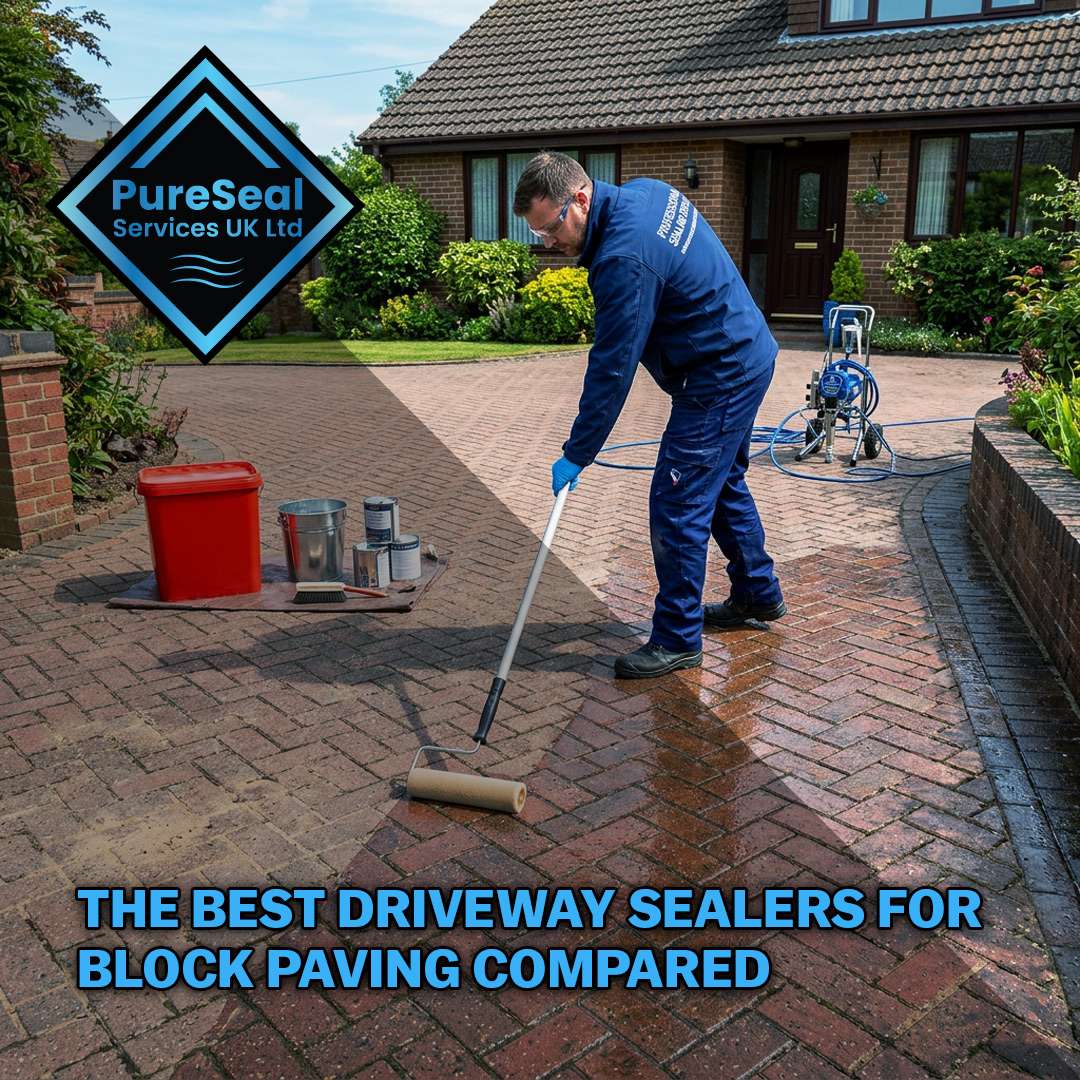
The Best Driveway Sealers for Block Paving Compared
The Best Driveway Sealers for Block Paving Compared
Block paving remains one of the UK’s most popular driveway choices thanks to its attractive appearance, durability and wide range of colours and patterns. However, even the highest-quality block paving will gradually fade, collect stains and encourage weed growth if left unprotected. Applying a professional sealer is one of the most effective ways to extend the lifespan of your driveway while making ongoing maintenance significantly easier. At Pure Seal Services, we only use premium-grade products designed to provide long-lasting protection rather than short-term cosmetic improvements. This guide compares the different types of driveway sealers available for block paving, explains where each performs best and helps property owners understand why investing in a professional sealing service can protect both the appearance and value of their home.Why Seal Block Paving?
Although block paving is extremely durable, it remains a porous material. Moisture, dirt, oil, algae and UV rays gradually penetrate the surface, leading to:- Colour fading
- Weed growth between joints
- Loss of kiln-dried sand
- Oil and grease staining
- Algae and moss development
- Surface erosion
- Increased maintenance
| Benefit | Without Sealer | With Professional Sealer |
|---|---|---|
| Weed growth | High | Significantly reduced |
| Oil resistance | Poor | Excellent |
| Colour retention | Moderate | Excellent |
| UV protection | None | High |
| Maintenance | Frequent | Much easier |
| Joint sand stability | Reduced | Improved |
Main Types of Driveway Sealers
Not every sealer performs in the same way. The right choice depends on the type of block paving, its condition and the finish the homeowner wants. The main categories include:- Acrylic sealers
- Polyurethane sealers
- Solvent-based sealers
- Water-based sealers
- Colour-enhancing sealers
- Natural finish sealers
Acrylic Sealers
Acrylic sealers remain one of the most widely used products throughout the UK. They create a durable protective coating that enhances colour while helping resist staining and weather damage.Advantages
- Excellent UV resistance
- Improves colour depth
- Reduces weed growth
- Good stain resistance
- Quick curing
- Long service life
Best suited for
- Residential driveways
- Decorative block paving
- New installations
- Recently cleaned paving
Polyurethane Sealers
Polyurethane products generally offer extremely high durability and abrasion resistance. They are particularly suited to areas experiencing heavier traffic or greater wear. Advantages include:- Outstanding durability
- Excellent chemical resistance
- Strong resistance to tyre marks
- Long maintenance intervals
Water-Based Sealers
Water-based products have become increasingly popular thanks to environmental improvements and lower odour during installation. Modern formulations perform far better than earlier generations. Benefits include:- Lower VOC emissions
- Minimal odour
- Fast drying
- Easier clean-up
- Excellent UV stability
Solvent-Based Sealers
Solvent-based sealers penetrate deeply into porous block paving and often provide excellent colour enhancement. Advantages include:- Deep penetration
- Rich colour enhancement
- Strong water repellency
- Durable finish
Colour Enhancing Sealers
Some homeowners want their driveway to look freshly installed again. Colour-enhancing sealers are specifically designed for this purpose. Rather than changing the colour, they intensify the existing shades already present within the paving. Benefits include:- Richer appearance
- Improved kerb appeal
- Wet-look finish (depending on product)
- UV protection
- Reduced fading
- Charcoal blocks
- Autumn mix paving
- Brindle blocks
- Multi-tonal driveways
Natural Finish Sealers
Not everyone wants a glossy finish. Natural finish sealers provide excellent protection while keeping the driveway looking close to its original appearance. These products are ideal for:- Heritage properties
- Modern homes
- Contemporary landscaping
- Premium block paving installations
Comparing Different Sealer Types
| Sealer Type | Appearance | Durability | Stain Protection | UV Protection | Maintenance |
|---|---|---|---|---|---|
| Acrylic | Satin | Excellent | Excellent | Excellent | Low |
| Polyurethane | Satin/Gloss | Outstanding | Outstanding | Excellent | Very Low |
| Water-Based | Natural | Excellent | Very Good | Excellent | Low |
| Solvent-Based | Enhanced | Excellent | Excellent | Excellent | Low |
| Natural Finish | Invisible | Very Good | Very Good | Excellent | Low |
Wet Look vs Natural Finish
One of the biggest decisions homeowners face is choosing the final appearance.| Wet Look Finish | Natural Finish |
|---|---|
| Richer colours | Original appearance |
| Slight sheen | Matt finish |
| Strong visual impact | More subtle |
| Popular on modern homes | Popular on traditional properties |
| Highlights paving patterns | Preserves natural texture |
Protection Against Oil Stains
Driveways experience constant exposure to:- Engine oil
- Diesel
- Petrol
- Brake fluid
- Tyre residue
Weed Prevention
Many people believe sealers stop weeds growing entirely. In reality, weeds rarely grow up through block paving—they usually germinate from seeds that settle in the joints. However, sealing provides several advantages:- Stabilises kiln-dried sand
- Reduces moisture retention
- Makes joints less hospitable to weeds
- Makes any weeds that do appear easier to remove
Preventing Sand Loss
Jointing sand is essential for maintaining the structural integrity of block paving. Over time, rain, pressure washing and vehicle movement gradually remove this sand. Professional sealing helps lock the kiln-dried sand into the joints, reducing movement while improving the overall stability of the driveway. This also helps reduce future maintenance costs.Resistance to Algae and Moss
The UK’s damp climate provides ideal conditions for algae, moss and organic growth. These can make driveways:- Slippery
- Dirty looking
- Difficult to maintain
- More susceptible to staining
How Long Does Driveway Sealer Last?
Several factors influence longevity:- Amount of traffic
- Weather exposure
- Quality of preparation
- Type of sealer used
- Installation method
| Condition | Typical Protection |
|---|---|
| Light residential use | 4–6 years |
| Average family driveway | 3–5 years |
| Heavy vehicle traffic | 2–4 years |
| Premium professionally applied system | Often towards the upper end of these ranges |
Professional Application vs DIY
Although DIY sealers are widely available, the finished results often depend more on preparation and application than the product itself. Professional installation offers several advantages.| DIY | Professional Service |
|---|---|
| Variable preparation | Thorough cleaning and preparation |
| Risk of uneven coating | Uniform application |
| Incorrect coverage rates | Correct product usage |
| Possible whitening or blooming | Professional finish |
| Limited durability | Maximum product performance |
Is Premium Sealing Worth the Investment?
Professional sealing represents an investment rather than simply another maintenance cost. A premium application can help homeowners avoid:- Premature block replacement
- Frequent pressure washing
- Deep oil stain removal
- Weed treatment costs
- Colour restoration work
How Weather Affects Driveway Sealers
The UK’s climate is one of the biggest challenges for any external surface. Block paving is exposed to constant cycles of rain, frost, sunshine and temperature fluctuations throughout the year.
A quality sealer acts as a protective barrier against these changing conditions.
| Weather Condition | Impact on Unsealed Block Paving | Benefit of Sealing |
|---|---|---|
| Heavy rain | Increased water absorption | Repels moisture |
| Frost | Risk of freeze-thaw damage | Reduces water penetration |
| Strong sunlight | Colour fading | UV protection |
| Snow and ice | Greater moisture retention | Easier water run-off |
| Damp conditions | Encourages algae | Slows organic growth |
By limiting the amount of water entering the surface, professional sealers help minimise gradual deterioration that often occurs over several winters.
Choosing the Right Finish for Your Property
There is no single “best” finish for every driveway. The ideal sealer depends on the property’s style, the age of the paving and the homeowner’s preferences.
For example:
- Modern new-build homes often suit colour-enhancing sealers that provide a richer appearance.
- Traditional cottages frequently look better with a natural matt finish.
- Large executive homes can benefit from a subtle satin finish that highlights the paving without appearing overly glossy.
- Commercial premises may prioritise durability over appearance.
During a professional survey, factors such as block condition, previous treatments and expected traffic levels should all be considered before selecting the most suitable product.
How Preparation Affects the Final Result
Even the highest-quality sealer cannot compensate for poor preparation.
Professional preparation is often the difference between a finish that lasts several years and one that begins to fail within months.
Typical preparation includes:
- Removing weeds.
- Treating biological growth.
- Cleaning away dirt and surface contamination.
- Allowing the paving to dry thoroughly.
- Replacing lost kiln-dried jointing sand.
- Protecting surrounding surfaces.
- Applying the sealer under suitable weather conditions.
Skipping any of these stages can significantly reduce the effectiveness of the finished coating.
Common Mistakes When Sealing Block Paving
Unfortunately, many sealing problems result from incorrect application rather than poor-quality products.
Some of the most common mistakes include:
| Mistake | Potential Problem |
|---|---|
| Sealing damp paving | White patches or poor adhesion |
| Applying too much product | Sticky or uneven finish |
| Applying too little | Reduced protection |
| Poor cleaning beforehand | Dirt trapped beneath coating |
| Incorrect weather conditions | Premature failure |
| Not replacing jointing sand | Reduced structural stability |
Professional installers understand the correct coverage rates and curing times required for different products.
Can Older Driveways Be Sealed?
Absolutely.
Many homeowners assume sealing is only suitable for newly installed block paving, but older driveways can often benefit even more.
Provided the paving remains structurally sound, sealing can:
- Restore colour depth.
- Improve water repellency.
- Reduce further weathering.
- Help protect recent repairs.
- Improve the overall appearance.
Older driveways may simply require more extensive cleaning and preparation before sealing begins.
Does Sealing Make Cleaning Easier?
One of the biggest long-term advantages is reduced maintenance.
Once sealed, many contaminants remain closer to the surface instead of soaking into the paving.
This means routine cleaning often becomes much simpler.
Typical maintenance may involve:
- Sweeping away leaves.
- Occasional rinsing.
- Removing spills quickly.
- Treating isolated weeds if required.
- Periodic professional cleaning.
Many homeowners notice that dirt washes away far more easily compared to untreated paving.
Protecting Your Investment
A professionally installed block paving driveway represents a significant investment.
Depending on size and design, replacement costs can easily run into several thousand pounds.
Protecting that investment with a premium sealer can help delay expensive repairs caused by:
- Surface erosion.
- Colour loss.
- Sand movement.
- Water penetration.
- Staining.
- Organic growth.
When viewed over the lifespan of the driveway, sealing often represents excellent value for money.
Signs Your Driveway Needs Resealing
Even high-quality sealers gradually wear over time.
Some indicators that it may be time for another application include:
| Sign | Possible Cause |
|---|---|
| Colours appear faded | UV exposure |
| Water soaks into blocks | Protective layer wearing away |
| Joint sand begins disappearing | Reduced stabilisation |
| Oil stains become harder to remove | Loss of stain resistance |
| Algae returns more quickly | Reduced surface protection |
Regular inspections allow homeowners to reseal before significant deterioration occurs.
Why Premium Products Deliver Better Long-Term Value
Budget sealers often appear attractive because of their lower upfront cost, but they may require more frequent reapplication and provide lower levels of protection.
Premium-grade products generally offer:
- Higher solids content.
- Better penetration.
- Longer UV resistance.
- Improved durability.
- Greater stain protection.
- More consistent appearance.
- Longer maintenance intervals.
While the initial investment is higher, many homeowners find that premium systems deliver lower lifetime costs through reduced maintenance and fewer repeat applications.
At Pure Seal Services, we deliberately position ourselves as a premium provider because we believe customers benefit from products that continue performing year after year rather than needing frequent replacement.
Frequently Asked Questions
Can sealing make faded block paving look new again?
A colour-enhancing sealer can significantly enrich existing colours, although it cannot reverse severe physical wear or damage.
How soon can vehicles drive on a newly sealed driveway?
This depends on the product used and weather conditions. Professional installers will advise appropriate curing times before the driveway is returned to normal use.
Does sealing stop weeds completely?
No. Wind-blown seeds can still germinate on the surface, but sealing helps reduce the conditions that encourage weed establishment and makes maintenance easier.
Is every block paving driveway suitable for sealing?
Most are, provided they are clean, dry and structurally sound. A professional inspection will determine whether any repairs or additional preparation are required before application.
How often should a driveway be professionally inspected?
Even if resealing is not immediately required, having the driveway inspected every few years allows any wear to be identified early, helping maintain its appearance and maximise the lifespan of the protective coating.
Tags: Driveway cleaning, pressure washing, Roof Cleaning, Exterior cleaning, gutter cleaning, window cleaning, Patio cleaning
 Artificial and Sports Surfaces
 Awnings / Canopies / Gazebos
 Block Paving
 Brickwork
 Composite Surfaces
 Decking / Timber
 Granite
 Imprinted Concrete
 Internal Masonry
 Limestone
 Marble
 Metal Cladding
 Polished or Honed Stone
 Porcelain
 Render
 Resin Bond
 Road and Rail Signs
 Roof Tiles / Slates
 Sandstone
 Slate
Slate Solar Panels and Glass
 Stone Sills and Pier Caps
 Tarmac and Asphalt
 Gutters & UPVC
 Acid Damage
 Biofilm
 Bitumen
 Blood
Blood Carbon
 Concrete / Grout / Mortar
 Copper Oxide
 Efflorescence
 Egg
Egg Failed Sealer
 Fire Damage
 Fuel / Oil
 Graffiti
 Grease / Fat / Cooking Oil
 Lawn Fertiliser
 Lead Carbonate
 Lead Oxide
 Paint Splashes
 Rust
Rust Tar & Glue
 Tannin Removers
 Traffic Film Removers
 Trapped Moisture / Sealer Repairs
 Urine Neutralisers