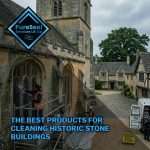
The Best Products for Cleaning Historic Stone Buildings
Historic stone buildings are an important part of the UK’s architectural heritage. From listed cottages and churches to manor houses and public buildings, these structures require specialist care to preserve their appearance and structural integrity. Cleaning historic stone is not as simple as applying a strong chemical or using a pressure washer. The wrong products can permanently damage centuries-old masonry, remove protective surface layers or accelerate deterioration.
Professional stone restoration focuses on selecting products that safely remove biological growth, atmospheric pollution and staining while protecting the stone beneath.
At
Pure Seal Services, we carefully assess every historic stone building before selecting the most appropriate cleaning products and restoration methods, ensuring the safest possible treatment for each individual property.
Why Historic Stone Requires Specialist Cleaning
Unlike modern construction materials, historic stone often becomes more delicate with age.
Many older buildings feature:
- Limestone
- Sandstone
- Bath stone
- York stone
- Granite
- Cotswold stone
- Slate detailing
- Reclaimed masonry
Each material reacts differently to cleaning products, making professional assessment essential before any work begins.
Common Problems Affecting Historic Stone
Over decades or centuries, stone buildings accumulate a wide range of contaminants.
| Problem |
Typical Appearance |
| Green algae |
Green surface growth |
| Red algae |
Red or orange staining |
| Moss |
Thick green clumps |
| Lichen |
Grey, yellow or white patches |
| Carbon staining |
Black deposits |
| Air pollution |
General darkening |
| Biological staining |
Organic discolouration |
| Efflorescence |
White salt deposits |
| Rust staining |
Orange or brown marks |
Each type of contamination requires a different cleaning product.
Why Product Selection Matters
Historic stone is often softer than modern masonry.
Incorrect products may cause:
- Surface erosion
- Permanent colour changes
- Loss of natural patina
- Mortar damage
- Chemical burns
- Increased water absorption
Professional cleaning aims to remove contamination without altering the character of the stone.
Professional Biocides
Biocides are among the most commonly used products in historic stone cleaning.
Rather than simply washing away biological growth, they eliminate it at the source.
Professional biocides help remove:
- Green algae
- Red algae
- Moss
- Lichen
- Mould
- Organic staining
Following treatment, the biological growth naturally breaks down over time, reducing the need for aggressive cleaning techniques.
Specialist Stone Cleaning Chemicals
Some staining cannot be removed using biocides alone.
Professional restoration may require specially formulated stone cleaners.
| Product Type |
Purpose |
| Biocide |
Removes biological growth |
| Carbon remover |
Removes soot deposits |
| Rust remover |
Treats iron staining |
| Efflorescence treatment |
Removes salt deposits |
| Paint remover |
Removes coatings safely |
| Graffiti remover |
Eliminates paint contamination |
Each product is selected according to both the stain and the type of stone.
Low-Pressure Cleaning Solutions
Historic stone rarely benefits from high-pressure washing.
Instead, professional cleaning often combines specialist products with low-pressure application.
Benefits include:
- Reduced erosion
- Better chemical penetration
- Protection of mortar joints
- Even cleaning
- Safer restoration
This approach allows contaminants to be removed without unnecessarily stressing fragile stonework.
Why Household Cleaners Should Never Be Used
Many household cleaning products appear effective initially but may create long-term damage.
Common products to avoid include:
- Bleach
- Patio cleaner
- Brick acid
- Hydrochloric acid
- Strong degreasers
- Abrasive powders
These products can permanently alter the appearance of historic masonry.
Steam Cleaning Products
Steam cleaning may be suitable for certain historic buildings when used alongside appropriate specialist products.
This method is often chosen because it:
- Uses minimal water
- Removes light contamination
- Reduces chemical usage
- Limits saturation
However, it is not suitable for every type of stone and should always follow a professional assessment.
Products Used for Carbon Staining
Historic buildings located near chimneys or busy roads often develop carbon staining.
Professional products are formulated to break down:
- Smoke staining
- Soot
- Traffic pollution
- Industrial deposits
These cleaners are considerably more effective than general-purpose detergents while remaining suitable for sensitive masonry when correctly applied.
Removing Paint From Historic Stone
Paint removal is one of the most delicate restoration tasks.
Professional products may include:
| Paint Type |
Suitable Professional Product |
| Masonry paint |
Specialist paint remover |
| Graffiti |
Controlled graffiti remover |
| Limewash residue |
Gentle restoration cleaner |
| Oil-based coatings |
Professional solvent system |
Selecting the wrong product risks driving paint further into porous stone.
Products for Efflorescence Removal
Efflorescence occurs when salts migrate through stone and crystallise on the surface.
Professional treatment focuses on:
- Removing salt deposits
- Identifying moisture sources
- Preventing recurrence
Aggressive acids are generally avoided on sensitive historic masonry.
Biological Growth Removal
Historic buildings often provide ideal conditions for biological growth.
Common areas include:
- North-facing walls
- Churchyards
- Garden walls
- Retaining walls
- Damp courtyards
Professional products eliminate growth while helping reduce future regrowth.
Why Test Panels Are Essential
Experienced contractors rarely clean an entire elevation immediately.
Instead they perform a trial area.
Benefits include:
| Advantage |
Why It Matters |
| Product testing |
Confirms compatibility |
| Colour assessment |
Prevents uneven appearance |
| Cleaning evaluation |
Measures effectiveness |
| Surface protection |
Reduces risk of damage |
| Client approval |
Demonstrates expected results |
Test panels are particularly important on listed or historically significant buildings.
Stone Types Require Different Products
No single cleaning product is suitable for every type of stone.
| Stone Type |
Cleaning Considerations |
| Limestone |
Sensitive to acidic products |
| Sandstone |
Highly porous |
| Granite |
More chemically resistant |
| Cotswold stone |
Soft and delicate |
| Bath stone |
Easily damaged by aggressive cleaning |
| York stone |
Requires careful pressure control |
Understanding the stone is just as important as selecting the cleaning product.
Environmental Considerations
Professional restoration also considers environmental responsibility.
Cleaning products should be used responsibly to help:
- Protect nearby planting
- Prevent unnecessary runoff
- Reduce waste
- Minimise chemical use
- Protect surrounding materials
Careful application is particularly important around churches, memorials and heritage sites.
Factors Affecting Restoration Costs
Every historic building presents unique challenges.
Pricing depends upon several factors.
| Cost Factor |
Effect on Price |
| Stone type |
Softer stone requires slower cleaning |
| Building size |
Larger elevations require more labour |
| Level of contamination |
Heavy staining increases treatment time |
| Access requirements |
Specialist access equipment may be needed |
| Listed status |
Greater care and planning required |
| Testing requirements |
Additional preparation time |
Professional restoration of historic stone buildings is a highly specialised service. Premium cleaning products, extensive testing, experienced technicians and careful restoration techniques all contribute to a higher level of workmanship. While this generally places specialist restoration at a higher price point than standard exterior cleaning, it helps protect valuable historic masonry and achieve sympathetic, long-lasting results.
Why Choose Professional Historic Stone Cleaning?
Professional restoration offers considerable advantages over DIY cleaning attempts.
| DIY Cleaning |
Professional Restoration |
| Generic chemicals |
Stone-specific products |
| Risk of permanent damage |
Carefully tested treatments |
| High-pressure washing |
Controlled cleaning methods |
| Limited knowledge |
Material-specific expertise |
| Short-term improvement |
Sensitive long-term restoration |
| Inconsistent finish |
Even, sympathetic cleaning |
At
Pure Seal Services, every historic stone cleaning project begins with a thorough assessment of the building, its stone type and the contaminants affecting it. By selecting specialist cleaning products and applying them using carefully controlled restoration methods, we help preserve the appearance, character and longevity of some of the UK’s most important stone buildings while respecting the materials that have stood for generations.
Understanding the Age of Historic Stone
One of the biggest factors influencing product selection is the age of the building. Stone that has been exposed to the British climate for hundreds of years often behaves very differently from newly quarried material.
Older stone may have:
- Increased porosity
- Weathered surfaces
- Historic repairs
- Soft lime mortar joints
- Natural patina
- Previous cleaning damage
Professional assessment helps identify these characteristics before any cleaning products are applied.
Cleaning Around Historic Mortar
Historic stone buildings frequently use lime mortar rather than modern cement mortar.
Lime mortar is intentionally softer than the surrounding stone, allowing buildings to expand and contract naturally.
Cleaning products must therefore be compatible with both the stone and the mortar.
| Mortar Type |
Cleaning Considerations |
| Lime mortar |
Requires gentle products and low-pressure cleaning |
| Hydraulic lime |
Moderate chemical resistance |
| Cement mortar |
Generally more durable but still requires careful treatment |
Damaging mortar joints can lead to costly repointing work and may compromise the building’s ability to manage moisture effectively.
Removing Pollution Without Damaging the Stone
Many historic buildings are located in towns and cities where decades of vehicle emissions and industrial pollution have accumulated on exterior walls.
These pollutants often create:
- Black surface staining
- Grey discolouration
- Carbon deposits
- Uneven weathering
Professional restoration products are formulated to break down these contaminants gradually rather than relying on harsh abrasion, helping preserve the original stone surface.
Products Used on Listed Buildings
Listed buildings often require an especially cautious approach.
Cleaning products are selected to minimise intervention while still achieving noticeable improvements.
Typical considerations include:
- Compatibility with historic masonry
- Minimal surface alteration
- Controlled application methods
- Careful dwell times
- Thorough testing before full treatment
This approach helps retain the character and authenticity of heritage buildings.
Why Abrasive Cleaning Is Usually Avoided
Historic stone should rarely be cleaned using abrasive methods.
Aggressive cleaning can:
- Remove protective weathered surfaces.
- Expose softer stone beneath.
- Increase future water absorption.
- Create patchy appearances.
- Accelerate weathering.
Professional restoration instead focuses on allowing specialist cleaning products to do most of the work before gentle rinsing removes loosened contamination.
Seasonal Considerations for Stone Cleaning
The time of year can influence the effectiveness of cleaning products.
| Season |
Considerations |
| Spring |
Ideal temperatures for many treatments |
| Summer |
Products may dry too quickly in hot weather |
| Autumn |
Suitable conditions before winter |
| Winter |
Frost and prolonged damp may delay treatment |
Experienced contractors monitor weather conditions to ensure products perform as intended.
Areas That Often Require Individual Treatment
Not every section of a building accumulates contamination at the same rate.
Certain areas usually require additional attention, including:
- Chimneys
- Window surrounds
- Doorways
- Decorative stone carvings
- Cornices
- Copings
- Boundary walls
- Entrance steps
These features often need carefully targeted cleaning rather than treating the entire building identically.
Balancing Cleaning and Preservation
Historic stone restoration is about achieving the right balance.
Removing every mark is not always appropriate, particularly on buildings where natural ageing contributes to their character.
Professional cleaning aims to remove:
- Harmful biological growth
- Heavy pollution
- Carbon staining
- Unsightly discolouration
while preserving:
- Natural weathering
- Historic tool marks
- Original stone texture
- Architectural character
This sympathetic approach is one of the defining features of professional heritage restoration.
Maintaining Historic Stone After Cleaning
Regular maintenance can significantly reduce the need for major restoration work in the future.
Good maintenance practices include:
| Maintenance Task |
Benefit |
| Annual inspections |
Identify contamination early |
| Removing moss promptly |
Prevents moisture retention |
| Keeping gutters clear |
Reduces water staining |
| Monitoring vegetation |
Limits biological growth |
| Addressing drainage issues |
Helps keep masonry dry |
Small maintenance tasks often prevent much larger restoration projects later.
Protecting Architectural Features
Historic buildings frequently contain decorative stonework that requires additional care during cleaning.
Examples include:
- Stone columns
- Carved lintels
- Decorative arches
- Window mouldings
- Statues
- Memorial plaques
- Ornamental cornices
These features often have intricate details that can trap dirt and biological growth while also being more vulnerable to damage from inappropriate cleaning methods.
Professional cleaning products are applied with precision to preserve these important architectural elements.
Why Experience Matters in Heritage Restoration
Historic stone cleaning is a specialist discipline that combines knowledge of traditional building materials with modern restoration techniques.
Experienced professionals understand how to:
- Identify different stone types.
- Recognise previous repair work.
- Select compatible cleaning products.
- Adjust application methods for delicate areas.
- Achieve consistent results across ageing masonry.
This expertise helps reduce the risk of accidental damage while producing sympathetic restoration results.
Choosing the Right Specialist
When selecting a contractor for historic stone cleaning, it is worth considering more than price alone.
Questions to ask include:
| Question |
Why It Is Important |
| Do they assess the stone before cleaning? |
Every building is different |
| Do they carry appropriate insurance? |
Protects valuable properties |
| Do they complete test areas? |
Confirms suitable products |
| Do they understand heritage materials? |
Reduces the risk of damage |
| Do they tailor the cleaning process? |
Avoids generic methods |
Historic buildings represent a significant investment, and choosing an experienced specialist helps protect both their appearance and long-term condition.
Investing in Professional Historic Stone Cleaning
Cleaning a historic stone building requires considerably more planning and expertise than standard exterior cleaning. Careful product selection, detailed testing, controlled application techniques and a thorough understanding of traditional masonry all contribute to the quality of the finished result.
At
Pure Seal Services, every restoration project is approached individually. By assessing the condition of the stone, identifying the type of contamination and selecting specialist products designed for sensitive masonry, we help restore the appearance of historic buildings while respecting their original materials and architectural heritage. Although this level of service commands a premium price compared with basic cleaning, it reflects the skill, care and attention required to preserve some of the UK’s most valuable stone structures.




 Artificial and Sports Surfaces
 Awnings / Canopies / Gazebos
 Block Paving
 Brickwork
 Composite Surfaces
 Decking / Timber
 Granite
 Imprinted Concrete
 Internal Masonry
 Limestone
 Marble
 Metal Cladding
 Polished or Honed Stone
 Porcelain
 Render
 Resin Bond
 Road and Rail Signs
 Roof Tiles / Slates
 Sandstone
 Slate
Slate Solar Panels and Glass
 Stone Sills and Pier Caps
 Tarmac and Asphalt
 Gutters & UPVC
 Acid Damage
 Biofilm
 Bitumen
 Blood
Blood Carbon
 Concrete / Grout / Mortar
 Copper Oxide
 Efflorescence
 Egg
Egg Failed Sealer
 Fire Damage
 Fuel / Oil
 Graffiti
 Grease / Fat / Cooking Oil
 Lawn Fertiliser
 Lead Carbonate
 Lead Oxide
 Paint Splashes
 Rust
Rust Tar & Glue
 Tannin Removers
 Traffic Film Removers
 Trapped Moisture / Sealer Repairs
 Urine Neutralisers