
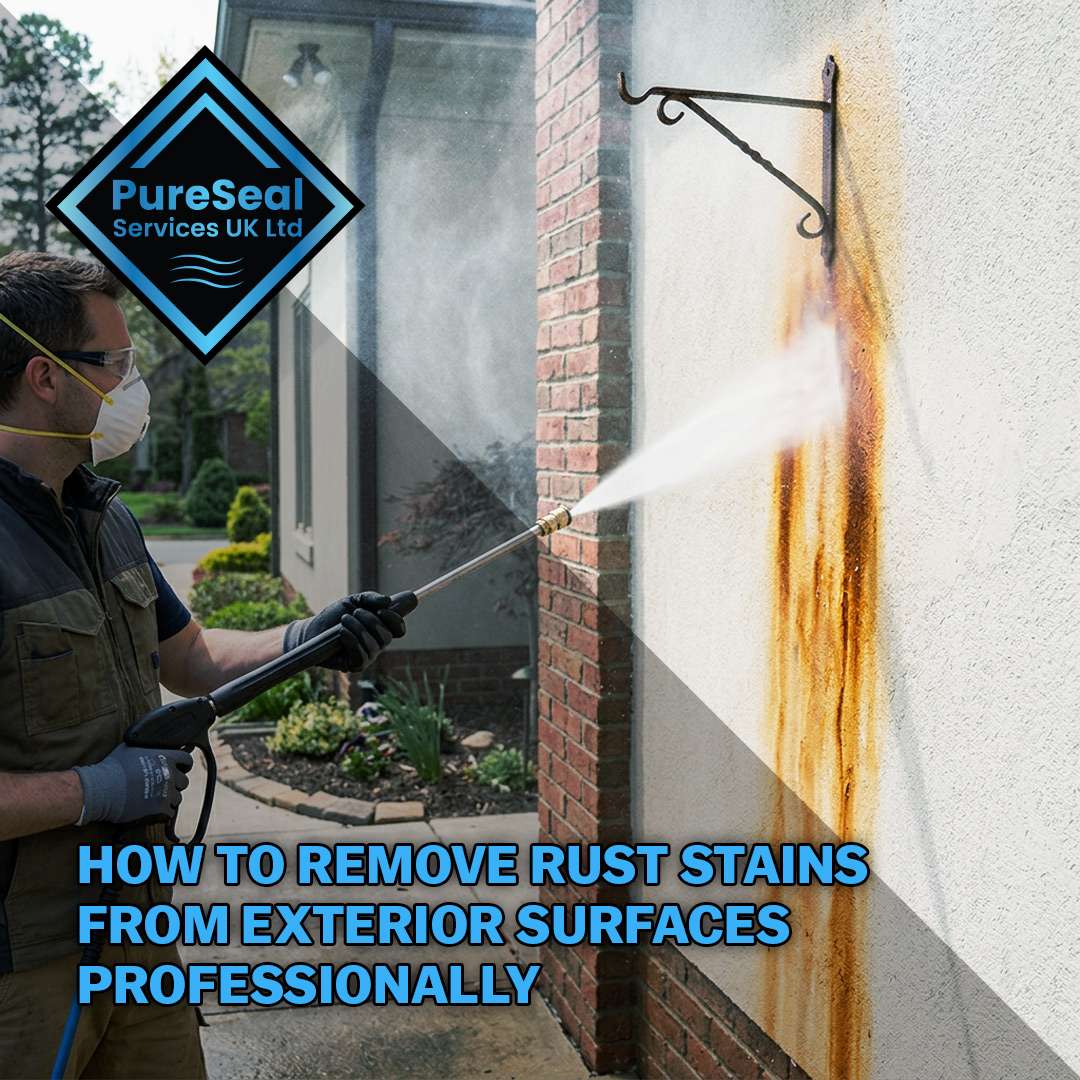
How to Remove Rust Stains From Exterior Surfaces Professionally
Written by PureSeal Services on . Posted in Approved Applicators, Blog, Pressure Washing
How to Remove Rust Stains From Exterior Surfaces Professionally
Rust stains are among the most stubborn marks found on exterior surfaces. Whether they appear on block paving, natural stone, concrete, render or brickwork, they can significantly reduce a property’s appearance and often become more noticeable over time.
Many homeowners attempt to remove rust stains using household products or excessive pressure washing, only to find the staining remains or the surface becomes damaged. Professional rust stain removal uses specialist products, experience and the correct techniques to lift stains safely while preserving the material underneath.
At Pure Seal Services, every exterior surface is assessed before treatment to determine the safest and most effective cleaning method. Because different materials react differently to rust removal products, a professional approach helps achieve the best possible results while reducing the risk of permanent damage.
What Causes Rust Stains Outside?
Rust staining occurs when iron reacts with oxygen and moisture, creating iron oxide. Rainwater then carries these particles across surrounding surfaces, leaving orange, brown or reddish marks.
Common sources include:
- Garden furniture
- Metal planters
- Gates
- Railings
- Fence fixings
- Rusting drain covers
- Air conditioning units
- Leaking pipes
- Roofing fixings
- Structural steel
- Scaffolding
- Tools left outdoors
Sometimes the source of the staining is obvious, while in other cases the rust may be travelling from hidden fixings behind render or beneath paving.
Why Rust Stains Can Be Difficult to Remove
Unlike surface dirt or algae, rust chemically bonds with many porous materials.
This means ordinary cleaning often fails because it only removes surface contamination.
Professional removal requires breaking down the iron deposits without damaging the surface itself.
The older the stain becomes, the more challenging it can be to remove completely.
Surfaces That Commonly Develop Rust Staining
Rust affects a wide range of exterior materials.
| Surface | Rust Stain Risk |
|---|---|
| Block paving | High |
| Concrete | High |
| Natural stone | Medium to High |
| Sandstone | High |
| Limestone | Medium |
| Brickwork | Medium |
| Render | Medium |
| Porcelain paving | Low |
| Roof tiles | Medium |
| Driveways | High |
Different surfaces require different cleaning techniques due to their varying levels of porosity and chemical resistance.
Why Pressure Washing Alone Doesn’t Remove Rust
Many people assume pressure washing will remove everything.
Unfortunately, rust doesn’t work that way.
Pressure washing may remove:
- Dirt
- Mud
- Moss
- Green algae
- Red algae
- Lichen (to a degree)
However, rust stains usually remain because they have penetrated into the surface.
Using higher pressure rarely improves results and may instead damage:
- Pointing
- Render
- Stone
- Concrete finishes
- Decorative paving
- Protective coatings
Professional contractors know when chemical treatment is required rather than simply increasing water pressure.
Identifying the Source of the Rust
Before cleaning begins, it’s important to identify where the staining originates.
Common examples include:
| Source | Typical Location |
|---|---|
| Rusty fence posts | Patios |
| Metal furniture | Paving |
| Downpipe brackets | Brickwork |
| Air conditioning units | Concrete |
| Roof fixings | Walls |
| Drain covers | Driveways |
| Steel beams | Commercial buildings |
Removing the stain without addressing the cause usually results in the marks returning.
Why Surface Identification Matters
Every material reacts differently to rust removal chemicals.
For example:
- Sandstone is more delicate than concrete.
- Limestone requires greater care than block paving.
- Painted render needs different treatment from bare masonry.
- Some sealers can react with acidic cleaners.
Professional assessment helps determine:
- Surface composition.
- Previous sealants.
- Existing damage.
- Chemical compatibility.
- Appropriate dwell times.
Skipping this stage can lead to expensive repairs.
Professional Rust Removal Products
Specialist rust removers are formulated specifically for exterior surfaces.
Unlike household cleaners, professional products are designed to dissolve iron staining while limiting damage to surrounding materials.
Depending on the surface, treatments may include products that:
- Break down iron oxide.
- Neutralise staining.
- Lift embedded contamination.
- Restore appearance.
- Prepare surfaces for further cleaning if required.
The exact product selection depends entirely on the material being treated.
Why Household Remedies Often Fail
Online advice commonly recommends products such as:
- Vinegar
- Lemon juice
- Baking soda
- Cola
- Bleach
While these may have limited success on very light staining, they rarely remove established exterior rust marks.
Some household products may even make matters worse by:
- Bleaching surrounding areas.
- Etching stone.
- Damaging sealants.
- Causing uneven colouring.
Professional products are specifically formulated for these types of stains.
The Professional Rust Removal Process
Every project differs slightly, but the process generally follows a structured approach.
| Stage | Purpose |
|---|---|
| Inspection | Assess staining and surface |
| Surface testing | Check chemical compatibility |
| Preparation | Protect surrounding areas |
| Rust treatment | Apply specialist remover |
| Controlled dwell time | Allow product to work |
| Agitation where required | Lift stubborn staining |
| Thorough rinsing | Remove residues |
| Final inspection | Assess remaining marks |
This systematic approach helps maximise results while protecting the surface.
Can Every Rust Stain Be Removed?
Not always.
Several factors influence the outcome.
These include:
- Age of staining.
- Surface type.
- Depth of penetration.
- Previous cleaning attempts.
- Existing damage.
- Mineral composition.
While many stains can be significantly reduced or completely removed, very old or deeply embedded rust may leave faint traces.
An experienced contractor will set realistic expectations before work begins.
Rust on Block Paving
Block paving is one of the most common surfaces affected.
Rust frequently develops from:
- Garden furniture.
- Wheelbarrows.
- Skip placement.
- Builders’ materials.
- Metal plant pots.
Because block paving is porous, stains can penetrate surprisingly deeply.
Professional treatment focuses on removing the rust while preserving both the blocks and jointing sand.
Rust on Natural Stone
Natural stone requires additional care.
Different stones absorb chemicals differently.
Examples include:
| Stone Type | Cleaning Considerations |
|---|---|
| Sandstone | Highly porous |
| Limestone | Acid sensitive |
| Granite | Dense surface |
| Slate | Generally more resistant |
| York stone | Variable absorption |
Testing a small area first is always advisable.
Rust Stains on Render
Render can become stained from:
- Metal fixings.
- Pipe brackets.
- Window fittings.
- Balcony fixings.
- Overflow pipes.
Because render often has coloured finishes, aggressive cleaning methods should be avoided.
The objective is to remove staining while preserving the render’s original appearance.
Commercial Rust Removal
Commercial buildings frequently develop rust around:
- Roller shutters.
- Steel framework.
- Warehouse doors.
- Loading bays.
- External staircases.
- Fire escapes.
Professional cleaning improves appearance while supporting ongoing property maintenance.
Safety During Rust Removal
Professional contractors take several precautions before applying cleaning chemicals.
These may include:
- Protecting nearby plants.
- Wetting surrounding areas where appropriate.
- Wearing suitable PPE.
- Controlling runoff.
- Following manufacturer guidance.
- Using the correct dilution rates.
Proper preparation contributes to safer and more effective cleaning.
Should Rust Removal Be Combined With Exterior Cleaning?
Often, yes.
Rust stains are frequently only one part of the overall cleaning project.
Additional services may include:
- Patio cleaning.
- Driveway cleaning.
- Render cleaning.
- Roof cleaning.
- Wall cleaning.
- Soft washing.
- Biocide treatments.
Treating the entire surface rather than isolated stains often produces a more consistent final appearance.
Preventing Rust Stains Returning
Removing the original source remains the most effective prevention.
Practical steps include:
| Prevention Method | Benefit |
|---|---|
| Replace rusting fixings | Stops future staining |
| Maintain painted metal | Prevents corrosion |
| Lift metal furniture | Reduces contact staining |
| Repair leaking brackets | Eliminates runoff |
| Inspect roof fixings | Prevents wall staining |
| Routine maintenance | Detects problems early |
Preventative maintenance is usually far easier than repeatedly removing established stains.
Why Experience Makes a Difference
Professional rust removal isn’t simply about choosing a stronger cleaning product.
Success depends on understanding:
- Surface chemistry.
- Cleaning reactions.
- Material sensitivity.
- Product compatibility.
- Safe application techniques.
- Environmental considerations.
Applying the wrong product can permanently alter certain exterior materials, making experience particularly valuable.
When to Call a Professional
Some very light rust marks may respond to simple cleaning, but professional assistance is often worthwhile when:
- Stains have been present for months or years.
- Large areas are affected.
- Delicate natural stone is involved.
- Render has become stained.
- Previous cleaning attempts have failed.
- Commercial properties require restoration.
- You want the best possible finish without risking surface damage.
Premium exterior cleaning services focus on delivering long-lasting, high-quality results rather than quick fixes. Investing in professional assessment, specialist products and proven cleaning techniques can often restore exterior surfaces far more effectively than repeated DIY attempts. For homeowners and businesses looking to improve kerb appeal while protecting valuable exterior materials, Pure Seal Services provides professional exterior cleaning solutions tailored to the specific surface and level of staining, helping achieve outstanding results through careful preparation and expert application without compromising the integrity of the property.
Understanding the Difference Between Surface Rust and Embedded Rust
Not all rust stains are the same. Before beginning any cleaning process, a professional contractor will determine whether the staining is sitting on the surface or has penetrated into the material.
Surface rust is generally newer and easier to treat, while embedded rust has often been exposed to repeated rainfall and oxidation, allowing it to work its way into the pores of the surface.
| Type of Rust Stain | Characteristics | Removal Difficulty |
|---|---|---|
| Surface rust | Recent staining with limited penetration | Low |
| Light embedded rust | Visible discolouration below the surface | Moderate |
| Heavy embedded rust | Long-established staining with deep penetration | High |
| Reoccurring rust | Continues to return due to an unresolved source | High |
Understanding the depth of the stain helps determine the most suitable treatment and provides realistic expectations before work begins.
Weather Conditions Matter
Professional rust removal isn’t simply about applying a cleaning product whenever it’s convenient.
Weather plays an important role in achieving consistent results.
Ideal conditions generally include:
- Dry surfaces before treatment.
- Mild temperatures.
- Minimal wind.
- No heavy rain forecast during application.
- Suitable drying conditions afterwards.
Extremely hot weather may cause certain products to dry too quickly, reducing their effectiveness, while heavy rain can dilute treatments before they’ve had time to work properly.
Planning work around suitable weather conditions helps maximise the effectiveness of the cleaning process.
Why DIY Scrubbing Can Make Things Worse
Many homeowners instinctively reach for a wire brush when they discover rust stains.
Unfortunately, this often creates additional problems.
Aggressive scrubbing can:
- Scratch paving.
- Remove protective coatings.
- Damage painted surfaces.
- Leave permanent abrasion marks.
- Spread metal particles across surrounding areas.
Using the wrong tools can leave the surface looking worse than before the cleaning even started.
Professional contractors select cleaning equipment that is appropriate for the specific material being treated.
Rust Around Metal Fixtures
One of the most common places rust staining develops is around external fixtures.
Examples include:
- Gate hinges.
- Fence brackets.
- Handrails.
- Outdoor lighting.
- Security barriers.
- Balcony fixings.
Even small amounts of corrosion can create noticeable staining once rainwater begins carrying rust onto surrounding brickwork or paving.
Replacing or repairing corroded fixtures after cleaning helps prevent the same problem returning.
Don’t Forget Vertical Surfaces
When people think about rust stains, they often picture driveways or patios.
However, vertical surfaces can be equally affected.
Rust frequently appears on:
- Garden walls.
- Brick pillars.
- Rendered elevations.
- Boundary walls.
- Retaining walls.
- Garage walls.
Cleaning vertical surfaces requires careful application to avoid streaking while ensuring the treatment remains in contact with the stain for long enough to work effectively.
The Importance of Testing Before Full Application
Professional exterior cleaning contractors rarely begin by treating the entire stained area immediately.
Instead, a discreet test area is often cleaned first.
Testing allows the contractor to assess:
| Test Objective | Why It’s Important |
|---|---|
| Product compatibility | Prevents unwanted reactions |
| Surface colour stability | Protects decorative finishes |
| Cleaning effectiveness | Confirms suitable treatment |
| Required dwell time | Optimises results |
| Need for repeat applications | Sets customer expectations |
This careful approach helps avoid unnecessary risks, particularly on premium exterior finishes.
Combining Rust Removal With General Surface Restoration
Once rust stains have been removed, other imperfections often become more noticeable.
Professional exterior cleaning projects may therefore include additional restoration work such as:
- Removing black spot from paving.
- Eliminating algae and biological growth.
- Cleaning atmospheric pollution.
- Removing traffic film.
- Washing external walls.
- Restoring original surface colour.
Treating the entire area rather than isolated stains usually produces a more uniform appearance.
Why Older Properties Need Extra Care
Traditional properties often feature softer construction materials than modern homes.
Older buildings may include:
- Handmade bricks.
- Lime mortar.
- Natural sandstone.
- Historic stonework.
- Decorative masonry.
These materials require more careful treatment than dense modern concrete products.
Using harsh chemicals or excessive pressure could damage surfaces that have remained intact for decades.
A professional assessment is particularly valuable when working on older homes.
Rust Caused by Irrigation Systems
Automatic watering systems can contribute to rust staining without homeowners realising.
If groundwater contains naturally occurring iron, repeated watering may gradually leave orange staining on:
- Paths.
- Walls.
- Driveways.
- Decorative stone.
- Garden edging.
In these situations, cleaning alone will not permanently solve the problem.
Identifying the source allows appropriate adjustments to be made to reduce future staining.
Maintaining Exterior Surfaces After Rust Removal
Once professional cleaning has restored the surface, regular maintenance helps keep it looking its best.
Simple maintenance practices include:
- Removing metal objects that trap moisture.
- Inspecting outdoor fixtures for corrosion.
- Washing away dirt before stains become established.
- Repairing damaged paint on metalwork.
- Keeping drainage systems flowing correctly.
Routine inspections often identify small problems before they develop into extensive staining.
Why Cheap Rust Removal Can Become Expensive
Choosing a contractor purely on price can sometimes prove costly.
Low-cost services may involve:
- Inappropriate chemicals.
- Limited preparation.
- Insufficient testing.
- Rushed application.
- Inadequate rinsing.
- Lack of experience with delicate surfaces.
Although a premium service may involve a higher initial investment, customers are often paying for experience, specialist knowledge and greater attention to detail.
This can reduce the risk of accidental surface damage and improve the overall finish.
Questions Worth Asking Before Booking
Choosing the right contractor involves more than comparing quotations.
Consider asking:
| Question | Why It Matters |
|---|---|
| Have you treated this surface before? | Demonstrates relevant experience |
| Will you inspect the staining first? | Shows a professional approach |
| Do you test products before cleaning? | Helps protect the surface |
| Can you identify the cause of the rust? | Prevents repeat staining |
| Will the surrounding area be protected? | Reduces the risk of collateral damage |
| What results should I realistically expect? | Sets clear expectations |
These questions provide a better understanding of how thoroughly the work will be carried out.
Professional Results Take Time
Effective rust removal is rarely an instant process.
Depending on the age and severity of the staining, contractors may need to:
- Apply more than one treatment.
- Allow suitable dwell times.
- Reassess the surface after rinsing.
- Carry out further spot treatments.
- Carefully blend cleaned sections into surrounding areas.
Patience often produces significantly better results than attempting to rush the process.
Protecting Kerb Appeal
Rust staining is often one of the first things visitors notice when approaching a property.
Even relatively small marks around gates, driveways or pathways can make an otherwise well-maintained home appear neglected.
Professional rust removal helps restore:
- Cleaner paving.
- Brighter walls.
- More attractive entrances.
- Improved first impressions.
- Greater overall kerb appeal.
For businesses, maintaining clean exterior surfaces can also contribute to a more professional image for customers, visitors and staff.
Investing in Professional Exterior Cleaning
Professional rust stain removal is about far more than simply removing orange marks from brickwork or paving. It involves understanding how different materials react, selecting the correct treatment for each surface and carrying out the work carefully to preserve the integrity of the property.
By using appropriate cleaning methods and addressing the source of the staining wherever possible, exterior surfaces can often be restored to a much cleaner and more attractive condition. Homeowners and commercial property owners looking for a premium service can benefit from the experience, specialist equipment and attention to detail offered by Pure Seal Services, helping ensure rust stains are treated professionally while protecting the long-term appearance of the property’s exterior.
Tags: gutter cleaning, window cleaning, Patio cleaning, Driveway cleaning, pressure washing, Roof Cleaning, Exterior cleaning
 Artificial and Sports Surfaces
 Awnings / Canopies / Gazebos
 Block Paving
 Brickwork
 Composite Surfaces
 Decking / Timber
 Granite
 Imprinted Concrete
 Internal Masonry
 Limestone
 Marble
 Metal Cladding
 Polished or Honed Stone
 Porcelain
 Render
 Resin Bond
 Road and Rail Signs
 Roof Tiles / Slates
 Sandstone
 Slate
Slate Solar Panels and Glass
 Stone Sills and Pier Caps
 Tarmac and Asphalt
 Gutters & UPVC
 Acid Damage
 Biofilm
 Bitumen
 Blood
Blood Carbon
 Concrete / Grout / Mortar
 Copper Oxide
 Efflorescence
 Egg
Egg Failed Sealer
 Fire Damage
 Fuel / Oil
 Graffiti
 Grease / Fat / Cooking Oil
 Lawn Fertiliser
 Lead Carbonate
 Lead Oxide
 Paint Splashes
 Rust
Rust Tar & Glue
 Tannin Removers
 Traffic Film Removers
 Trapped Moisture / Sealer Repairs
 Urine Neutralisers