

The Little-Known Trick to Clean Gutters Safely and Effectively
What Is the Little-Known Trick for Cleaning Gutters?
Keeping your gutters clean might not sound glamorous, but it’s one of the most essential home maintenance jobs. Clogged gutters lead to overflowing water, damp walls, and even structural damage if ignored for too long.
In the UK’s rainy climate, gutters fill quickly with leaves, moss, and roof grit. The challenge isn’t just cleaning them — it’s doing it safely and efficiently.
So, what’s the little-known trick that makes gutter cleaning easier, safer, and longer-lasting?
It’s a combination of vacuum cleaning from the ground using extension poles and preventive treatment — a modern approach that replaces risky ladder work with professional-grade suction systems and follow-up biocide or mesh protection.
Let’s explore what this means in practice, along with detailed costs, pros and cons of each method, and how to keep your gutters clean all year long.
Why Clean Gutters Matter So Much
Gutters are designed to channel rainwater from your roof into downpipes and safely away from your property. When debris builds up, that system fails.
Blocked gutters can cause:
-
Water overflowing onto walls, leading to damp patches.
-
Damage to fascias and soffits.
-
Rotten timber and peeling paintwork.
-
Staining on brickwork.
-
Foundation erosion and puddling around the base of the house.
-
Extra weight on brackets, causing sagging or breakage.
In a typical UK home, it only takes one or two seasons of neglect for these problems to appear. Regular cleaning is much cheaper than repairing water damage later.
The “Little-Known Trick”: Gutter Vacuum Systems
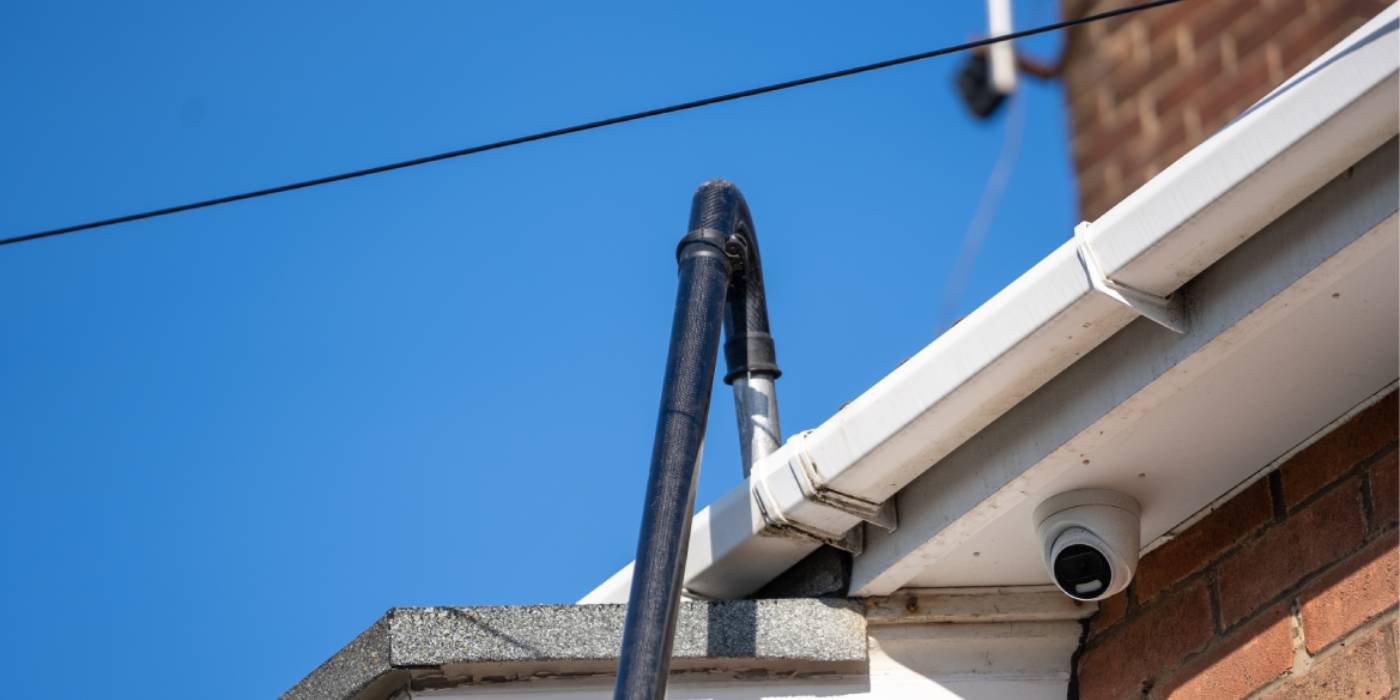
The modern “secret weapon” in gutter maintenance is the gutter vacuum system — a professional setup that allows technicians to clean gutters from the ground using long carbon-fibre poles and a high-power wet-and-dry vacuum.
Instead of climbing ladders or walking along rooflines, the operator stays safely on the ground while the vacuum sucks out leaves, moss, and sludge up to 40 feet high. A camera attached to the pole ensures no debris is missed.
Why It’s Considered a “Little-Known Trick”
Although professional roofers and window cleaners have used this technology for years, many homeowners still think gutter cleaning means climbing up with a scoop and bucket. The gutter vac method is faster, safer, cleaner, and surprisingly affordable.
How the Gutter Vacuum Method Works
-
Inspection: A telescopic inspection camera identifies blockages, standing water, and broken sections.
-
Setup: Extension poles are connected to the vacuum unit.
-
Cleaning: The operator moves along the property, vacuuming debris through the poles.
-
Disposal: Waste (leaves, sludge, moss) is collected in the vacuum drum for easy disposal.
-
Final Check: A camera re-check ensures gutters are clear and flowing.
This process eliminates the mess of scooping by hand, and because the operator remains grounded, there’s no ladder risk or roof damage.
Table 1 – Comparison: Traditional vs. Gutter Vacuum Cleaning
| Feature | Traditional Ladder Cleaning | Gutter Vacuum Cleaning |
|---|---|---|
| Safety | High fall risk | Ground-based, safe |
| Speed | Slower; ladder repositioning needed | 3× faster |
| Access | Hard to reach over conservatories | Reaches 3-storey gutters easily |
| Mess | Debris often falls to ground | Waste contained in vacuum drum |
| Precision | Visual check only | Camera-guided inspection |
| Average Cost (UK) | £60–£150 per house | £70–£180 depending on height |
| Environmental Impact | Manual, low impact | Similar; minimal water use |
Typical Costs for Gutter Cleaning in the UK
The cost of gutter cleaning depends on property type, access, and whether you choose ladder or vacuum-based service.
Table 2 – Average Gutter Cleaning Costs (2025 UK Prices)
| Property Type | One-Off Clean (Manual) | Vacuum Clean (Camera-Assisted) |
|---|---|---|
| 1-bed flat / bungalow | £50–£70 | £60–£90 |
| 2-bed terraced house | £60–£100 | £80–£120 |
| 3-bed semi-detached | £80–£130 | £100–£150 |
| 4-bed detached | £120–£180 | £140–£200 |
| Large detached / townhouse | £180–£250 | £200–£280 |
Extras like downpipe flushing (£15–£40) or gutter repairs (£50–£150 per section) may add to the total.
Prices are often cheaper when booked as part of a roof moss removal or exterior cleaning package, since the same access equipment can be used.
The Secret Second Step: Preventive Treatment
Cleaning alone solves today’s blockage — but to stop future build-up, professionals often apply a biocide wash or install gutter mesh guards afterward. This is the real “two-part trick” for long-term results.
Biocide Treatment
After cleaning, a mild roof-safe biocide is sprayed along the gutter edges and roofline. This kills moss spores and algae before they regrow and wash back into the gutters.
-
Average cost: £1.50–£2.50 per metre.
-
Effect duration: 2–4 years depending on climate.
-
Benefit: Reduces maintenance frequency by up to 50%.
Gutter Mesh Guards
Mesh or brush inserts fit inside the gutter channel, letting water pass while blocking large debris.
-
Material cost: £4–£8 per metre (installed).
-
Lifespan: 5–10 years.
-
Best for: Homes near trees or heavy leaf fall areas.
Table 3 – Preventive Treatments Compared
| Treatment Type | Purpose | Cost Range (per metre) | Longevity | Maintenance |
|---|---|---|---|---|
| Biocide spray | Stops moss/algae regrowth | £1.50–£2.50 | 2–4 years | Reapply periodically |
| Mesh gutter guard | Blocks leaves and debris | £4–£8 | 5–10 years | Check annually |
| Brush insert (hedgehog) | Catches large debris | £5–£9 | 5 years | Remove to clean |
| Full cover guard system | Permanent aluminium cover | £8–£15 | 10+ years | Minimal |
A combination of vacuum cleaning + biocide is often the most cost-effective and efficient method for typical UK homes.
Why Gutter Cleaning Often Gets Neglected
Most homeowners don’t notice blocked gutters until they overflow or leak during heavy rain. Gutter systems are largely out of sight — and so they become out of mind. Common reasons people postpone cleaning include:
-
Fear of heights or ladder use.
-
Assuming “no visible problem means it’s fine.”
-
Lack of time or proper equipment.
-
Waiting for damage to appear before acting.
Neglect, however, can lead to expensive repairs. In damp climates like Britain’s, constant overflow can soak brickwork, rot soffits, and even cause mould inside walls.
Table 4 – Consequences of Ignoring Blocked Gutters
| Problem | Likely Repair Cost | Description |
|---|---|---|
| Damp interior walls | £400–£1,000 | Moisture ingress from overflowing gutters. |
| Rotten fascia boards | £300–£800 | Water exposure destroys timber fascias. |
| Foundation erosion | £1,000–£3,000 | Persistent pooling around property base. |
| Gutter bracket failure | £150–£400 | Weight of debris pulls gutter loose. |
Routine cleaning once or twice per year is far cheaper than dealing with these consequences.
The Safest Way to Clean Gutters Yourself
If you prefer to tackle the job personally, you can do so safely with the right preparation and tools.
Equipment checklist:
-
Stable ladder with safety stabiliser or footing.
-
Gutter scoop or trowel.
-
Bucket and rope for debris collection.
-
Garden hose or pressure washer (low setting).
-
Work gloves and safety glasses.
Steps for manual cleaning:
-
Check the ladder on level ground and secure it.
-
Scoop debris from the gutter section by section.
-
Flush each section with water to check flow.
-
Inspect downpipes for blockages and use a hose or flexible rod to clear them.
-
Rinse surroundings and check that water runs freely from outlets.
Safety Note:
Never overreach from a ladder. Move the ladder frequently, keeping your belt buckle between the rails. For two-storey or higher properties, professional help is recommended.
Gutter Cleaning Frequency and Maintenance Schedule
Frequency depends on your environment and roof type.
Table 5 – Recommended Cleaning Intervals
| Surroundings | Suggested Cleaning Frequency |
|---|---|
| Urban area, few trees | Once per year (autumn or spring) |
| Suburban with moderate foliage | Twice per year |
| Rural / heavily wooded area | 3–4 times per year |
| After storms or strong winds | Immediate inspection recommended |
Homeowners who use a biocide treatment or install mesh guards can often extend these intervals safely.
Tools and Accessories That Make It Easier
Aside from professional vacuums, several clever accessories make DIY cleaning much easier — and they’re available at affordable prices.
Table 6 – Useful Gutter Cleaning Tools
| Tool | Average UK Price | Use |
|---|---|---|
| Telescopic gutter wand | £20–£50 | Attaches to hose; allows ground-level rinsing |
| Gutter scoop set | £10–£15 | Manual debris removal |
| Inspection camera (wireless) | £50–£100 | Lets you see blockages without climbing |
| Wet/dry vacuum adapter | £25–£60 | Converts home vacuum for light use |
| Safety stabiliser bar | £30–£70 | Keeps ladder steady and away from wall |
Investing in a few of these tools pays off quickly if you maintain your own property.
Regional Labour and Service Considerations
Labour rates for professional cleaning vary depending on region, access complexity, and property type.
-
London and South East: Highest due to labour and travel time.
-
North and Midlands: Generally more affordable.
-
Coastal regions: Slightly higher due to salt build-up and marine exposure.
Most companies offer discounts for regular maintenance contracts, often saving 10–20% compared to one-off visits.
The Hidden Benefit: Protecting Roof and Fascia Longevity
Clean gutters are more than a cosmetic issue — they protect your roof’s structural elements. When gutters overflow, water seeps behind fascias, softening wood and eventually causing paint to peel and mould to form.
Over time, this accelerates decay, leading to expensive carpentry repairs. Preventive gutter cleaning keeps these areas dry, extending the life of your roofline by several years.
Table 7 – Roofline Maintenance Cost Comparison
| Task | Typical Cost | Benefit |
|---|---|---|
| Gutter clean + inspection | £100–£150 | Prevents leaks and overflows |
| Fascia board replacement | £800–£1,500 | Fixes rot damage from overflow |
| Full roofline refit (fascia, soffit, gutter) | £2,500–£4,000+ | Restores water management system |
Regular cleaning can prevent the need for major refurbishment work entirely.
DIY vs. Professional Gutter Cleaning: Which Is Better?
Both approaches have their place, but the deciding factors are usually height, accessibility, and time.
Table 8 – DIY vs. Professional Cleaning Comparison
| Criteria | DIY | Professional |
|---|---|---|
| Safety | Risk from ladders | Ground-based, insured |
| Cost | £0–£50 (tools) | £70–£200 average |
| Quality of Clean | Depends on skill | Camera-verified |
| Time Required | 2–4 hours | 30–90 minutes |
| Insurance Coverage | None | Usually insured up to £5 million |
| Frequency of Cleaning | As needed | Scheduled annually |
For single-storey homes, DIY can be cost-effective. For two-storey or complex roofs, professionals are safer and usually produce cleaner, more consistent results.
Environmental Considerations
Modern gutter cleaning methods have minimal environmental impact. Vacuum systems use no harsh chemicals and very little water. When biocide is used, responsible professionals choose biodegradable formulations.
Collected debris (mainly leaves and moss) can often be composted, keeping waste out of landfills. Many companies now offer eco-cleaning packages using entirely chemical-free steam or vacuum systems.
The Real Trick: Combine Cleaning with Prevention
The real “little-known trick” isn’t just the vacuum technology — it’s the mindset of combining cleaning and prevention.
-
Clean the gutters safely and thoroughly using a vacuum system.
-
Flush downpipes and apply biocide to prevent regrowth.
-
Install mesh or brush guards for long-term protection.
-
Book annual inspections before heavy rain seasons.
This four-step approach ensures you spend less time worrying about blockages and more time with peace of mind that your roof drainage is performing properly.
Frequently Asked Questions
Is gutter cleaning really necessary every year?
Yes, especially in the UK’s wet climate. Even without nearby trees, roof grit and moss wash down from tiles and accumulate in gutters.
Will gutter guards eliminate the need for cleaning?
They greatly reduce debris build-up but still need occasional checks, especially after storms or heavy leaf fall.
Can I clean gutters myself without a ladder?
Yes. A telescopic gutter vacuum or hose wand can reach two-storey gutters from the ground.
What happens if I don’t clean my gutters?
Overflowing water can damage fascias, soffits, walls, and even the foundation of your home. Repair costs are usually several times higher than cleaning fees.
How long does professional gutter cleaning take?
For most homes, 45 to 90 minutes. Larger properties may take two to three hours depending on access.
Example Annual Maintenance Plan
| Month | Recommended Task |
|---|---|
| March–April | Spring inspection and light clean if moss growth visible. |
| June–July | Optional biocide application for roofline. |
| September–October | Full clean after leaf fall season. |
| December–January | Quick gutter check for blockages after storms. |
Scheduling work during drier months ensures safe access and better results.
Final Thoughts
The little-known trick for cleaning gutters isn’t a fancy chemical or hidden gadget — it’s about combining modern vacuum systems, preventive treatments, and routine care.
By switching from risky ladder work to ground-based vacuum cleaning, homeowners save time, stay safe, and achieve a cleaner, longer-lasting result.
Adding a simple biocide or gutter guard afterwards keeps blockages away for years, meaning fewer call-outs and less chance of expensive water damage.
For most UK homes, spending £100–£150 once a year on a professional vacuum clean and treatment can prevent thousands of pounds in repairs down the line.
In short: the trick isn’t just cleaning — it’s cleaning smartly.
Use safe modern methods, add preventive care, and your gutters will protect your home for decades to come.
Signs Your Gutters Need Immediate Attention
Most homeowners only think about their gutters when water starts pouring over the sides during a storm. But long before that happens, there are subtle signs that your gutters need cleaning or repair. Spotting them early saves time and money.
Common warning signs include:
-
Overflow during light rain — indicates partial blockage or sagging sections.
-
Plants growing in the gutters — seeds germinate easily in damp debris.
-
Visible sagging or bending — gutters are likely full and pulling away from brackets.
-
Peeling paint or dark stains on fascia boards — a sign of trapped moisture.
-
Pooling water near foundations — suggests downpipe blockages or disconnected outlets.
-
Bird or insect activity — nests often form in clogged areas.
Ignoring these signals can turn a £100 cleaning job into a £500 repair. Early action is always cheaper and safer.
The Role of Downpipes in Gutter Performance
Downpipes are the vertical sections that carry water from the gutters to the ground or drain system. Even if your gutters look clear, a blocked downpipe can stop the entire system from draining.
Most downpipe blockages occur at the elbows and joints, where leaves and moss clump together. Over time, this can cause water to back up into the gutter channel and overflow.
Table – Downpipe Blockage Warning Signs
| Indicator | Possible Cause | Recommended Action |
|---|---|---|
| Water overflowing at one end | Partial blockage in bend | Flush with hose or vacuum wand |
| Gurgling sound during rainfall | Trapped air pocket or debris | Check for leaves or nesting material |
| Water pooling at base of wall | Detached downpipe shoe | Realign or reconnect outlet |
| Rust stains or leaks | Metal corrosion or cracked joint | Replace section or fit new seal |
Clearing downpipes with a hose or vacuum attachment is part of every thorough cleaning. For stubborn clogs, some professionals use flexible augers or gentle pressure washers to restore full flow.
Why Ladder Safety Can’t Be Ignored
Each year in the UK, thousands of homeowners are injured in ladder-related accidents — many while attempting to clean gutters. Even short tasks can be risky when performed at height without proper equipment or footing.
Best safety practices include:
-
Always use a sturdy, non-slip ladder with stabiliser arms or standoff brackets.
-
Never lean the ladder against the gutter itself.
-
Keep your hips between the rails; overreaching is the main cause of falls.
-
Have a second person hold or secure the ladder if possible.
-
Avoid working in wet, windy, or icy conditions.
Table – Common Ladder Mistakes and Safer Alternatives
| Unsafe Practice | Safer Alternative |
|---|---|
| Leaning ladder directly on gutter | Use wall standoff or ladder stabiliser |
| Overreaching to clean wider area | Move ladder every metre or two |
| Carrying heavy tools while climbing | Use tool belt or rope pulley |
| Working alone | Ask for assistance or hire a professional |
The little-known benefit of the gutter vacuum system is that it eliminates all these ladder risks entirely by keeping both feet safely on the ground.
Eco-Friendly Gutter Cleaning Options
Homeowners are increasingly looking for sustainable ways to maintain their properties, and gutter cleaning is no exception. Modern cleaning techniques allow for chemical-free, low-waste methods that protect both your home and the environment.
Eco-friendly approaches include:
-
Steam cleaning or warm water flushing instead of chemical degreasers.
-
Vacuum systems that collect debris for composting rather than dumping.
-
Biodegradable biocides derived from natural enzymes for moss prevention.
-
Rainwater reuse — collected water from cleaning can irrigate gardens if no chemicals are used.
Table – Environmental Comparison of Gutter Cleaning Methods
| Method | Water Use | Chemicals Required | Environmental Impact |
|---|---|---|---|
| Manual scoop | Low | None | Minimal |
| High-pressure washing | High | Sometimes | Moderate; risk of runoff |
| Gutter vacuum system | Very low | None | Excellent; no runoff |
| Steam cleaning | Moderate | None | Very good; uses only heat |
Choosing environmentally conscious methods ensures your maintenance routine aligns with sustainability goals — and keeps local drainage systems free from pollutants.
The Connection Between Gutters and Roof Health
Gutters and roofs work together as part of one system. When gutters clog, water can back up beneath roof tiles or into eaves, leading to rot and leaks. Likewise, when moss and grit wash down from a dirty roof, they fill the gutters more quickly.
That’s why many professional cleaners now offer combined roof and gutter packages — tackling both problems in one visit. Keeping the roof surface clean reduces debris entering gutters, while clear gutters ensure water drains away efficiently.
Table – Roof and Gutter Maintenance Synergy
| Combined Task | Cost Range (UK) | Benefit |
|---|---|---|
| Roof moss removal + gutter cleaning | £900–£1,800 | Prevents blockages and damp walls |
| Gutter cleaning + fascia washdown | £150–£250 | Improves appearance and prevents rot |
| Annual roofline inspection | £100–£200 | Early detection of leaks or cracks |
When seen as a complete system, roof and gutter care becomes less about cleaning and more about preserving the entire envelope of the home.
Tags: Patio cleaning, Driveway cleaning, pressure washing, Roof Cleaning, Exterior cleaning, gutter cleaning, window cleaning
 Artificial and Sports Surfaces
 Awnings / Canopies / Gazebos
 Block Paving
 Brickwork
 Composite Surfaces
 Decking / Timber
 Granite
 Imprinted Concrete
 Internal Masonry
 Limestone
 Marble
 Metal Cladding
 Polished or Honed Stone
 Porcelain
 Render
 Resin Bond
 Road and Rail Signs
 Roof Tiles / Slates
 Sandstone
 Slate
Slate Solar Panels and Glass
 Stone Sills and Pier Caps
 Tarmac and Asphalt
 Gutters & UPVC
 Acid Damage
 Biofilm
 Bitumen
 Blood
Blood Carbon
 Concrete / Grout / Mortar
 Copper Oxide
 Efflorescence
 Egg
Egg Failed Sealer
 Fire Damage
 Fuel / Oil
 Graffiti
 Grease / Fat / Cooking Oil
 Lawn Fertiliser
 Lead Carbonate
 Lead Oxide
 Paint Splashes
 Rust
Rust Tar & Glue
 Tannin Removers
 Traffic Film Removers
 Trapped Moisture / Sealer Repairs
 Urine Neutralisers