
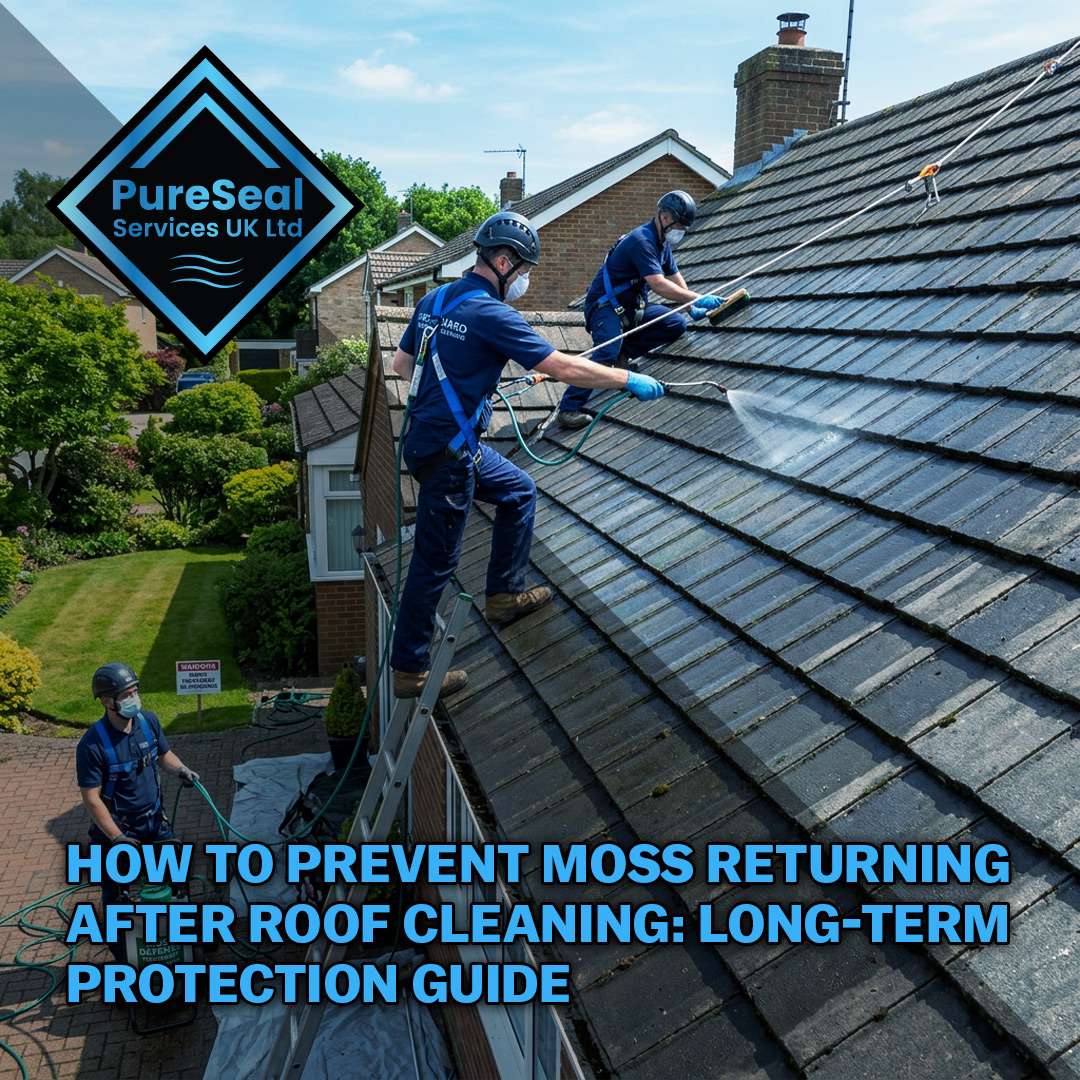
How to Prevent Moss Returning After Roof Cleaning: Long-Term Protection Guide
Written by PureSeal Services on . Posted in Approved Applicators, Blog, Pressure Washing
How to Prevent Moss Returning After Roof Cleaning: Long-Term Protection Guide
Removing moss from a roof is only the first step towards maintaining a clean, attractive and long-lasting roofing system. While a professional roof clean can dramatically improve the appearance of a property, preventing moss from returning is what delivers genuine long-term value.
Moss thrives in the UK’s damp climate, particularly on roofs that receive little sunlight or are surrounded by trees. Without the correct aftercare, even a professionally cleaned roof can gradually become home to new moss growth as airborne spores settle on the tiles.
At Pure Seal Services, roof cleaning is designed to do more than improve kerb appeal. By combining expert cleaning techniques with preventative treatments, homeowners can enjoy cleaner roofs for much longer while helping to protect their investment.
Why Moss Returns
Many homeowners are surprised when moss begins reappearing a few years after a roof has been cleaned. This isn’t necessarily because the original cleaning was ineffective.
Moss reproduces by releasing microscopic spores that travel through the air. These spores settle on roof tiles and begin growing whenever conditions become favourable.
The main causes of moss regrowth include:
- Damp conditions.
- Poor sunlight.
- Overhanging trees.
- Organic debris.
- Ageing roof surfaces.
- Lack of preventative treatment.
Understanding these causes makes it easier to reduce the likelihood of future moss problems.
How Moss Grows on Roofs
Moss does not require soil to survive. Instead, it anchors itself directly onto the surface of roof tiles where moisture is present.
The growth cycle typically follows these stages:
| Stage | Description |
|---|---|
| Spore settlement | Airborne spores land on roof tiles |
| Germination | Moist conditions trigger growth |
| Early moss formation | Small patches begin developing |
| Expansion | Moss spreads across neighbouring tiles |
| Mature growth | Thick moss retains even more moisture |
Breaking this cycle is the key to long-term protection.
Professional Moss Removal Is Only the Beginning
Removing visible moss significantly improves the appearance of the roof, but it rarely removes every microscopic spore.
For this reason, experienced roof cleaning specialists often recommend further treatment after manual moss removal.
Professional roof cleaning usually includes:
- Roof inspection.
- Manual moss removal.
- Gutter clearance.
- Softwashing or biocide treatment.
- Roof condition assessment.
Each stage contributes to reducing future moss growth.
Apply a Professional Biocide Treatment
One of the most effective ways to prevent moss returning is through the application of a professional biocide.
Rather than simply cleaning the roof surface, a biocide works by killing remaining spores and biological growth that cannot easily be seen.
Benefits include:
- Reduces moss regrowth.
- Helps eliminate algae.
- Targets lichen.
- Continues working after application.
- Supports longer-lasting results.
Many premium roof cleaning services include this treatment as part of the overall cleaning process.
Keep Gutters Clear
Blocked gutters are one of the biggest contributors to damp roof conditions.
Overflowing water can keep roof edges permanently wet, creating ideal conditions for moss growth.
Regular gutter maintenance helps by:
- Improving drainage.
- Preventing standing water.
- Reducing moisture retention.
- Protecting fascias and soffits.
- Supporting roof longevity.
| Gutter Condition | Effect on Moss Growth |
|---|---|
| Clean gutters | Better drainage and drier roof edges |
| Blocked gutters | Increased dampness and moss growth |
| Overflowing gutters | Constant moisture around roofline |
Checking gutters at least twice a year is a sensible preventative measure.
Trim Overhanging Trees
Trees provide shade that slows the drying of roof tiles after rainfall.
Leaves also deposit organic matter onto roofs, providing additional moisture and nutrients that encourage moss growth.
Where practical, trimming back overhanging branches can:
- Increase sunlight.
- Improve airflow.
- Reduce leaf build-up.
- Help roofs dry more quickly.
This simple maintenance task can significantly reduce the conditions moss requires to thrive.
Remove Debris Regularly
Leaves, twigs and other organic material trap moisture against roof tiles.
Allowing debris to accumulate encourages moss spores to settle and establish themselves.
Professional roof maintenance often includes removing:
- Leaves.
- Small branches.
- Pine needles.
- Seed pods.
- General organic debris.
Keeping the roof surface clear helps reduce long-term moisture retention.
Inspect Your Roof Every Year
Early intervention is much easier than dealing with heavy moss growth.
An annual roof inspection allows small problems to be identified before they become expensive repairs.
Professional inspections typically check:
| Inspection Area | Why It Matters |
|---|---|
| Moss regrowth | Allows early treatment |
| Broken tiles | Prevents water ingress |
| Flashings | Maintains weatherproofing |
| Ridge tiles | Identifies movement |
| Gutters | Ensures proper drainage |
Small patches of moss are far easier to manage than widespread growth covering the entire roof.
Understand the Impact of Roof Orientation
The direction your roof faces can have a significant impact on how quickly moss returns.
North-facing roof slopes often receive less direct sunlight throughout the day, meaning they stay damp for longer after rain. This creates favourable conditions for moss spores to establish and spread.
South-facing roofs usually dry more quickly due to increased sun exposure, although nearby trees and neighbouring buildings can still create shaded areas.
| Roof Orientation | Typical Moss Risk |
|---|---|
| North-facing | High |
| East-facing | Moderate |
| South-facing | Lower |
| West-facing | Moderate |
Knowing which areas of the roof are most vulnerable allows homeowners to monitor those sections more closely.
Softwashing Provides Longer-Term Protection
Softwashing has become one of the preferred methods used by professional roof cleaning companies because it focuses on eliminating biological growth rather than simply removing what is visible.
Following manual moss removal, a carefully applied softwash treatment helps destroy remaining spores that could otherwise begin growing again.
Unlike pressure washing alone, softwashing provides ongoing protection that continues working after the initial cleaning has been completed.
Avoid High-Pressure Cleaning as Ongoing Maintenance
While pressure washing may appear to provide immediate visual improvements, repeatedly using high-pressure water on a roof is rarely the best long-term strategy.
Potential risks include:
- Damaging tile surfaces.
- Dislodging pointing.
- Forcing water beneath tiles.
- Removing protective coatings on certain roofing materials.
- Increasing maintenance requirements over time.
Many experienced roof cleaning specialists instead focus on preventative treatments that reduce the need for repeated aggressive cleaning.
Weather Plays a Role
The UK’s climate naturally encourages moss growth.
Factors that increase the likelihood of moss returning include:
- Frequent rainfall.
- Mild winters.
- High humidity.
- Poor ventilation.
- Prolonged shade.
While these conditions cannot be controlled, regular maintenance and professional treatments help minimise their impact.
Why Professional Maintenance Delivers Better Value
Many homeowners wait until their roof is heavily covered in moss before arranging another clean. By this stage, the amount of work required is often significantly greater than if smaller areas had been treated earlier.
A preventative approach can reduce:
- Heavy moss accumulation.
- Blocked gutters.
- Roof staining.
- Moisture retention.
- Long-term maintenance costs.
Professional roof maintenance should be viewed as protecting one of the most valuable parts of the property rather than simply improving appearance.
Premium Roof Cleaning Is an Investment
Preventing moss from returning requires more than a quick wash with water. Premium roof cleaning services involve careful preparation, specialist treatments, safe access equipment and experienced technicians who understand how different roof materials respond to cleaning.
As a result, professional roof cleaning may cost anywhere from several hundred pounds to well over £1,500, depending on roof size, access, contamination levels and the complexity of the work. While this places specialist services towards the premium end of the market, the focus is on delivering long-lasting protection and reducing the need for frequent repeat cleaning.
Signs That Preventative Treatment May Be Needed Again
Even after professional roof cleaning, it is worth keeping an eye on the condition of your roof throughout the year.
Indicators that another maintenance treatment may be beneficial include:
- Small patches of new moss.
- Green algae beginning to appear.
- Lichen developing on individual tiles.
- Gutters collecting increasing amounts of moss debris.
- Roof surfaces remaining damp for extended periods.
Addressing these signs early often prevents them developing into much larger problems.
Choosing an Experienced Roof Cleaning Specialist
Long-term moss prevention depends on much more than removing what can be seen from the ground. It requires an understanding of roof construction, biological growth, safe working practices and the correct use of professional treatments.
At Pure Seal Services, every roof is individually assessed before work begins, ensuring the most appropriate cleaning and preventative methods are selected for the property. By combining thorough moss removal with professional aftercare treatments and ongoing maintenance advice, homeowners can enjoy cleaner roofs for longer while helping to preserve both the appearance and condition of their property.
How Different Roof Materials Affect Moss Regrowth
Not all roof coverings provide the same environment for moss to grow. The texture, age and condition of the roofing material can all influence how quickly moss returns after cleaning.
Older roof tiles often become more porous over time due to years of exposure to rain, frost and sunlight. This increased porosity allows moisture to remain on the surface for longer, creating favourable conditions for moss spores.
| Roof Material | Likelihood of Moss Growth | Why |
|---|---|---|
| Concrete tiles | Moderate to high | Porous surfaces can retain moisture as they age |
| Clay tiles | Moderate | Durable but moss can establish in shaded areas |
| Natural slate | Low to moderate | Smooth surface sheds water well but shaded areas remain vulnerable |
| Fibre cement | Moderate | Surface condition varies depending on age and maintenance |
Professional roof cleaning specialists always assess the roofing material before recommending an ongoing maintenance programme.
Prevent Small Problems Becoming Large Ones
One of the biggest mistakes homeowners make is waiting until moss becomes highly visible before taking action.
Small patches are much easier and more cost-effective to manage than extensive moss growth covering large areas of the roof.
Regular visual checks from ground level can help identify:
- Small green patches developing near ridge tiles.
- Moss collecting around valleys.
- Growth along roof edges.
- Damp shaded corners.
- Debris trapped behind chimneys.
Early intervention reduces the amount of work needed during future maintenance visits.
Why Airflow Is Important
Good airflow helps roofs dry quickly after rainfall.
Where airflow is restricted, moisture remains on roof tiles for longer periods, encouraging biological growth.
Several factors influence ventilation around a roof:
- Dense surrounding vegetation.
- Closely positioned neighbouring buildings.
- High garden walls.
- Roof design.
- Tree canopies.
Although these features cannot always be changed, understanding their impact helps explain why some roofs require more frequent maintenance than others.
Seasonal Roof Maintenance
Different times of the year present different challenges for roof maintenance.
Spring
Spring is an ideal time to inspect the roof after winter weather.
Check for:
- Moss regrowth.
- Broken tiles.
- Blocked gutters.
- Storm damage.
Summer
Dry weather makes summer suitable for maintenance work and professional treatments.
It is also easier to identify areas where moss has dried out following treatment.
Autumn
Falling leaves can quickly block gutters and retain moisture on roof surfaces.
Removing leaves promptly helps reduce damp conditions.
Winter
Heavy rainfall, frost and lower temperatures increase moisture retention.
While some maintenance may be weather dependent, regular inspections remain worthwhile.
| Season | Recommended Maintenance |
|---|---|
| Spring | Roof inspection and gutter clearance |
| Summer | Professional roof cleaning and preventative treatments |
| Autumn | Remove leaves and check drainage |
| Winter | Monitor roof condition after storms |
Why DIY Moss Prevention Has Limitations
There are numerous DIY roof cleaning products available, but they rarely match the effectiveness of professional treatments.
Common limitations include:
- Lower-strength formulations.
- Limited coverage.
- Lack of specialist equipment.
- Inconsistent application.
- Safety risks when working at height.
Attempting to clean a roof without appropriate experience may also increase the risk of damaging roof tiles or causing personal injury.
Professional roof cleaning companies have access to commercial-grade products and equipment designed specifically for long-term roof maintenance.
The Financial Benefits of Preventative Maintenance
Preventative roof maintenance is often considerably less expensive than allowing moss to accumulate over many years.
Ignoring moss growth can contribute to:
- Increased gutter cleaning.
- Additional roof maintenance.
- Moisture-related deterioration.
- More labour-intensive future roof cleaning.
By investing in preventative treatments, homeowners often reduce the need for more extensive work later.
| Preventative Maintenance | Potential Long-Term Benefit |
|---|---|
| Professional biocide treatment | Slower moss regrowth |
| Regular inspections | Earlier detection of problems |
| Gutter maintenance | Improved roof drainage |
| Tree management | Reduced shade and moisture |
| Periodic professional cleaning | Helps maintain roof appearance |
Protecting Your Property’s Kerb Appeal
A moss-free roof has a significant impact on the overall appearance of a property.
Even if walls, windows and driveways are clean, a roof covered in moss can make the entire property appear neglected.
Professional roof maintenance helps preserve:
- The property’s external appearance.
- First impressions.
- Pride of ownership.
- Overall presentation.
For homeowners planning to sell, maintaining a clean roof can also contribute to a more attractive exterior when prospective buyers first view the property.
Why Experience Makes the Difference
Preventing moss from returning is not simply about applying a treatment every few years.
Experienced roof cleaning professionals understand:
- Which roofs are naturally more susceptible to moss.
- How surrounding trees affect growth.
- The most effective treatment schedules.
- Safe application techniques.
- Appropriate products for different roof materials.
This knowledge allows preventative treatments to be tailored to each individual property rather than following a generic approach.
Building a Long-Term Roof Care Plan
The most successful way to minimise moss regrowth is through a planned maintenance programme rather than waiting until the roof becomes heavily contaminated again.
A typical long-term approach may include:
| Maintenance Activity | Suggested Frequency |
|---|---|
| Visual inspection | Once or twice per year |
| Gutter cleaning | At least twice per year |
| Removal of leaves and debris | As required |
| Professional roof assessment | Every few years or if concerns arise |
| Preventative softwash or biocide treatment | As recommended following inspection |
Every property is different, so maintenance intervals should always reflect the roof’s condition, location and surrounding environment.
At Pure Seal Services, long-term roof protection is at the heart of every project. By combining careful moss removal, professional softwashing treatments and tailored maintenance recommendations, homeowners receive a premium service designed to slow moss regrowth, protect roofing materials and maintain the appearance of their property for years to come.
Tags: Patio cleaning, Driveway cleaning, pressure washing, Roof Cleaning, Exterior cleaning, gutter cleaning, window cleaning
 Artificial and Sports Surfaces
 Awnings / Canopies / Gazebos
 Block Paving
 Brickwork
 Composite Surfaces
 Decking / Timber
 Granite
 Imprinted Concrete
 Internal Masonry
 Limestone
 Marble
 Metal Cladding
 Polished or Honed Stone
 Porcelain
 Render
 Resin Bond
 Road and Rail Signs
 Roof Tiles / Slates
 Sandstone
 Slate
Slate Solar Panels and Glass
 Stone Sills and Pier Caps
 Tarmac and Asphalt
 Gutters & UPVC
 Acid Damage
 Biofilm
 Bitumen
 Blood
Blood Carbon
 Concrete / Grout / Mortar
 Copper Oxide
 Efflorescence
 Egg
Egg Failed Sealer
 Fire Damage
 Fuel / Oil
 Graffiti
 Grease / Fat / Cooking Oil
 Lawn Fertiliser
 Lead Carbonate
 Lead Oxide
 Paint Splashes
 Rust
Rust Tar & Glue
 Tannin Removers
 Traffic Film Removers
 Trapped Moisture / Sealer Repairs
 Urine Neutralisers