
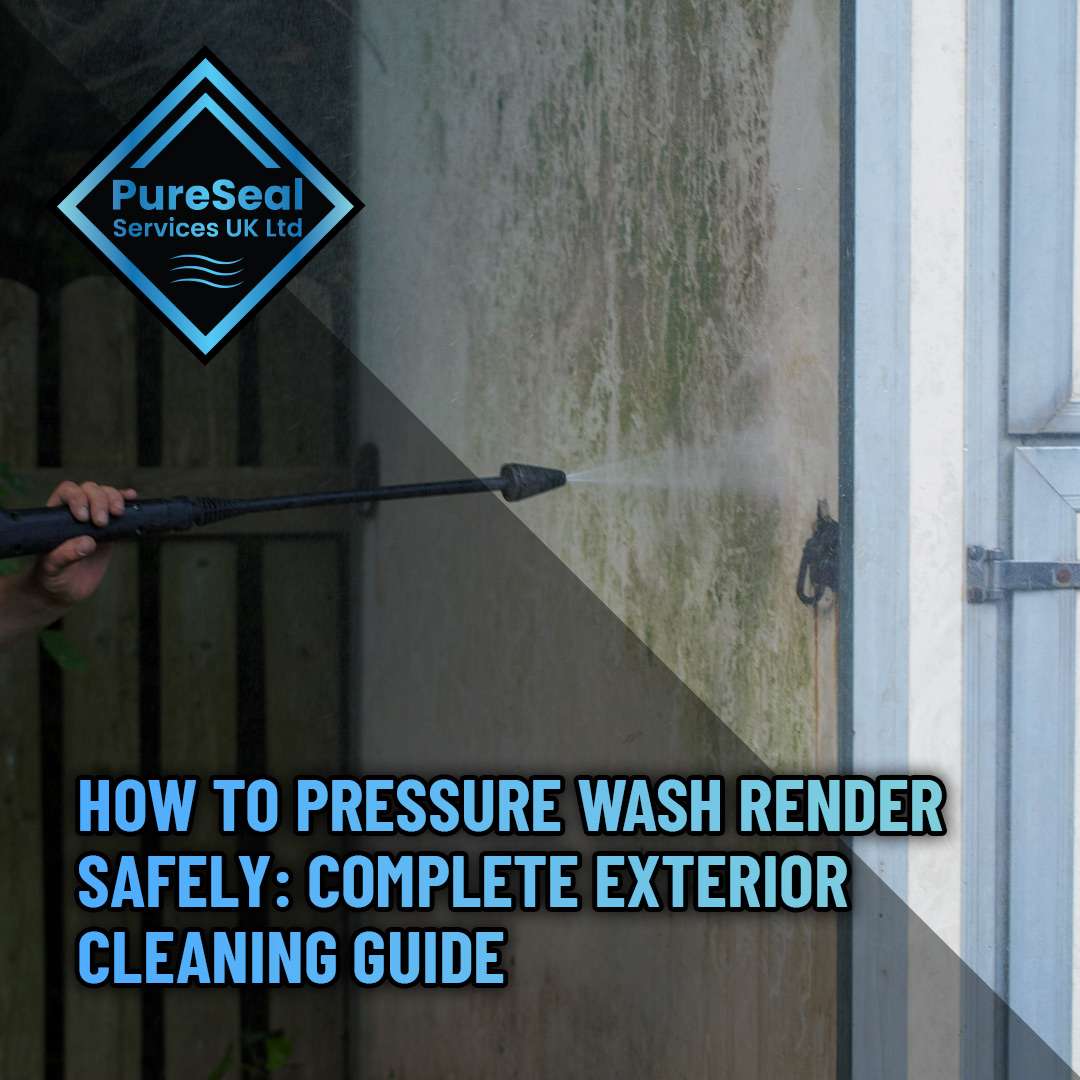
How to Pressure Wash Render Safely: Complete Exterior Cleaning Guide
Written by PureSeal Services on . Posted in Blog, Pressure Washing, Approved Applicators
How to Pressure Wash Render Safely: Complete Exterior Cleaning Guide
Render is one of the most popular exterior finishes on UK homes and commercial properties. It provides a modern appearance, protects the building from the elements and can significantly improve kerb appeal. However, over time, render becomes affected by dirt, atmospheric pollution, green algae, red algae, mould and other organic growth, leaving buildings looking tired and neglected.
Many homeowners assume that pressure washing is the quickest solution, but cleaning render requires far more care than cleaning patios or driveways. Using excessive pressure can permanently damage the surface, remove protective coatings or leave unsightly marks that are expensive to repair.
At Pure Seal Services, we specialise in professional exterior cleaning and understand that every rendered property requires an individual approach. In many cases, low-pressure soft washing combined with specialist cleaning products provides a safer and longer-lasting result than high-pressure washing alone.
Why Render Gets Dirty
Render is continually exposed to the British weather, making it susceptible to contamination throughout the year.
Common causes include:
- Green algae
- Red algae
- Moss
- Mould
- Mildew
- Air pollution
- Vehicle emissions
- Bird droppings
- Tree sap
- Organic staining
- General dirt
Properties located beneath trees or in shaded areas often experience faster algae growth due to increased moisture.
Can You Pressure Wash Render?
The simple answer is yes—but only in certain circumstances.
Pressure washing render incorrectly can cause significant damage. Professional contractors often reduce machine pressure considerably or avoid pressure washing altogether depending on the render type and its condition.
The safest method depends on:
- Age of the render
- Manufacturer’s recommendations
- Existing damage
- Surface coating
- Amount of contamination
- Property location
Risks of Incorrect Pressure Washing
Improper cleaning techniques can create problems far worse than the original staining.
Potential risks include:
| Risk | Possible Result |
|---|---|
| Excessive pressure | Surface erosion |
| Incorrect nozzle | Visible striping |
| Water ingress | Damp problems |
| Paint removal | Costly repairs |
| Cracking | Structural damage to finish |
| Surface scarring | Permanent cosmetic defects |
| Damaged seals | Moisture penetration |
Professional assessment before cleaning is always recommended.
Different Types of Render
Not all render should be cleaned in the same way.
| Render Type | Cleaning Considerations |
|---|---|
| Silicone Render | Usually cleaned using soft washing techniques |
| Monocouche Render | Requires controlled pressure and specialist chemicals |
| Acrylic Render | Gentle cleaning only |
| Cement Render | Can often tolerate slightly higher pressure |
| Lime Render | Extremely delicate and requires specialist care |
| Painted Render | Pressure must be carefully controlled |
Identifying the render correctly is one of the most important stages of the cleaning process.
Why Soft Washing Is Often Better
Soft washing has become the preferred cleaning method for many rendered properties.
Rather than relying on force, it uses carefully selected cleaning chemicals to remove contamination.
Benefits include:
- Lower risk of damage
- Longer-lasting results
- Kills algae spores
- Removes mould
- Removes red algae
- Removes green algae
- Less water usage
- More even finish
Many premium rendered homes are now cleaned almost exclusively using soft washing systems.
Green Algae vs Red Algae
Many homeowners recognise green algae but overlook red algae.
Both can make render look unattractive.
Green Algae
Characteristics:
- Green streaks
- Damp appearance
- Slippery surfaces
- Fast-growing
Red Algae
Characteristics:
- Pink or red staining
- Often appears on modern render
- Extremely stubborn
- Can permanently stain if ignored
Professional chemical treatments are usually required to remove both effectively.
Equipment Used by Professional Contractors
Professional render cleaning involves far more than a domestic pressure washer.
Typical equipment includes:
- Commercial pressure washers
- Variable pressure systems
- Soft wash pumps
- Telescopic poles
- Specialist nozzles
- Water-fed poles
- Professional cleaning chemicals
- PPE
- Access equipment where necessary
The ability to adjust pressure accurately is essential when cleaning delicate render.
Choosing the Correct Pressure
One of the biggest mistakes made by inexperienced operators is using maximum pressure.
Professional contractors adjust pressure according to:
- Surface strength
- Type of contamination
- Render age
- Coating condition
- Water flow
- Nozzle angle
Lower pressure often produces better results while protecting the render.
The Importance of Cleaning Chemicals
Pressure alone rarely removes all biological contamination.
Professional cleaning chemicals help eliminate:
- Green algae
- Red algae
- Moss
- Mould
- Mildew
- Organic staining
This creates a cleaner finish while slowing future regrowth.
Why Dwell Time Matters
Cleaning chemicals need time to work.
Applying chemicals and immediately washing them away reduces effectiveness considerably.
Professional contractors allow products to remain on the surface for the appropriate dwell time before rinsing or carrying out further cleaning.
Safe Cleaning Process
A professional render cleaning project typically follows several stages.
| Stage | Purpose |
|---|---|
| Inspection | Identify render type and condition |
| Risk assessment | Protect surrounding areas |
| Surface testing | Confirm compatibility |
| Chemical application | Treat contamination |
| Dwell time | Allow chemicals to work |
| Gentle rinsing | Remove contamination |
| Spot treatment | Remove remaining stains |
| Final inspection | Ensure consistent finish |
This structured approach reduces the risk of damage while achieving a superior result.
Areas Requiring Extra Care
Certain parts of a property require additional attention during cleaning.
These include:
- Windows
- Doors
- Air vents
- Soffits
- Fascias
- Outdoor lighting
- Electrical fittings
- CCTV cameras
- Timber cladding
- Roof edges
Professional contractors protect vulnerable areas before work begins.
Weather Conditions
Render cleaning should always take weather into account.
Ideal conditions include:
- Mild temperatures
- Dry weather
- Light winds
- No heavy rain forecast
- Moderate humidity
Cleaning during very hot weather can cause chemicals to dry too quickly.
Heavy rain can dilute treatments before they have fully worked.
Common Mistakes Homeowners Make
DIY render cleaning often creates unnecessary damage.
Common mistakes include:
| Mistake | Result |
|---|---|
| Using maximum pressure | Surface damage |
| Cleaning too closely | Etching |
| Using incorrect chemicals | Discolouration |
| Ignoring algae spores | Rapid regrowth |
| Using rotating nozzles | Permanent marks |
| Skipping testing | Unexpected damage |
Professional knowledge helps avoid these issues.
Should You Use a Turbo Nozzle?
Turbo nozzles are highly effective on concrete and paving but are rarely suitable for render.
Their concentrated rotating jet can:
- Remove coatings
- Scar surfaces
- Leave swirl marks
- Create visible patches
For most render cleaning projects, wider fan nozzles and significantly lower pressure provide much safer results.
Water Temperature
Some commercial systems allow contractors to use heated water.
Benefits may include:
- Faster grease removal
- Improved cleaning performance
- Reduced chemical usage
- Better organic stain removal
However, temperature must still be controlled carefully to suit the render.
Protecting Nearby Plants
Many render cleaning products are designed to tackle biological growth, so protecting surrounding landscaping is an important part of the job.
Professional contractors may:
- Pre-wet plants with clean water.
- Cover delicate flowers where necessary.
- Rinse vegetation after cleaning.
- Prevent chemical pooling around roots.
Taking these precautions helps minimise the impact on nearby gardens while maintaining effective cleaning standards.
When Pressure Washing Should Be Avoided
There are situations where pressure washing simply isn’t the best option.
These include:
- Cracked render.
- Loose render.
- Delaminating coatings.
- Newly applied render.
- Heritage properties with lime render.
- Previously damaged surfaces.
In these cases, specialist soft washing methods often provide a safer alternative.
Signs Your Render Needs Professional Cleaning
Many property owners wait until staining becomes severe before arranging cleaning.
Early signs include:
- Green patches developing.
- Red streaks appearing.
- Black mould spots.
- Dull or uneven colouring.
- Water marks.
- Organic staining around gutters.
- Dark areas beneath rooflines.
Addressing these issues early often makes cleaning simpler and helps maintain the appearance of the property.
Why Experience Matters
Render is one of the most delicate exterior surfaces to clean successfully.
Professional contractors understand:
- Different render systems.
- Safe operating pressures.
- Chemical compatibility.
- Weather conditions.
- Correct nozzle selection.
- Access requirements.
- Health and safety procedures.
This experience significantly reduces the risk of accidental damage while producing consistently high-quality results.
Investing in Professional Render Cleaning
Professional render cleaning is a premium service that requires specialist knowledge, commercial equipment and carefully selected cleaning products. While lower-cost providers may rely solely on high-pressure washing, experienced contractors focus on protecting the render while delivering outstanding cosmetic improvements.
Higher-quality services typically involve detailed inspections, surface testing, controlled cleaning methods and specialist treatments to remove algae, mould and organic staining safely. Although this approach may involve a higher initial investment, it often provides longer-lasting results and reduces the likelihood of expensive repairs caused by improper cleaning.
At Pure Seal Services, every render cleaning project is tailored to the individual property. We carefully assess the render type, level of contamination and overall condition before selecting the safest cleaning method. Whether low-pressure washing, specialist soft washing or a combination of techniques is required, our priority is always to restore your property’s appearance while protecting the integrity of the rendered finish.
How Often Should Render Be Cleaned?
There is no universal schedule for render cleaning, as every property is exposed to different environmental conditions. Homes surrounded by trees, close to busy roads or located in damp, shaded areas are likely to require cleaning more frequently than properties in open, well-ventilated locations.
As a general guide:
| Property Location | Typical Cleaning Frequency |
|---|---|
| Urban areas | Every 3–5 years |
| Rural properties | Every 2–4 years |
| Coastal homes | Every 2–3 years |
| Properties beneath trees | Every 2–3 years |
| North-facing elevations | Every 2–4 years |
Regular inspections can identify early signs of algae or staining before they become difficult to remove.
Why Low Pressure Often Delivers Better Results
Many people associate effective cleaning with high pressure, but this is rarely true when it comes to render.
Using lower pressure allows the cleaning chemicals to do the hard work while the water simply rinses away the contamination. This approach reduces the likelihood of:
- Surface erosion
- Visible pressure marks
- Water penetration
- Damage to decorative finishes
- Premature ageing of the render
Experienced contractors understand that successful render cleaning is about technique rather than force.
Cleaning Around Windows and Doors
Rendered properties often feature uPVC, aluminium or timber windows and doors that require protection during cleaning.
Professional contractors will usually:
- Avoid directing water into window seals.
- Use controlled spray angles.
- Rinse frames after chemical application.
- Protect decorative finishes.
- Check for existing damaged seals before starting work.
This careful approach helps prevent unnecessary water ingress while ensuring surrounding surfaces are left clean as well.
Dealing With Stubborn Stains
Not every stain responds to the same treatment.
Common examples include:
| Stain Type | Recommended Professional Approach |
|---|---|
| Green algae | Specialist biocide followed by gentle rinsing |
| Red algae | Multiple chemical treatments may be required |
| Black mould | Anti-fungal cleaning solution |
| Traffic film | Professional exterior detergent |
| Rust stains | Dedicated rust-removal product |
| Bird droppings | Gentle chemical softening before cleaning |
Understanding the source of the stain allows contractors to choose the most effective cleaning process without risking unnecessary damage to the render.
Why Testing a Small Area Is Essential
Before cleaning an entire building, professional contractors will often carry out a small test patch.
This allows them to:
- Confirm the render reacts well to the chosen chemical.
- Check pressure settings.
- Assess dwell time.
- Ensure the finish remains consistent.
- Identify any hidden defects.
A short test can prevent costly mistakes and gives confidence that the chosen method is appropriate for the whole property.
Health and Safety During Render Cleaning
Working on exterior walls frequently involves cleaning at height, handling specialist chemicals and operating powerful equipment.
Professional contractors should always consider:
- Safe ladder use.
- Mobile access towers where appropriate.
- PPE including gloves and eye protection.
- Controlled chemical storage.
- Safe hose management to reduce trip hazards.
- Protection of members of the public.
Following strict health and safety procedures protects both the workforce and the property owner.
Why Cheap Render Cleaning Can Cost More
When comparing quotations, it is important to understand what is included in the service.
Very low-priced cleaning often means corners are being cut, such as:
- Using excessive pressure instead of specialist treatments.
- Skipping chemical applications.
- Rushing preparation.
- Failing to protect surrounding areas.
- Using domestic rather than commercial equipment.
While these approaches may reduce the initial price, they can increase the risk of damage or lead to algae returning much sooner, resulting in additional expense later.
Maintaining Render Between Professional Cleans
After professional cleaning, a few simple maintenance measures can help preserve the appearance of rendered walls.
These include:
- Trimming back overhanging trees and shrubs to improve airflow.
- Keeping gutters and downpipes clear to prevent water staining.
- Removing climbing plants before they become established.
- Checking for leaks that may encourage algae growth.
- Arranging periodic inspections to deal with minor contamination before it becomes widespread.
Preventative maintenance is often far more cost-effective than waiting until extensive staining develops.
Choosing a Professional Render Cleaning Specialist
Cleaning render successfully requires far more than owning a pressure washer. Contractors should have experience with different render systems, understand the correct cleaning chemicals and know when pressure washing should be replaced by softer cleaning methods.
A professional service should include:
- A full inspection before work begins.
- Surface-specific cleaning methods.
- Careful protection of surrounding areas.
- Commercial-grade equipment.
- Specialist cleaning chemicals.
- Thorough testing where required.
- A final inspection to ensure a consistent finish.
At Pure Seal Services, we take a premium approach to render cleaning, investing in specialist equipment, high-quality cleaning products and proven techniques to achieve outstanding results while protecting your property’s exterior. Every project is tailored to the individual building, ensuring the safest and most effective cleaning method is selected for long-lasting results.
Tags: Patio cleaning, Driveway cleaning, pressure washing, Roof Cleaning, Exterior cleaning, gutter cleaning, window cleaning
 Artificial and Sports Surfaces
 Awnings / Canopies / Gazebos
 Block Paving
 Brickwork
 Composite Surfaces
 Decking / Timber
 Granite
 Imprinted Concrete
 Internal Masonry
 Limestone
 Marble
 Metal Cladding
 Polished or Honed Stone
 Porcelain
 Render
 Resin Bond
 Road and Rail Signs
 Roof Tiles / Slates
 Sandstone
 Slate
Slate Solar Panels and Glass
 Stone Sills and Pier Caps
 Tarmac and Asphalt
 Gutters & UPVC
 Acid Damage
 Biofilm
 Bitumen
 Blood
Blood Carbon
 Concrete / Grout / Mortar
 Copper Oxide
 Efflorescence
 Egg
Egg Failed Sealer
 Fire Damage
 Fuel / Oil
 Graffiti
 Grease / Fat / Cooking Oil
 Lawn Fertiliser
 Lead Carbonate
 Lead Oxide
 Paint Splashes
 Rust
Rust Tar & Glue
 Tannin Removers
 Traffic Film Removers
 Trapped Moisture / Sealer Repairs
 Urine Neutralisers