How Pressure Washing Helps Prevent Long-Term Property Damage
Property maintenance is about far more than appearance. While a clean driveway, patio, building exterior, or commercial premises undoubtedly looks more attractive, regular maintenance also plays a vital role in protecting surfaces from deterioration. One of the most effective ways to maintain external surfaces is through professional pressure washing.
Over time, dirt, algae, moss, lichen, pollution, and other contaminants accumulate on exterior surfaces. Left untreated, these substances can contribute to long-term damage, reduce the lifespan of materials, and lead to expensive repairs. Professional pressure washing removes these harmful contaminants before they have the opportunity to cause significant problems.
Whether applied to residential or commercial properties, pressure washing can help preserve structural integrity, improve safety, and reduce ongoing maintenance costs. Professional cleaning services from Pure Seal Services help property owners protect valuable assets while maintaining a clean and professional appearance.
What Is Pressure Washing?
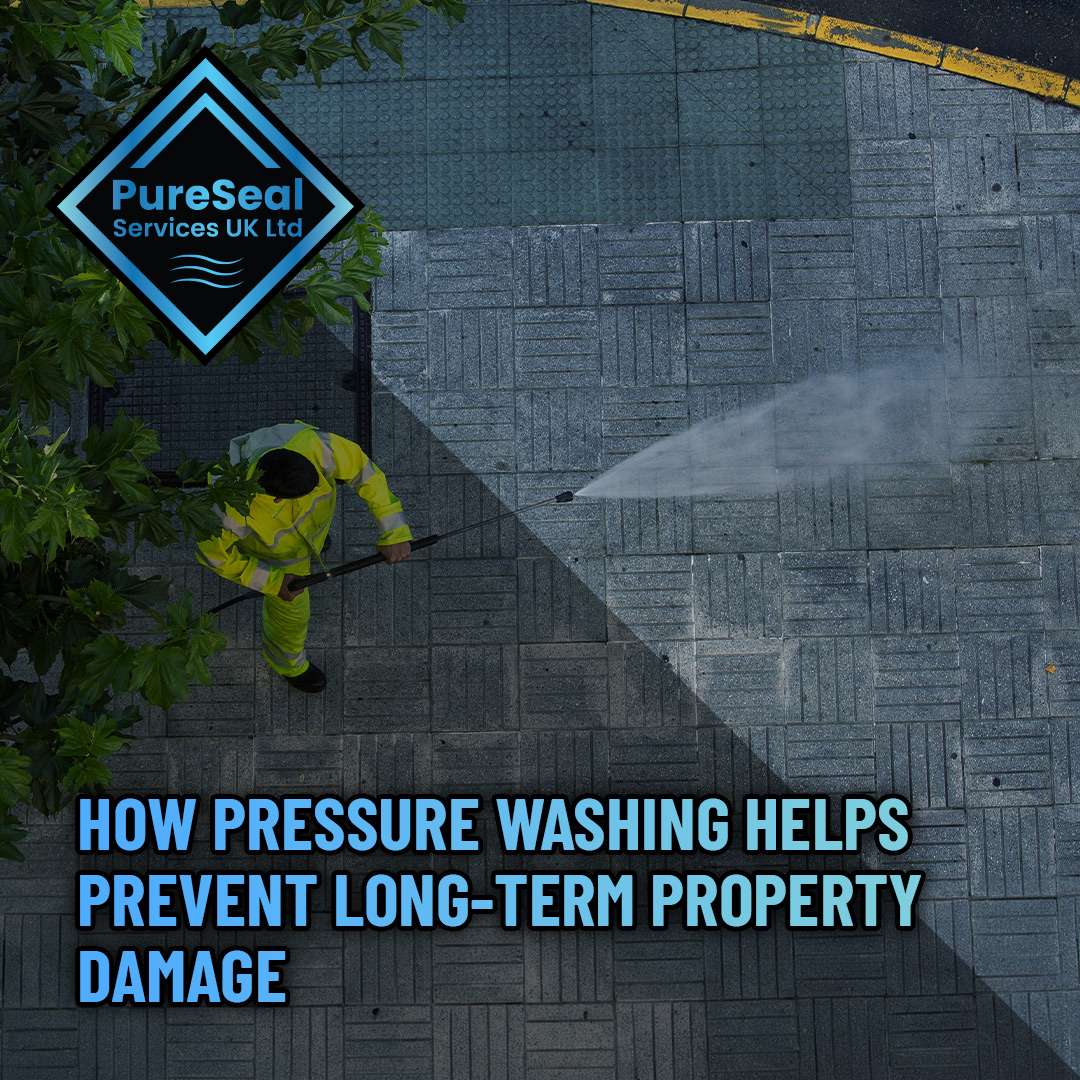
Pressure washing uses high-pressure water to remove dirt, grime, biological growth, stains, and debris from external surfaces.
Commonly cleaned surfaces include:
Driveways
Patios
Paths
Walls
Car parks
Commercial premises
Concrete surfaces
Block paving
Stonework
External hard landscaping
Professional pressure washing equipment delivers significantly more cleaning power than domestic machines, allowing contaminants to be removed efficiently while using techniques appropriate for each surface.
Why Dirt and Organic Growth Cause Property Damage
Many property owners view dirt, moss, and algae as cosmetic issues. However, these contaminants can create conditions that contribute to long-term deterioration.
Moisture Retention
One of the biggest concerns is moisture retention.
Organic growth such as moss and algae acts like a sponge, holding water against surfaces for extended periods.
This can lead to:
Surface degradation
Accelerated weathering
Cracking
Freeze-thaw damage
Material deterioration
Progressive Surface Wear
When contaminants remain in place for years, they can gradually weaken external surfaces.
Contaminant
Potential Damage
Moss
Moisture retention and surface erosion
Algae
Surface staining and slip hazards
Lichen
Surface pitting and discolouration
Dirt deposits
Trapped moisture and deterioration
Pollution
Chemical staining and surface wear
Regular pressure washing removes these contaminants before damage becomes established.
Protecting Driveways From Long-Term Damage
Driveways are among the most heavily used areas of any property.
Daily exposure to:
Vehicle traffic
Rainfall
Oil deposits
Dirt
Moss growth
means they can deteriorate rapidly without proper maintenance.
Block Paving Protection
Block paving is particularly vulnerable because dirt and organic matter accumulate between joints.
If neglected, this can result in:
Weed growth
Joint erosion
Surface staining
Uneven paving
Pressure washing helps remove debris while restoring the appearance of the surface.
Concrete Driveways
Concrete surfaces can become stained by:
Algae
Oil spills
Tyre marks
Atmospheric pollution
Routine cleaning helps prevent contaminants from becoming deeply embedded.
Driveway Type
Common Issues Prevented
Block paving
Weed growth and joint deterioration
Concrete
Staining and surface wear
Tarmac
Moss growth and contamination
Resin
Surface discolouration
Preventing Patio Deterioration
Patios are exposed to the elements throughout the year and often receive little maintenance until problems become obvious.
Biological Growth Problems
Patios frequently develop:
Moss
Algae
Lichen
Black spot staining
These growths retain moisture and can gradually damage paving materials.
Reduced Water Drainage
Accumulated dirt can obstruct drainage pathways and surface pores.
This may lead to:
Standing water
Increased moisture levels
Accelerated weathering
Professional pressure washing helps restore effective drainage and preserve the condition of paving materials.
Reducing Freeze-Thaw Damage
The UK’s climate creates ideal conditions for freeze-thaw cycles.
How Freeze-Thaw Damage Occurs
Water enters small cracks and pores within surfaces.
When temperatures drop below freezing:
Water freezes.
It expands.
Pressure develops inside the material.
Cracks enlarge.
Repeated cycles can cause substantial damage over time.
Pressure Washing as Prevention
By removing moss, dirt, and organic matter that trap moisture, pressure washing helps reduce water retention and lowers the risk of freeze-thaw damage.
This is particularly important for:
Concrete
Stone paving
Brickwork
Driveways
Pathways
Protecting Roof Drainage Systems
Pressure washing often forms part of a broader exterior maintenance programme.
Clean external surfaces contribute to improved drainage performance.
How Surface Contamination Affects Drainage
Debris from:
Moss
Leaves
Dirt deposits
Algae growth
can eventually enter drainage systems.
This may contribute to:
Blocked drains
Overflowing gutters
Water pooling
Damp issues
Maintaining clean external surfaces helps minimise these risks.
Preventing Permanent Surface Staining
Some stains become increasingly difficult to remove as they age.
Examples include:
Rust marks
Organic staining
Traffic film
Atmospheric pollution
Bird droppings
Regular pressure washing prevents contaminants from becoming permanently embedded.
Surface Appearance Matters
Maintaining clean surfaces helps preserve:
Surface Feature
Benefit
Original colour
Improved appearance
Surface texture
Better visual appeal
Material integrity
Longer lifespan
Property presentation
Enhanced kerb appeal
Preventative cleaning often avoids the need for more extensive restoration work later.
Minimising Moss and Weed Growth
Moss and weeds are common causes of property deterioration.
Problems Associated With Moss
Moss can:
Hold moisture against surfaces
Encourage freeze-thaw damage
Create slip hazards
Accelerate surface wear
Weed Growth Issues
Weeds often develop in:
Block paving joints
Cracks
Expansion gaps
As roots expand, they can widen existing defects and contribute to structural problems.
Professional pressure washing removes the organic material that supports weed growth and helps maintain cleaner surfaces.
Protecting Commercial Properties
Commercial premises face many of the same challenges as residential properties but often on a larger scale.
High-Traffic Areas
Commercial properties frequently experience:
Heavy foot traffic
Vehicle movements
Pollution exposure
Increased contamination
These factors accelerate wear and tear.
Professional Image
A well-maintained exterior supports customer confidence while protecting the physical condition of the property.
Common commercial cleaning areas include:
Area
Benefits of Pressure Washing
Car parks
Removes dirt and improves safety
Walkways
Reduces slip hazards
Building facades
Prevents staining
Loading areas
Improves cleanliness
Entrance areas
Enhances presentation
Improving Safety Around the Property
Property damage is not the only concern associated with contaminated surfaces.
Safety risks can also increase significantly.
Slip Hazard Prevention
Algae and moss can become extremely slippery when wet.
Risk areas include:
Patios
Steps
Paths
Entrances
Driveways
Regular pressure washing helps remove hazardous growth before accidents occur.
Liability Considerations
For commercial property owners, preventing slips and falls is particularly important.
Routine maintenance demonstrates a proactive approach to safety management.
Extending the Lifespan of External Surfaces
One of the biggest advantages of pressure washing is its ability to extend the useful life of property surfaces.
Long-Term Surface Preservation
Regular maintenance helps reduce:
Surface erosion
Moisture damage
Biological contamination
Embedded staining
This can delay the need for costly repairs or replacement.
Maintenance Approach
Expected Outcome
Regular pressure washing
Extended surface lifespan
Occasional cleaning
Moderate preservation
No maintenance
Faster deterioration
Identifying Problems Before They Escalate
Pressure washing often reveals underlying issues that may otherwise remain hidden.
During cleaning, it becomes easier to identify:
Cracks
Damaged pointing
Loose paving
Drainage issues
Surface deterioration
Early detection allows property owners to address problems before repair costs increase.
Pressure Washing Different Surface Types
Different materials require different cleaning approaches.
Professional operators assess each surface carefully before selecting the appropriate method.
Natural Stone
Natural stone benefits from cleaning that removes contamination without damaging the surface.
Block Paving
Block paving often requires careful cleaning to preserve joints while removing weeds and moss.
Concrete
Concrete surfaces can withstand effective cleaning while benefiting from stain removal.
Commercial Hardstanding Areas
Large commercial areas often accumulate significant contamination that requires specialist equipment.
Surface
Typical Contaminants
Natural stone
Algae and staining
Block paving
Moss and weeds
Concrete
Oil and dirt
Commercial yards
Traffic grime
Pathways
Organic growth
Typical Pressure Washing Costs
The cost of professional pressure washing depends on factors such as:
Surface size
Surface type
Level of contamination
Accessibility
Additional treatments
Premium services focus on achieving outstanding results and long-term protection rather than competing on low pricing.
Area
Typical Professional Cost
Small driveway
£180 – £350+
Medium driveway
£350 – £700+
Large driveway
£700 – £1,500+
Patio cleaning
£250 – £900+
Commercial projects
Site-specific quotation required
Investing in professional cleaning often proves more economical than dealing with avoidable repairs caused by years of neglect.
Why Scheduled Maintenance Is More Effective Than Reactive Cleaning
Many property owners wait until surfaces appear heavily stained before arranging cleaning.
However, preventative maintenance generally delivers better long-term outcomes.
Benefits of scheduled pressure washing include:
Reduced contaminant build-up
Lower risk of permanent staining
Improved surface longevity
Better year-round appearance
Reduced repair costs
Properties that receive routine maintenance typically require less intensive cleaning and experience fewer deterioration-related issues.
Signs That Pressure Washing Is Needed
Several indicators suggest it may be time to arrange professional pressure washing.
These include:
Green staining
Black spots on paving
Moss growth
Slippery surfaces
Weed development
Traffic grime
Surface discolouration
Water pooling
Addressing these issues promptly helps prevent minor contamination from developing into more significant property maintenance concerns.
Professional pressure washing from Pure Seal Services helps remove harmful contaminants, preserve external surfaces, and reduce the risk of long-term property damage across residential and commercial properties alike.
How Pressure Washing Helps Protect Brickwork
Brickwork is designed to withstand the UK’s challenging weather conditions, but it is not immune to deterioration. Over time, airborne pollution, algae, moss, and dirt can accumulate on brick surfaces, trapping moisture and affecting the overall condition of the structure.
When contaminants remain on brickwork for prolonged periods, they can contribute to:
Persistent dampness
Surface staining
Mortar deterioration
Organic growth expansion
Reduced visual appeal
Professional pressure washing helps remove these contaminants before they become deeply embedded.
Preserving Mortar Joints
Mortar joints are often more vulnerable than the bricks themselves. Moss and weeds can establish themselves within small cracks and gaps, gradually widening them over time.
Regular cleaning helps reduce:
Brickwork Issue
Potential Consequence
Moss growth
Increased moisture retention
Weed roots
Joint deterioration
Dirt accumulation
Surface staining
Organic matter
Faster weathering
Keeping brickwork clean can contribute significantly to the long-term preservation of walls, boundary structures, and building facades.
Preventing Damage to Rendered Surfaces
Rendered buildings are increasingly popular throughout the UK because of their modern appearance and weather-resistant properties. However, render can become discoloured over time, particularly on shaded elevations.
Common Render Problems
Rendered surfaces frequently suffer from:
Green algae staining
Black mould growth
Atmospheric pollution deposits
Water streaking
General weathering
These issues often become more noticeable on white, cream, or light-coloured render.
Why Early Cleaning Matters
The longer contamination remains on render, the more difficult it can become to remove completely.
Routine pressure washing or appropriate exterior cleaning methods help:
Maintain appearance
Reduce biological growth
Prevent permanent staining
Protect the finish
This can help avoid expensive restoration work in the future.
Pressure Washing and Drainage Performance
Many property owners overlook the relationship between surface cleanliness and drainage efficiency.
Surface Build-Up Can Restrict Water Flow
When dirt, moss, leaves, and organic debris accumulate, they can obstruct:
Drainage channels
Surface gullies
Permeable paving systems
Water runoff routes
Poor drainage can contribute to:
Standing water
Flooding
Surface deterioration
Increased slip hazards
Regular pressure washing helps keep these areas clear and functioning correctly.
Benefits for Permeable Surfaces
Modern permeable driveways and paving systems are designed to allow water to pass through the surface.
However, accumulated debris can reduce their effectiveness.
Professional cleaning helps maintain permeability and supports proper water management around the property.
Supporting Preventative Property Maintenance
Preventative maintenance is generally more cost-effective than reactive repairs.
Pressure washing forms an important part of a wider maintenance strategy by helping property owners identify developing issues before they become serious.
Areas Often Revealed During Cleaning
Cleaning frequently highlights:
Hairline cracks
Damaged pointing
Uneven paving
Subsidence indicators
Surface defects
Because contaminants are removed, these issues become much easier to identify and monitor.
Long-Term Financial Benefits
Although professional pressure washing represents an investment, it can often reduce future maintenance costs.
Maintenance Strategy
Potential Outcome
Scheduled cleaning
Reduced repair requirements
Periodic cleaning
Moderate maintenance costs
No routine cleaning
Increased likelihood of repairs
Many property owners find that regular maintenance provides better value than addressing major deterioration after it occurs.
Pressure Washing for Commercial Asset Management
Commercial property owners and facilities managers often include pressure washing within broader asset management programmes.
The goal is not simply to improve appearance but to preserve the condition of valuable infrastructure.
Common Commercial Surfaces
Pressure washing is frequently used on:
Warehouse yards
Distribution centres
Retail parks
Office complexes
Educational facilities
Healthcare premises
These surfaces experience substantial wear from both foot traffic and vehicle movements.
Benefits for Facilities Managers
Routine cleaning helps support:
Planned maintenance schedules
Health and safety compliance
Property inspections
Budget forecasting
Asset preservation
A proactive approach often helps reduce unexpected maintenance expenditure.
Seasonal Pressure Washing and Property Protection
The changing UK seasons expose properties to different types of contamination throughout the year.
Scheduling pressure washing at appropriate intervals helps minimise the impact of seasonal conditions.
Spring
Spring is often used to remove:
Winter grime
Moss growth
Algae build-up
Organic debris
Summer
Summer cleaning helps maintain presentation and address contaminants that become more visible in dry conditions.
Autumn
Autumn maintenance focuses on removing:
Falling leaves
Surface debris
Early moss growth
Winter
Winter preparations often involve cleaning areas where moisture retention could create safety concerns.
Season
Key Pressure Washing Benefits
Spring
Removes winter contamination
Summer
Maintains appearance
Autumn
Prevents seasonal build-up
Winter
Supports safety and drainage
A structured maintenance programme allows surfaces to remain in better condition throughout the year.
Why Professional Equipment Makes a Difference
Many domestic pressure washers can improve the appearance of surfaces temporarily, but commercial-grade equipment provides a far more comprehensive clean.
Professional services typically utilise:
Higher-capacity machines
Specialist surface cleaners
Commercial treatments
Surface-specific techniques
This allows contaminants to be removed more effectively while minimising the risk of damage.
Avoiding DIY Mistakes
Incorrect pressure washing can sometimes lead to:
Surface etching
Joint erosion
Water ingress
Damage to delicate materials
Professional operators understand how to adjust pressure levels and cleaning methods according to the surface being treated.
This ensures effective cleaning while protecting the long-term condition of the property.
Maintaining Kerb Appeal While Protecting Structural Integrity
Many people associate pressure washing solely with improving kerb appeal, but its benefits extend much further. By removing harmful contaminants, reducing moisture retention, supporting drainage systems, and helping identify developing defects, pressure washing serves as an important preventative maintenance measure for both residential and commercial properties.
Regular professional cleaning from Pure Seal Services helps property owners protect external surfaces from avoidable deterioration while preserving the appearance, safety, and long-term value of their investment.

 Artificial and Sports Surfaces
 Awnings / Canopies / Gazebos
 Block Paving
 Brickwork
 Composite Surfaces
 Decking / Timber
 Granite
 Imprinted Concrete
 Internal Masonry
 Limestone
 Marble
 Metal Cladding
 Polished or Honed Stone
 Porcelain
 Render
 Resin Bond
 Road and Rail Signs
 Roof Tiles / Slates
 Sandstone
 Slate
Slate Solar Panels and Glass
 Stone Sills and Pier Caps
 Tarmac and Asphalt
 Gutters & UPVC
 Acid Damage
 Biofilm
 Bitumen
 Blood
Blood Carbon
 Concrete / Grout / Mortar
 Copper Oxide
 Efflorescence
 Egg
Egg Failed Sealer
 Fire Damage
 Fuel / Oil
 Graffiti
 Grease / Fat / Cooking Oil
 Lawn Fertiliser
 Lead Carbonate
 Lead Oxide
 Paint Splashes
 Rust
Rust Tar & Glue
 Tannin Removers
 Traffic Film Removers
 Trapped Moisture / Sealer Repairs
 Urine Neutralisers