
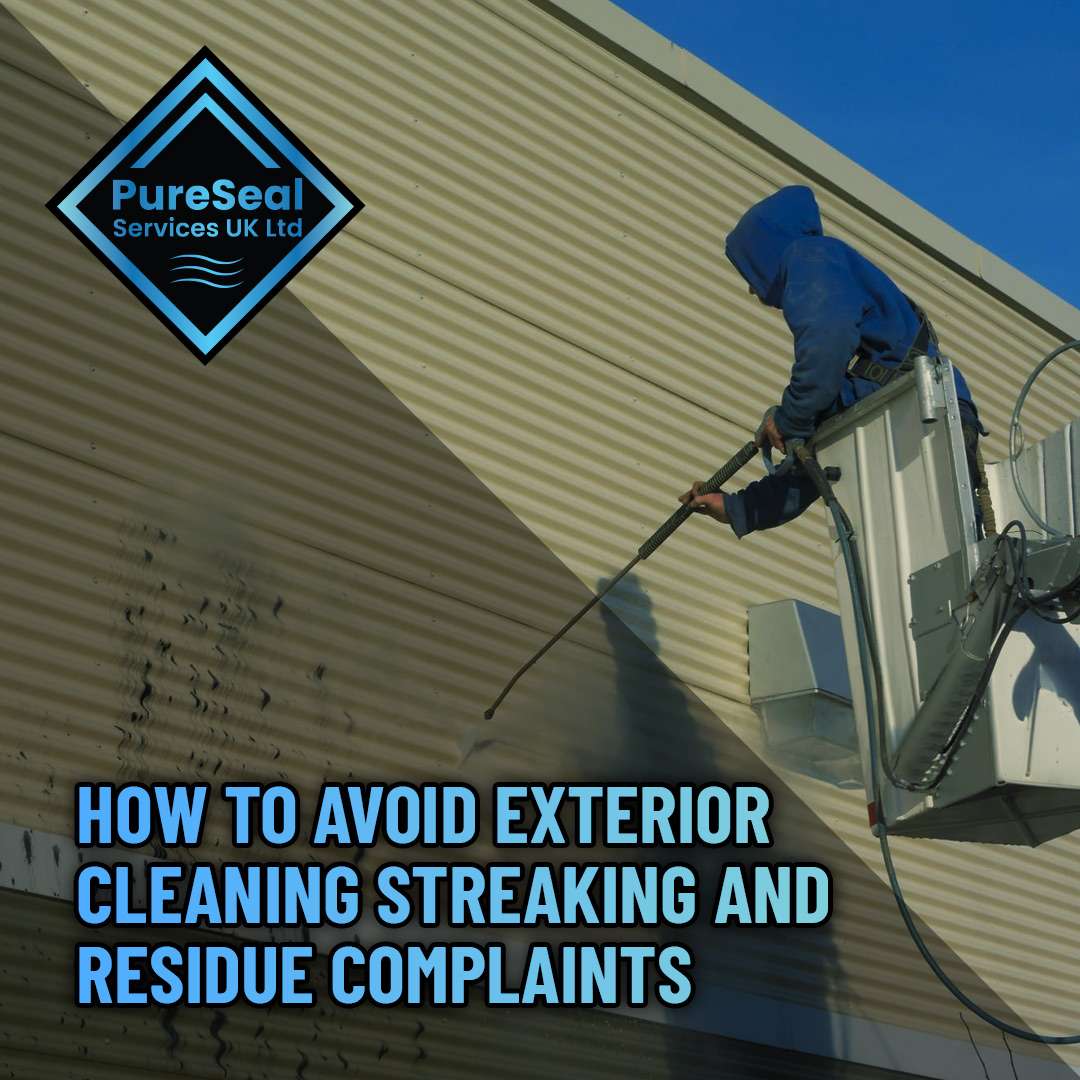
How to Avoid Exterior Cleaning Streaking and Residue Complaints
A complete guide for UK exterior cleaning professionals
Exterior cleaning businesses across the UK rely heavily on delivering visible results. Customers expect their patios, driveways, roofs and render to look dramatically cleaner once a job is finished. When surfaces appear patchy, streaked or covered in residue, it can quickly lead to complaints, refund requests and reputational damage.
Streaking and residue problems are some of the most common issues faced by exterior cleaning companies. In many cases, the cleaning process itself removes the dirt successfully, but poor chemical handling or rinsing techniques leave marks behind once the surface dries.
Understanding how streaking occurs — and how to prevent it — is essential for any exterior cleaning professional looking to maintain high standards and protect profitability.
This guide explains:
-
Why streaking and residue occur in exterior cleaning
-
The most common causes of surface streaking
-
Surfaces that are most vulnerable to residue problems
-
The financial impact of customer complaints
-
Practical techniques to avoid streaking
-
How professional-grade chemicals improve results
For exterior cleaning professionals seeking reliable chemical products designed specifically for the industry, suppliers such as Pure Seal provide professional exterior cleaning chemicals for driveways, patios, roofs and render.
Learn more here:
https://puresealservices.co.uk/
What Is Exterior Cleaning Streaking?
Streaking refers to visible lines, patches or discolouration left behind on a surface after cleaning. These marks often become noticeable once the surface has dried completely.
Streaking can appear in several forms.
| Type of Streaking | Appearance |
|---|---|
| Water streaking | Long dark lines caused by drying water |
| Chemical residue | White film or chalky patches |
| Patchy cleaning | Uneven colour tone |
| Runoff streaks | Vertical or directional staining |
Streaking is often mistaken for incomplete cleaning, but it is usually caused by chemical residue or uneven rinsing.
Why Streaking Leads to Customer Complaints
Exterior cleaning is a highly visual service. Customers judge the quality of the job primarily by appearance.
Even if the surface is technically clean, visible streaking can make the job appear poorly completed.
Common customer reactions include:
-
Asking for a return visit
-
Requesting partial refunds
-
Leaving negative online reviews
For small businesses that rely on reputation and local referrals, streaking complaints can have a serious impact.
| Complaint Type | Business Impact |
|---|---|
| Visible streaks | Return visit required |
| Residue marks | Customer dissatisfaction |
| Patchy results | Negative reviews |
| Unresolved problems | Refund requests |
Avoiding streaking helps maintain both profit and reputation.
The Financial Cost of Streaking Complaints
Exterior cleaning businesses often operate on relatively modest profit margins.
When a customer complains about streaking, the cost of correcting the problem can quickly exceed the original profit.
Consider the following example.
| Job Description | Value (£) |
|---|---|
| Driveway cleaning | £180 |
| Job Costs | Amount (£) |
|---|---|
| Labour | £70 |
| Fuel | £20 |
| Chemicals | £15 |
| Equipment wear | £10 |
| Total cost | £115 |
| Profit | Amount (£) |
|---|---|
| Revenue | £180 |
| Expenses | £115 |
| Net profit | £65 |
If the customer complains and a return visit is required:
| Additional Cost | Amount (£) |
|---|---|
| Extra labour | £70 |
| Additional chemicals | £10 |
| Travel fuel | £15 |
| Total additional cost | £95 |
This removes the original profit and reduces earnings for the day.
The Most Common Causes of Streaking
Several factors commonly contribute to streaking and residue in exterior cleaning.
1. Uneven Chemical Application
One of the most frequent causes of streaking is inconsistent chemical coverage.
If certain areas receive more chemical than others, the cleaning result may vary across the surface.
| Application Problem | Result |
|---|---|
| Overlapping spray pattern | Dark streaking |
| Missed sections | Patchy cleaning |
| Uneven spraying | Visible lines |
Using consistent spraying techniques helps prevent these problems.
2. Incorrect Chemical Dilution
Exterior cleaning chemicals are usually supplied in concentrated form.
If dilution ratios are incorrect, residue may remain after rinsing.
| Dilution Error | Result |
|---|---|
| Too strong | Surface residue |
| Too weak | Incomplete cleaning |
| Poor mixing | Uneven results |
Accurate dilution ensures chemicals perform effectively without leaving residue.
3. Poor Rinsing Techniques
Proper rinsing is one of the most important steps in exterior cleaning.
If chemical residues remain on the surface after rinsing, they can dry and form visible streaks.
| Rinsing Problem | Result |
|---|---|
| Insufficient water flow | Residue remains |
| Incomplete coverage | Patchy marks |
| Uneven rinsing | Visible streaks |
Consistent rinsing from top to bottom helps prevent chemical build-up.
4. Cleaning in Direct Sunlight
Hot weather can increase the risk of streaking.
Chemicals may dry on the surface before they can be rinsed properly.
| Weather Condition | Risk |
|---|---|
| Direct sunlight | Rapid drying |
| High temperatures | Chemical residue |
| Windy conditions | Uneven application |
Many professionals clean during cooler parts of the day to reduce these risks.
5. Chemical Runoff
When chemicals flow across the surface during rinsing, they may collect in certain areas.
If runoff is not removed properly, it can leave streaks.
| Runoff Issue | Result |
|---|---|
| Chemical pooling | Dark patches |
| Uneven water flow | Streak marks |
| Residue build-up | Surface discolouration |
Managing water direction during rinsing reduces runoff problems.
Surfaces Most Likely to Show Streaking
Some surfaces make streaking more visible than others.
| Surface | Streaking Risk |
|---|---|
| Sandstone | High |
| Limestone | High |
| Porcelain paving | Medium |
| Concrete | Medium |
| Render | Medium |
| Roof tiles | Lower |
Porous materials tend to absorb chemicals more easily, increasing streaking risk.
The Importance of Correct Dwell Time
Dwell time refers to the period that cleaning chemicals remain on the surface before rinsing.
If dwell time is incorrect, streaking may occur.
| Dwell Time Issue | Result |
|---|---|
| Too short | Dirt not fully removed |
| Too long | Chemical residue |
| Uneven dwell time | Patchy cleaning |
Monitoring dwell time carefully helps ensure consistent results.
Best Practices to Prevent Streaking
Exterior cleaning companies can reduce streaking complaints by following professional procedures.
Recommended steps include:
-
Inspect the surface before cleaning
-
Select the correct chemical
-
Prepare the correct dilution ratio
-
Apply chemical evenly
-
Allow appropriate dwell time
-
Rinse thoroughly
-
Perform a final inspection
| Best Practice | Benefit |
|---|---|
| Even application | Consistent cleaning |
| Correct dilution | Reduced residue |
| Controlled dwell time | Prevents staining |
| Thorough rinsing | Removes contaminants |
Following a structured process improves results significantly.
The Importance of Adequate Water Flow
Effective rinsing requires sufficient water flow and pressure.
Low water pressure may leave residue behind.
| Water Issue | Result |
|---|---|
| Low pressure | Incomplete rinsing |
| Poor spray pattern | Uneven cleaning |
| Inconsistent flow | Residue patches |
Proper equipment helps ensure consistent rinsing.
Why Professional Chemicals Reduce Streaking
Professional exterior cleaning chemicals are formulated to perform consistently and rinse cleanly.
Benefits include:
✔ Consistent chemical strength
✔ Reliable dilution ratios
✔ Reduced residue formation
✔ Predictable cleaning results
Using high-quality chemicals helps prevent streaking and improves customer satisfaction.
Specialist suppliers such as Pure Seal provide professional exterior cleaning chemicals designed specifically for contractors.
Their products are commonly used for:
-
Driveway cleaning
-
Patio and paving cleaning
-
Roof softwashing
-
Render cleaning
Explore their range here:
https://puresealservices.co.uk/
Staff Training and Experience
Many streaking problems occur because cleaning operators lack experience.
Training staff in proper chemical handling and rinsing techniques can significantly reduce complaints.
| Training Topic | Importance |
|---|---|
| Chemical dilution | Prevents residue |
| Application methods | Ensures even coverage |
| Surface identification | Avoids damage |
| Rinsing techniques | Removes contaminants |
Well-trained staff produce more consistent results.
Final Inspection Before Leaving the Job
A final inspection helps identify streaking before the customer sees it.
Exterior cleaning professionals should check:
-
Overall surface colour
-
Edges and corners
-
Areas where chemicals may have pooled
| Inspection Step | Purpose |
|---|---|
| Surface scan | Identify streaks |
| Edge inspection | Detect residue build-up |
| Drying observation | Check final appearance |
Correcting issues immediately helps prevent complaints.
Managing Customer Expectations
Some stains cannot be completely removed.
Setting realistic expectations helps avoid misunderstandings.
| Surface Issue | Expected Result |
|---|---|
| Organic growth | Usually fully removable |
| Surface dirt | Fully removable |
| Oil stains | Partial improvement |
| Mineral staining | May require specialist treatment |
Clear communication improves customer satisfaction.
Why Reliable Chemical Suppliers Matter
Using reliable chemical suppliers helps exterior cleaning businesses deliver consistent results.
Professional suppliers offer:
-
Tested chemical formulations
-
Clear dilution instructions
-
Products designed specifically for exterior surfaces
Many contractors rely on specialist suppliers such as Pure Seal, which provides chemicals developed specifically for exterior cleaning professionals.
You can explore their products here:
https://puresealservices.co.uk/
Building a More Reliable Exterior Cleaning Process
Successful cleaning companies develop structured workflows to ensure consistent results.
Typical cleaning process:
-
Surface inspection
-
Chemical selection
-
Correct dilution preparation
-
Even chemical application
-
Controlled dwell time
-
Thorough rinsing
-
Final inspection
This systematic approach greatly reduces streaking and residue issues.
Final Thoughts
Streaking and residue complaints are common challenges in the exterior cleaning industry, but they are usually preventable. Most issues arise from uneven chemical application, incorrect dilution, poor rinsing or unfavourable weather conditions.
For exterior cleaning businesses, these problems can lead to:
-
Customer complaints
-
Refund requests
-
Additional labour costs
-
Negative reviews
-
Damage to reputation
By following professional cleaning procedures and using reliable chemical products, exterior cleaning professionals can significantly reduce streaking problems.
Professional-grade products from specialist suppliers such as Pure Seal provide consistent performance designed specifically for exterior cleaning contractors.
Learn more here:
https://puresealservices.co.uk/
With the right techniques, training and chemical products, exterior cleaning businesses can deliver high-quality results while avoiding the costly problems associated with streaking and residue complaints.
 Artificial and Sports Surfaces
 Awnings / Canopies / Gazebos
 Block Paving
 Brickwork
 Composite Surfaces
 Decking / Timber
 Granite
 Imprinted Concrete
 Internal Masonry
 Limestone
 Marble
 Metal Cladding
 Polished or Honed Stone
 Porcelain
 Render
 Resin Bond
 Road and Rail Signs
 Roof Tiles / Slates
 Sandstone
 Slate
Slate Solar Panels and Glass
 Stone Sills and Pier Caps
 Tarmac and Asphalt
 Gutters & UPVC
 Acid Damage
 Biofilm
 Bitumen
 Blood
Blood Carbon
 Concrete / Grout / Mortar
 Copper Oxide
 Efflorescence
 Egg
Egg Failed Sealer
 Fire Damage
 Fuel / Oil
 Graffiti
 Grease / Fat / Cooking Oil
 Lawn Fertiliser
 Lead Carbonate
 Lead Oxide
 Paint Splashes
 Rust
Rust Tar & Glue
 Tannin Removers
 Traffic Film Removers
 Trapped Moisture / Sealer Repairs
 Urine Neutralisers