
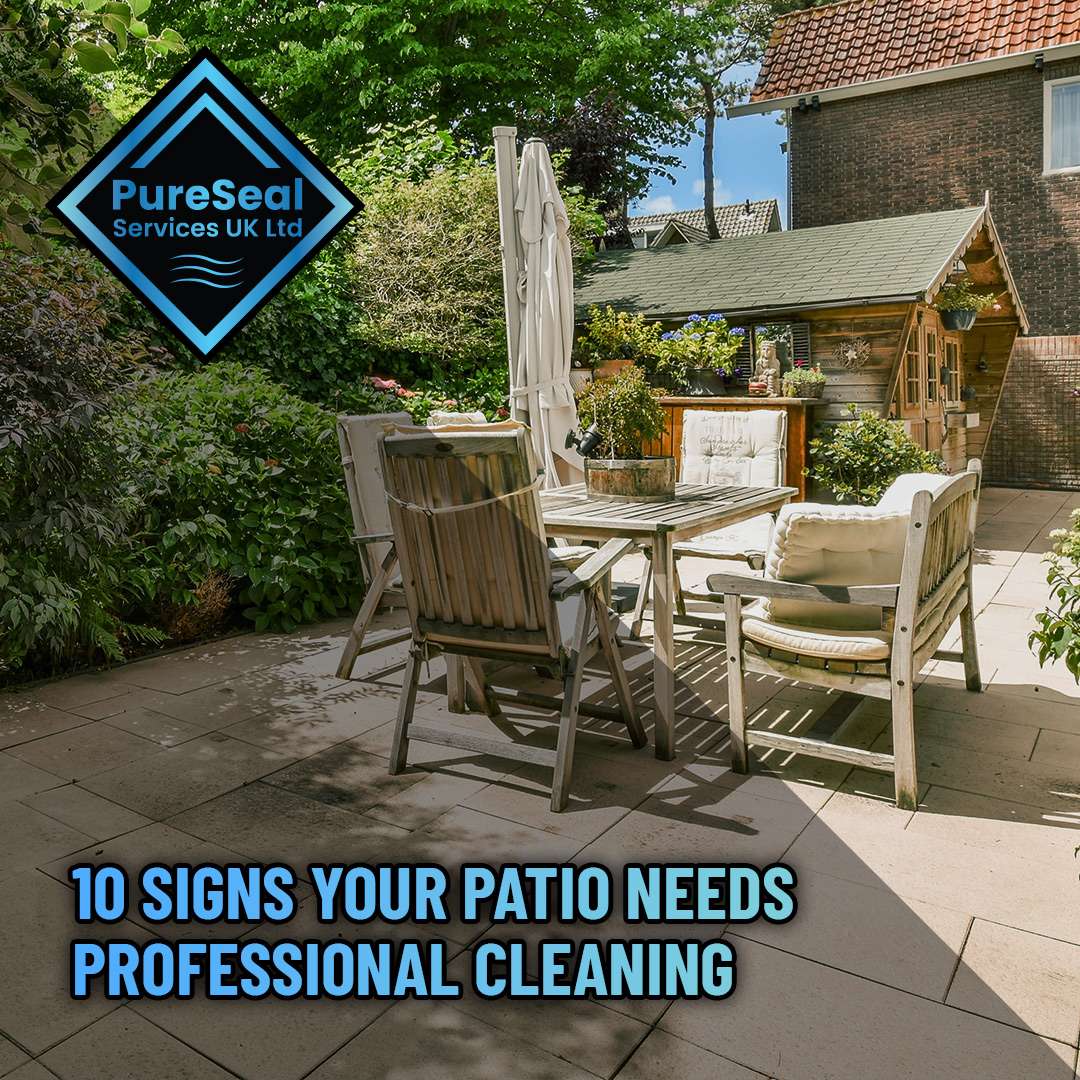
10 Signs Your Patio Needs Professional Cleaning
Written by PureSeal Services on . Posted in Pressure Washing, Approved Applicators, Blog
10 Signs Your Patio Needs Professional Cleaning
Your patio is one of the most used outdoor spaces around your property. Whether it is used for entertaining guests, relaxing with family, or simply improving kerb appeal, a clean patio makes a noticeable difference to the appearance and safety of your home. Over time, patios naturally collect dirt, algae, moss, weeds, stains, and weather damage that ordinary household cleaning methods struggle to remove properly.
Many homeowners delay professional patio cleaning because they believe the problem is only cosmetic. In reality, neglected paving can become slippery, damaged, and even structurally compromised if left untreated for too long. Regular maintenance from experienced specialists such as Pure Seal Services helps protect your investment while restoring the original appearance of your outdoor surfaces.
Below are ten clear signs that your patio may need professional cleaning.
1. Your Patio Looks Darker Than It Used To
One of the first signs of patio contamination is a noticeable darkening of the surface. Natural stone, block paving, concrete slabs, and porcelain paving all lose their brightness when dirt and organic matter build up over time.
This gradual change often happens so slowly that homeowners do not immediately notice it. However, when sections are cleaned professionally, the difference can be dramatic.
Common Causes of Patio Discolouration
| Cause | Effect on Patio |
|---|---|
| Air pollution | Leaves black residue on slabs |
| Algae growth | Creates green or dark patches |
| Mud and debris | Dulls natural colours |
| Fallen leaves | Causes staining and tannin marks |
| Moisture retention | Encourages organic growth |
Professional cleaning equipment removes deep-rooted grime that ordinary garden hoses and domestic pressure washers cannot fully tackle.
2. Green Algae Is Appearing Across the Surface
Green algae is extremely common on patios throughout the UK due to our damp climate. While it may initially seem harmless, algae can quickly spread and create slippery conditions.
Areas that receive limited sunlight are particularly vulnerable, including:
- North-facing patios
- Shaded corners
- Areas beneath trees
- Spaces behind garden furniture
- Patios close to fences or walls
Algae thrives in moisture-rich environments and can become deeply embedded within porous paving materials.
Why Algae Should Never Be Ignored
| Problem | Risk |
|---|---|
| Slippery surfaces | Increased risk of falls |
| Trapped moisture | Accelerated surface wear |
| Discolouration | Poor appearance |
| Spreading growth | Larger cleaning costs later |
Professional patio cleaning removes algae at the root rather than simply washing the surface temporarily.
3. Black Spots Are Becoming Difficult to Remove
Black spot lichen is one of the most stubborn patio contaminants in the UK. These tiny black dots often appear on sandstone and concrete paving and become harder to remove the longer they remain untreated.
Unlike normal dirt, black spot lichen penetrates deep into the surface pores of the stone.
Signs You Are Dealing With Black Spot Lichen
| Symptom | Description |
|---|---|
| Small black dots | Usually circular in shape |
| Resistant to scrubbing | Does not lift easily |
| Spreads gradually | Covers larger areas over time |
| Embedded appearance | Looks inside the stone rather than on top |
DIY methods often fail because household cleaners cannot fully break down the lichen. Professional-grade treatments combined with specialist cleaning equipment are usually required for effective removal.
4. Your Patio Becomes Slippery After Rain
A patio should remain safe to walk on in all weather conditions. If the surface becomes slippery after rainfall, this is a major warning sign that organic contamination has built up.
Slippery patios are commonly caused by:
- Algae
- Moss
- Mildew
- Biofilm build-up
- Dirt trapped in textured surfaces
This issue becomes particularly dangerous during autumn and winter when moisture levels increase.
Areas Most at Risk
| Patio Area | Reason |
|---|---|
| Shaded sections | Slower drying times |
| Steps | Higher fall risk |
| Sloped patios | Water runoff encourages slime |
| Textured paving | Traps organic material |
Professional cleaning restores grip levels and helps reduce accident risks around your property.
5. Weeds Are Growing Between the Joints
Weeds are more than just an eyesore. When weeds grow between patio joints, they gradually weaken the structural integrity of the paving.
Roots expand beneath slabs and can eventually lead to movement, uneven surfaces, and drainage problems.
Problems Caused by Patio Weeds
| Issue | Long-Term Impact |
|---|---|
| Root expansion | Joint damage |
| Moisture retention | Increased moss growth |
| Loose slabs | Trip hazards |
| Cracked pointing | Expensive repairs |
Removing visible weeds alone is not enough because seeds and roots often remain hidden beneath the surface. Professional cleaning helps eliminate the conditions that allow weeds to thrive.
6. Drainage Problems Are Developing
Patios should drain water effectively. If puddles remain long after rainfall, there may be a build-up of debris, dirt, moss, or blocked drainage channels.
Standing water can cause several problems including:
- Surface erosion
- Algae growth
- Frost damage during winter
- Staining
- Slippery conditions
Signs of Poor Patio Drainage
| Sign | Possible Cause |
|---|---|
| Persistent puddles | Blocked drainage |
| Water flowing toward house | Uneven surface |
| Moss near joints | Excess moisture |
| Dark damp patches | Poor evaporation |
Professional patio cleaning often restores drainage performance by clearing blocked channels and removing debris from the surface.
7. Your Patio Is Covered in Moss
Moss growth is one of the clearest indicators that your patio requires attention. Moss retains moisture against the paving surface which can accelerate deterioration.
Although moss may appear soft and harmless, it can create significant issues over time.
Why Moss Is Harmful
| Problem | Effect |
|---|---|
| Retains moisture | Encourages frost damage |
| Makes surfaces slippery | Safety hazard |
| Spreads rapidly | Covers large areas |
| Weakens joints | Structural issues |
Moss often grows heavily during colder months and in shaded gardens where moisture levels remain high throughout the year.
Professional cleaning removes both the visible moss and the underlying spores that cause regrowth.
8. DIY Cleaning Is No Longer Working
Many homeowners attempt to clean patios themselves using domestic pressure washers or supermarket cleaning products. While these methods may provide short-term improvement, they often fail to deal with deep contamination.
In some cases, incorrect pressure washing techniques can even damage the patio surface.
Common DIY Cleaning Problems
| DIY Method | Potential Issue |
|---|---|
| Excessive pressure washing | Surface etching |
| Bleach products | Plant damage |
| Scrubbing only | Incomplete cleaning |
| Cheap sealants | Uneven finish |
Professional patio cleaning companies use commercial-grade equipment designed for different paving materials, ensuring effective cleaning without unnecessary damage.
9. The Patio Is Affecting Your Property’s Appearance
Your patio forms a major part of your property’s exterior presentation. A dirty or neglected patio can significantly reduce the visual appeal of your home.
This becomes especially important if you are:
- Selling your property
- Hosting outdoor gatherings
- Improving garden aesthetics
- Renovating your outdoor space
Visual Signs of Neglect
| Sign | Appearance Impact |
|---|---|
| Heavy staining | Makes garden look older |
| Weed growth | Untidy appearance |
| Uneven colouring | Neglected look |
| Dirty edges | Poor first impression |
A professionally cleaned patio instantly improves the overall appearance of your outdoor area and can make the entire garden feel newer and better maintained.
10. The Surface Is Starting to Deteriorate
Patio surfaces naturally age over time, but dirt, moisture, and organic growth can accelerate the deterioration process significantly.
Early signs of damage should never be ignored.
Warning Signs of Surface Wear
| Sign | Possible Cause |
|---|---|
| Flaking stone | Moisture penetration |
| Cracked joints | Weed growth or movement |
| Loose slabs | Failed pointing |
| Fading colours | UV exposure and contamination |
Professional cleaning not only improves appearance but also helps preserve the lifespan of your paving by removing harmful contaminants before they cause further damage.
Why Professional Patio Cleaning Matters
Professional patio cleaning involves far more than simply spraying water onto paving slabs. Experienced specialists understand how different materials react to pressure, chemicals, and weather conditions.
This is particularly important for surfaces such as:
- Indian sandstone
- Limestone
- Block paving
- Concrete slabs
- Porcelain paving
- Resin-bound surfaces
Each material requires a tailored approach to avoid damage while achieving effective results.
Benefits of Professional Cleaning
| Benefit | Description |
|---|---|
| Improved appearance | Restores original colours |
| Increased safety | Reduces slip hazards |
| Longer lifespan | Prevents premature deterioration |
| Better drainage | Clears debris and moss |
| Weed reduction | Removes growth at source |
Common Patio Stains and Their Causes
Different stains require different treatment methods. Identifying the source of the staining helps determine the best cleaning approach.
| Stain Type | Common Cause |
|---|---|
| Green staining | Algae |
| Black spots | Lichen |
| White marks | Efflorescence |
| Rust stains | Metal furniture or runoff |
| Dark patches | Damp and dirt build-up |
| Oil stains | BBQs or outdoor cooking |
Professional patio cleaning services use specialist products and equipment to target these stains effectively without causing unnecessary damage to the paving.
How Often Should a Patio Be Professionally Cleaned?
The frequency depends on several factors including location, tree coverage, weather exposure, and usage levels.
Recommended Cleaning Frequency
| Patio Condition | Suggested Cleaning Schedule |
|---|---|
| Heavy tree coverage | Every 6–12 months |
| Damp shaded garden | Annually |
| High foot traffic | Every 12 months |
| Light contamination | Every 18–24 months |
Regular maintenance prevents severe build-up and helps avoid larger restoration costs later.
The Risks of Cheap Patio Cleaning Services
Choosing patio cleaning based solely on low prices can sometimes create more problems than it solves. Poor-quality cleaning methods may damage the paving surface or fail to address the underlying contamination properly.
Risks Associated With Cheap Cleaning
| Risk | Potential Result |
|---|---|
| Excessive pressure | Surface damage |
| Inexperienced operators | Uneven cleaning |
| Low-quality chemicals | Short-lived results |
| No aftercare | Rapid regrowth |
Homeowners looking for long-lasting results often prefer experienced providers such as Pure Seal Services, where quality workmanship and professional-grade equipment help deliver a more thorough and durable finish.
Premium patio cleaning services typically involve:
- Specialist surface assessment
- Commercial equipment
- Professional treatments
- Safe pressure levels
- Detailed aftercare recommendations
This level of service usually comes at a higher price point than basic pressure washing, but the results and long-term protection are often considerably better.
Signs Your Patio May Also Need Sealing
After professional cleaning, some patios benefit from sealing to help protect the surface from future contamination.
Indicators That Sealing May Help
| Sign | Reason |
|---|---|
| Porous stone | Absorbs water easily |
| Frequent algae growth | Moisture retention |
| Rapid staining | Unprotected surface |
| Colour fading | UV exposure |
Sealing can help reduce future maintenance requirements while improving resistance to staining and weather damage.
Seasonal Patio Cleaning Considerations
Different times of year bring different challenges for patios across the UK.
Spring
| Common Problems | Cause |
|---|---|
| Algae growth | Wet winter conditions |
| Moss build-up | Cold temperatures |
| Dirty surfaces | Winter debris |
Summer
| Common Problems | Cause |
|---|---|
| BBQ stains | Outdoor cooking |
| Increased foot traffic | More patio usage |
| Dust build-up | Dry weather |
Autumn
| Common Problems | Cause |
|---|---|
| Leaf staining | Falling foliage |
| Slippery surfaces | Damp weather |
| Drain blockages | Debris accumulation |
Winter
| Common Problems | Cause |
|---|---|
| Frost damage | Trapped moisture |
| Surface cracking | Freeze-thaw cycles |
| Persistent dampness | Reduced sunlight |
Professional cleaning throughout the year helps minimise seasonal damage and maintain the condition of the paving.
What to Expect From a Professional Patio Cleaning Service
A high-quality patio cleaning service typically includes several stages to achieve the best results.
Typical Cleaning Process
| Stage | Purpose |
|---|---|
| Surface inspection | Identifies contamination and damage |
| Weed removal | Clears joints |
| Pre-treatment | Breaks down organic growth |
| Pressure cleaning | Removes dirt and stains |
| Rinsing | Clears residue |
| Optional sealing | Protects the surface |
The exact process depends on the type and condition of the patio surface.
Areas Around the Patio That Often Need Attention
Patios are rarely the only affected areas. Contamination often spreads into surrounding surfaces.
Nearby Areas Commonly Affected
| Area | Common Issue |
|---|---|
| Garden paths | Algae and moss |
| Steps | Slippery surfaces |
| Driveway edges | Weed growth |
| Retaining walls | Green staining |
| Decking borders | Moisture build-up |
Cleaning these surrounding areas can help improve the overall appearance and reduce the likelihood of rapid patio recontamination.
Patio Materials That Benefit Most From Professional Cleaning
Some materials require particularly careful treatment to avoid damage.
| Patio Material | Cleaning Consideration |
|---|---|
| Sandstone | Easily etched by pressure |
| Limestone | Sensitive to chemicals |
| Porcelain | Requires specialist techniques |
| Concrete | Can trap deep stains |
| Block paving | Joint sand protection needed |
Using the wrong cleaning approach on these materials can cause permanent surface damage, which is why professional expertise is important.
Tags: Patio cleaning, Driveway cleaning, pressure washing, Roof Cleaning, Exterior cleaning, gutter cleaning, window cleaning
 Artificial and Sports Surfaces
 Awnings / Canopies / Gazebos
 Block Paving
 Brickwork
 Composite Surfaces
 Decking / Timber
 Granite
 Imprinted Concrete
 Internal Masonry
 Limestone
 Marble
 Metal Cladding
 Polished or Honed Stone
 Porcelain
 Render
 Resin Bond
 Road and Rail Signs
 Roof Tiles / Slates
 Sandstone
 Slate
Slate Solar Panels and Glass
 Stone Sills and Pier Caps
 Tarmac and Asphalt
 Gutters & UPVC
 Acid Damage
 Biofilm
 Bitumen
 Blood
Blood Carbon
 Concrete / Grout / Mortar
 Copper Oxide
 Efflorescence
 Egg
Egg Failed Sealer
 Fire Damage
 Fuel / Oil
 Graffiti
 Grease / Fat / Cooking Oil
 Lawn Fertiliser
 Lead Carbonate
 Lead Oxide
 Paint Splashes
 Rust
Rust Tar & Glue
 Tannin Removers
 Traffic Film Removers
 Trapped Moisture / Sealer Repairs
 Urine Neutralisers