Lichen is one of those outdoor growths that tends to creep in quietly and then suddenly become very noticeable once it has established itself. It appears as pale green, grey, yellow or even slightly orange patches that cling tightly to patio slabs, block paving and natural stone surfaces. Unlike simple surface dirt, lichen is a living organism made up of algae and fungus working together, which is why it behaves differently from moss or algae alone.
Patios are particularly vulnerable because they offer exactly what lichen needs to thrive: moisture, shade and a rough surface to anchor into. Over time, it slowly embeds itself into the microscopic pores of stone or concrete, making it more difficult to remove with standard cleaning methods.
This is why many homeowners eventually turn to more advanced cleaning techniques, including pressure washing and specialist treatments. When carried out correctly, these methods can restore patios to a near-original condition without damaging the surface.
Pureseal Services provides professional exterior cleaning solutions that deal with stubborn biological growth like lichen using controlled methods designed to protect the integrity of the patio while achieving a deep clean.
Why Lichen Is More Difficult to Remove Than Moss or Algae
Lichen is often confused with moss or algae, but it is significantly more resilient.
Key differences between patio growth types
Growth Type
Appearance
Root Structure
Removal Difficulty
Algae
Green slippery film
Surface-level
Easy
Moss
Soft, thick green growth
Shallow roots
Moderate
Lichen
Crusty, patchy growth
Deeply embedded
High
Unlike moss, which sits on top of the surface, lichen attaches itself firmly into the stone. This means scraping alone rarely works, and water pressure must be carefully combined with chemical treatment to fully break it down.
Common Types of Lichen Found on Patios
Different environments encourage different types of lichen growth. Understanding what you are dealing with helps determine the best removal method.
Crustose lichen
This is the most stubborn type, forming flat, crust-like patches that are tightly bonded to the surface.
Very difficult to remove manually
Often changes colour depending on moisture
Requires chemical and pressure treatment
Foliose lichen
This type has a leaf-like structure and slightly lifts away from the surface.
Easier to remove than crustose
Can be scraped after treatment
Still rooted into pores of stone
Fruticose lichen
This is more branched and shrubby in appearance.
Less common on patios
Usually found in shaded, damp areas
Can often be removed with combined methods
Why Lichen Grows on Patios in the First Place
Lichen does not appear randomly. It develops over time due to specific environmental conditions.
Main causes of lichen growth
Cause
Effect on Patio
Shade
Reduces drying time, encourages moisture retention
Poor drainage
Water sits on surface longer
Organic debris
Provides nutrients for growth
Weather exposure
Alternating wet and dry conditions encourage spread
Lack of maintenance
Allows spores to establish over time
North-facing patios and areas under trees are particularly prone to heavy lichen growth due to limited sunlight.
Tools and Equipment Needed for Lichen Removal
Removing lichen properly requires more than just a pressure washer. A combination of tools and treatments produces the best results.
Essential equipment list
Equipment
Purpose
Pressure washer
Removes loosened lichen and surface debris
Patio surface cleaner attachment
Ensures even cleaning coverage
Biocide treatment
Kills lichen at root level
Stiff-bristle brush
Agitates stubborn patches
Scraper tool
Removes thick, lifted growth
Protective gloves
Safety when handling chemicals
Eye protection
Prevents splash irritation
Watering can or sprayer
Applies treatment evenly
The most important component in long-term removal is the biocide treatment, as it prevents regrowth after cleaning.
Step-by-Step Guide to Removing Lichen From Patios
A structured process is essential when dealing with lichen because incomplete removal often leads to rapid regrowth.
Step 1: Clear and prepare the patio
Remove furniture, pots and any loose objects. Sweep the entire area thoroughly to remove leaves, soil and surface debris. This ensures cleaning products can reach the lichen directly.
Step 2: Apply biocide treatment
A specialist outdoor biocide should be applied evenly across the patio surface.
Cover all affected areas
Ensure even distribution
Allow sufficient dwell time
This step is critical because it begins breaking down the lichen structure before any pressure is used.
Step 3: Allow treatment to work
Biocides need time to penetrate and kill the organism at its base. Depending on severity, this can range from several hours to a full day.
Step 4: Pressure wash the surface
Once the lichen has been weakened, use a pressure washer fitted with a surface cleaner.
Maintain consistent movement
Avoid concentrating on one spot
Use moderate pressure settings
Step 5: Target remaining patches
Any stubborn areas should be treated again with a brush and lightly rewashed.
Step 6: Final rinse and inspection
A full rinse removes any remaining residue and ensures the patio is evenly cleaned.
Recommended Pressure Settings for Patio Materials
Different patio materials respond differently to pressure washing, especially when lichen has been embedded for a long time.
Patio Material
Recommended Pressure (PSI)
Notes
Concrete slabs
2,000 – 3,000 PSI
Can tolerate higher pressure
Natural stone
1,200 – 2,000 PSI
Requires caution to avoid erosion
Sandstone
1,000 – 1,800 PSI
Very porous, needs gentle approach
Limestone
800 – 1,500 PSI
Easily damaged if over-washed
Block paving
1,500 – 2,500 PSI
Joint sand may be affected
It is always safer to begin at a lower setting and increase gradually if needed.
Chemical Treatment vs Pressure Washing for Lichen
Both chemical and mechanical cleaning play a role, but neither is fully effective on its own.
Comparison of methods
Method
Effectiveness
Risk Level
Best Use
Pressure washing only
Moderate
Medium
Light surface growth
Chemical treatment only
High (slow)
Low
Prevention and long-term control
Combined approach
Very high
Low to medium
Heavy infestations
The most effective results always come from combining both methods in a controlled sequence.
Common Mistakes When Removing Lichen
Lichen removal is often done incorrectly, which leads to surface damage or quick regrowth.
Using pressure alone
High-pressure water may remove the visible layer but does not kill the organism beneath the surface.
Skipping biocide treatment
Without treatment, lichen often returns within weeks or months.
Using excessive pressure
Over-washing can erode stone surfaces, especially softer materials like sandstone.
Not allowing dwell time
Rushing the chemical process significantly reduces effectiveness.
Ignoring joints and edges
Lichen often spreads from shaded joints where moisture collects.
Surface-Specific Considerations for Patio Cleaning
Different patio materials require different handling techniques.
Natural stone patios
Natural stone is porous and delicate in many cases.
Requires low to moderate pressure
Benefits from longer biocide treatment
Can lose surface texture if over-cleaned
Concrete patios
Concrete is more durable but still porous.
Handles higher pressure
May show streaking if unevenly cleaned
Often benefits from surface cleaner attachments
Block paving patios
Block paving requires special attention to joint sand.
Pressure washing may dislodge jointing material
Re-sanding may be required afterwards
Even coverage is essential to avoid patchy results
Long-Term Prevention of Lichen Regrowth
Once lichen has been removed, preventing its return is just as important as the cleaning itself.
Preventative strategies
Regular biocide application
Keeping the patio clear of organic debris
Improving drainage to reduce standing water
Trimming back overhanging trees and shrubs
Routine light cleaning to prevent build-up
Seasonal Influence on Lichen Growth
Lichen does not grow evenly throughout the year. Seasonal changes significantly affect how quickly it spreads.
Seasonal growth patterns
Season
Growth Activity
Notes
Spring
High
Moist conditions encourage spread
Summer
Moderate
Slower growth due to drying
Autumn
Very high
Falling leaves increase organic matter
Winter
High
Damp, low sunlight conditions
Autumn and winter are typically the most problematic periods.
Professional Lichen Removal Services
In cases where lichen has become deeply embedded, professional treatment is often more effective and safer for the patio surface.
Pureseal Services carries out lichen removal using controlled pressure systems combined with specialist treatments that are adjusted based on the type of stone and severity of growth.
The focus is not just on removing visible patches, but on treating the root structure to reduce regrowth over time.
Professional cleaning is particularly useful for:
Older patios with long-term build-up
Natural stone surfaces requiring careful handling
Large outdoor areas with extensive coverage
Patios previously damaged by incorrect DIY pressure washing
Cost of Professional Lichen Removal From Patios
Professional cleaning costs vary depending on patio size, material type and level of infestation. Lichen-heavy surfaces typically require more time and treatment, which affects pricing.
Pureseal Services positions its work at the premium end of the market, reflecting the level of detail and care involved.
Typical pricing structure
Service Type
Average Price Range
Small patio lichen removal
£250 – £400
Medium patio deep clean
£400 – £650
Large patio restoration
£650 – £1,200
Heavy lichen infestation treatment
£700 – £1,500
Patio cleaning + preventative treatment
£900 – £1,800
Higher pricing reflects extended treatment time, specialist chemical use and controlled cleaning methods designed to protect the surface while delivering long-lasting results.
Behaviour of Patios After Lichen Removal
After lichen has been removed, patios often go through a short adjustment period as the surface settles.
Colour may appear brighter as embedded growth is removed
Slight texture changes may be visible in heavily affected areas
Drying patterns may highlight previous growth zones temporarily
Remaining spores may still exist but are inactive due to treatment
This is why preventative treatment plays such an important role in long-term results.
Advanced Methods for Removing Stubborn Lichen From Patios
Once lichen has been established for a long time, standard pressure washing and a single chemical treatment are often not enough. Older infestations tend to root deeper into the surface of stone or concrete, which means a more structured, multi-stage approach is needed to fully break it down.
Repeated biocide cycling
One of the most effective advanced methods is repeated biocide application over a controlled period.
Instead of relying on a single treatment, the process is repeated in cycles:
First application kills surface-level organisms
Second application targets deeper root structures
Third application prevents regrowth spores from activating
Cycle Stage
Purpose
Expected Outcome
Initial treatment
Surface breakdown
Visible softening of lichen
Secondary treatment
Deeper penetration
Reduced adhesion to stone
Final treatment
Prevention
Long-term suppression
This staged approach is particularly effective on patios that have been untreated for several years or have heavy shading and moisture retention.
Steam-assisted cleaning
In more delicate situations, low-pressure steam cleaning can be used as an alternative or supplement to traditional pressure washing. Steam helps loosen biological material without relying on high force.
Benefits include:
Reduced risk of surface erosion
Better penetration into porous stone
Improved removal of fine lichen remnants
Lower water usage compared to full pressure washing
Steam is particularly useful for natural stone patios where preserving surface integrity is more important than aggressive cleaning.
Mechanical agitation techniques
In some cases, lichen forms a crust that cannot be removed with water pressure alone. Mechanical agitation is then used after chemical treatment has softened the growth.
Tool Type
Use Case
Nylon brushes
General surface agitation
Stiff bristle brushes
Thick lichen patches
Scraper blades
Heavy crust removal
Rotary brushes
Large area uniform cleaning
The key is to avoid excessive force. The goal is to lift the weakened lichen rather than scrape the stone itself.
Deep Cleaning Different Patio Surface Conditions
Not all patios are in the same condition, and lichen behaves differently depending on age, exposure and material wear. Adjusting technique based on condition is essential for achieving a consistent finish.
Newly installed patios with early lichen growth
Early-stage lichen is easier to manage but still requires proper treatment.
If treated early, lichen rarely becomes a long-term issue on newer patios.
Moderately aged patios with established growth
This is where most residential patios fall. Lichen has usually been present for multiple seasons.
Typical characteristics:
Visible crusting in shaded areas
Patchy distribution across slabs
Some surface pitting or porosity increase
Treatment approach:
Full biocide saturation
Medium-pressure surface cleaning
Focus on joints and edges where moisture collects
Heavily neglected patios
These require a far more intensive restoration process.
Signs include:
Thick crusted lichen covering large areas
Deep discolouration of stone
Slippery surfaces due to biological build-up
Blocked drainage between slabs
In these cases, multiple cleaning passes are usually needed, often combined with restoration techniques to bring the patio back to a usable condition.
How Patio Material Age Affects Lichen Removal
The age and wear of patio materials directly influence how easily lichen can be removed.
Material porosity over time
Material Age
Porosity Level
Effect on Lichen
New (0–3 years)
Low
Limited penetration
Mid-age (3–10 years)
Moderate
Increasing adhesion
Old (10+ years)
High
Deep root embedding
Older patios are more absorbent, which means lichen can penetrate deeper into the structure, requiring longer treatment times and more careful pressure control.
Surface erosion considerations
Over time, patio surfaces naturally wear down due to weather exposure. This creates small grooves and pits where lichen can anchor more firmly.
Excessive pressure washing on older stone can:
Widen surface cracks
Remove fine surface texture
Expose aggregate in concrete
Accelerate future biological growth
This is why controlled cleaning methods are essential rather than aggressive high-pressure blasting.
Environmental Factors That Influence Lichen Regrowth
Even after successful removal, environmental conditions will determine how quickly lichen may return.
Moisture retention patterns
Areas that remain damp for long periods are most at risk.
Common causes include:
Poor drainage beneath slabs
Overhanging vegetation
North-facing garden layouts
Lack of airflow around patio edges
Reducing moisture retention is one of the most effective long-term prevention strategies.
Sunlight exposure levels
Lichen thrives in shaded environments.
Sun Exposure
Lichen Risk
Full sun
Low
Partial shade
Moderate
Heavy shade
High
Patios that receive limited direct sunlight will always require more frequent maintenance.
Organic debris accumulation
Leaves, soil and pollen act as a nutrient source for lichen.
If left untreated:
Organic matter traps moisture
Microbial activity increases
Lichen colonies expand more rapidly
Regular sweeping and seasonal cleaning significantly reduce this risk.
Long-Term Patio Maintenance Strategy
Once a patio has been fully cleaned, maintaining it properly reduces the likelihood of lichen returning to the same severity.
Routine maintenance schedule
Frequency
Maintenance Task
Purpose
Weekly
Light sweep
Remove debris build-up
Monthly
Water rinse
Prevent surface contamination
Quarterly
Spot biocide treatment
Control early regrowth
Annually
Full clean
Reset surface condition
Every 2–3 years
Protective treatment
Long-term prevention
Consistency is more important than intensity when it comes to preventing lichen.
Preventative biocide application
Applying a preventative treatment after cleaning is one of the most effective ways to slow regrowth.
Keeps spores inactive
Reduces adhesion of new growth
Extends time between deep cleans
Improves overall patio appearance longevity
This is especially important in shaded or damp gardens.
Safety Considerations When Removing Lichen
Lichen removal involves both chemical and mechanical processes, so safety must be considered throughout.
Chemical handling safety
Biocides are effective but must be used responsibly.
Always avoid skin contact
Prevent runoff into plant beds where possible
Store chemicals securely away from children and pets
Follow controlled dilution ratios
Overuse of chemical products does not improve results and can damage surrounding landscaping.
Slip hazard risks during cleaning
Wet lichen becomes extremely slippery when loosened.
Precautions include:
Working in small sections
Avoiding walking on treated areas
Using stable footing at all times
Keeping children and pets away during cleaning
Even after removal begins, surfaces can remain hazardous until fully rinsed.
Equipment handling risks
Pressure washers and surface cleaners require careful handling.
Maintain steady grip during operation
Avoid directing jets toward joints or weak stone edges
Ensure electrical safety with outdoor-rated equipment
Check hose connections regularly to prevent bursts
Professional Restoration Approach for Severe Lichen Cases
In more advanced cases, especially where patios have not been maintained for many years, a structured restoration approach is required rather than simple cleaning.
Pureseal Services uses a methodical process designed to bring heavily affected patios back into usable condition without unnecessary surface damage.
This typically includes:
Initial assessment of stone condition and porosity
Multi-stage biocide treatment over extended periods
Controlled pressure washing using surface cleaners
Targeted spot restoration for deep crust areas
Optional sealing to reduce future absorption
Each stage is adjusted depending on how the patio responds, rather than using a single fixed method.
This tailored approach is particularly important for natural stone patios, where material variation can be significant even within the same installation.
Behaviour of Patios After Deep Lichen Removal
Once lichen has been removed, patios often continue to change slightly over the following weeks as they fully dry and settle.
Common post-cleaning effects include:
Gradual colour lightening as moisture evaporates
Remaining faint marks from previous growth areas
Increased surface uniformity after drying
Improved slip resistance once fully dry
These changes are normal and often indicate that the cleaning process has successfully removed both surface and embedded growth.
Managing Expectations With Lichen Removal
One of the most important aspects of lichen treatment is understanding that results are influenced by the age, depth and environment of the growth.
In some cases:
Deep staining may not fully disappear in one treatment
Heavily eroded stone may retain some visual marking
Shaded areas may require ongoing maintenance
Regrowth prevention is an ongoing process rather than a one-off fix
This is why structured cleaning combined with preventative care is far more effective than isolated treatments.
Practical Considerations for Long-Term Patio Care
Maintaining a patio after lichen removal is not just about cleaning, but about managing the conditions that allow it to form in the first place.
Key practical measures include:
Improving drainage around slab edges
Reducing constant shade where possible
Keeping joints free from organic matter
Scheduling periodic preventative treatments
Avoiding long gaps between maintenance cycles
When these factors are controlled properly, patios remain cleaner for longer periods and require less intensive restoration work in the future.
Final Conclusion
Removing lichen from patios is never just a straightforward cleaning job. It sits somewhere between surface restoration and biological control, which is why results depend so heavily on the method used rather than just the equipment. What looks like a simple patch of discolouration is actually a living organism that has bonded itself into the texture of the stone over time, and that distinction changes how it needs to be treated.
The most important point is that lichen cannot be properly dealt with using pressure alone. Water pressure will remove the visible surface layer, but the organism itself often remains embedded beneath, ready to reappear once conditions become damp again. This is why chemical treatment plays such a central role. Biocides are not an optional extra in this process, they are what actually breaks the biological cycle and prevents regrowth from taking hold immediately after cleaning.
Equally important is patience in the process. Lichen does not develop overnight, and it does not disappear instantly either. The most effective results come from allowing treatments time to work, rather than rushing into aggressive cleaning too early. When biocide is given time to penetrate properly, the structure of the lichen weakens significantly, which means less reliance on pressure and a lower risk of damaging the patio surface.
The condition and age of the patio also play a major role in the final outcome. Newer surfaces tend to respond well to treatment and return to a near-original finish fairly quickly. Older patios, especially those that have been exposed to years of moisture and organic build-up, behave differently. Their surfaces are more porous, which allows lichen to root deeper, and that often means a staged approach is needed rather than a single clean. In those cases, expectations need to be realistic, because while dramatic improvement is achievable, some degree of surface marking can remain where the stone itself has been weathered over time.
Material type is another factor that should never be ignored. Natural stone, sandstone and limestone are particularly sensitive to both pressure and chemical strength, while concrete and block paving offer more flexibility but still require control to avoid joint damage or surface streaking. A one-method-fits-all approach simply does not work effectively across all patio types, which is why adjustment during the process is so important.
Long-term results depend just as much on what happens after cleaning as the cleaning itself. Without preventative treatment, patios that are prone to shade, damp conditions or poor drainage will almost always begin to show regrowth again. This is not a failure of the cleaning process, it is a reflection of the environment. Lichen spores exist naturally in outdoor spaces, so the goal is not to eliminate them completely but to keep the surface conditions unfavourable for them to establish again quickly.
Maintenance is often underestimated but makes a significant difference. Simple habits like regular sweeping, removing organic debris and occasional light biocide application can extend the time between deep cleans considerably. In many cases, patios that receive consistent light maintenance remain in good condition far longer than those left until heavy build-up returns.
Safety also plays a bigger role than people expect. Once lichen becomes wet or partially lifted, it can create a surprisingly slippery surface, especially on sloped patios or areas with limited drainage. This is why controlled cleaning in sections and careful rinsing is important, not just for appearance but for usability of the space afterwards.
From a professional perspective, the most reliable results come from a structured and controlled process rather than aggressive cleaning. Pureseal Services approaches lichen removal in this way, using staged treatment methods combined with carefully adjusted pressure levels to ensure that the biological growth is fully addressed while protecting the integrity of the patio surface underneath. This becomes particularly important in more severe cases where multiple years of build-up have occurred or where natural stone requires careful handling to avoid long-term wear.
Ultimately, effective lichen removal is about balance. Enough treatment to fully break down and kill the organism, enough pressure to clear away the residue, and enough restraint to avoid damaging the surface in the process. When those elements are aligned properly, patios do not just look cleaner, they return to a more stable condition that is easier to maintain and far less likely to deteriorate quickly again.

 Artificial and Sports Surfaces
 Awnings / Canopies / Gazebos
 Block Paving
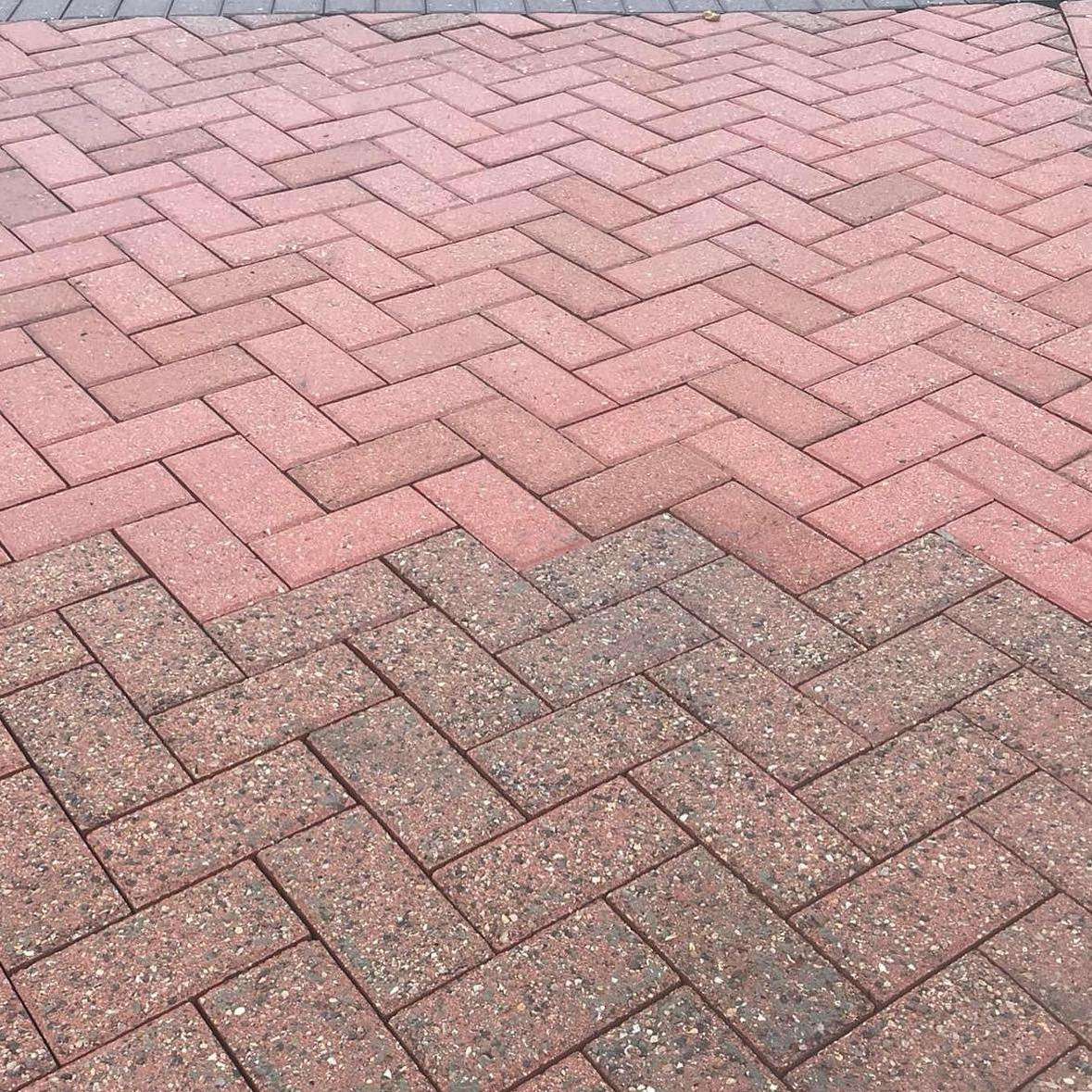 Brickwork
 Composite Surfaces
 Decking / Timber
 Granite
 Imprinted Concrete
 Internal Masonry
 Limestone
 Marble
 Metal Cladding
 Polished or Honed Stone
 Porcelain
 Render
 Resin Bond
 Road and Rail Signs
 Roof Tiles / Slates
 Sandstone
 Slate
Slate Solar Panels and Glass
 Stone Sills and Pier Caps
 Tarmac and Asphalt
 Gutters & UPVC
 Acid Damage
 Biofilm
 Bitumen
 Blood
Blood Carbon
 Concrete / Grout / Mortar
 Copper Oxide
 Efflorescence
 Egg
Egg Failed Sealer
 Fire Damage
 Fuel / Oil
 Graffiti
 Grease / Fat / Cooking Oil
 Lawn Fertiliser
 Lead Carbonate
 Lead Oxide
 Paint Splashes
 Rust
Rust Tar & Glue
 Tannin Removers
 Traffic Film Removers
 Trapped Moisture / Sealer Repairs
 Urine Neutralisers