
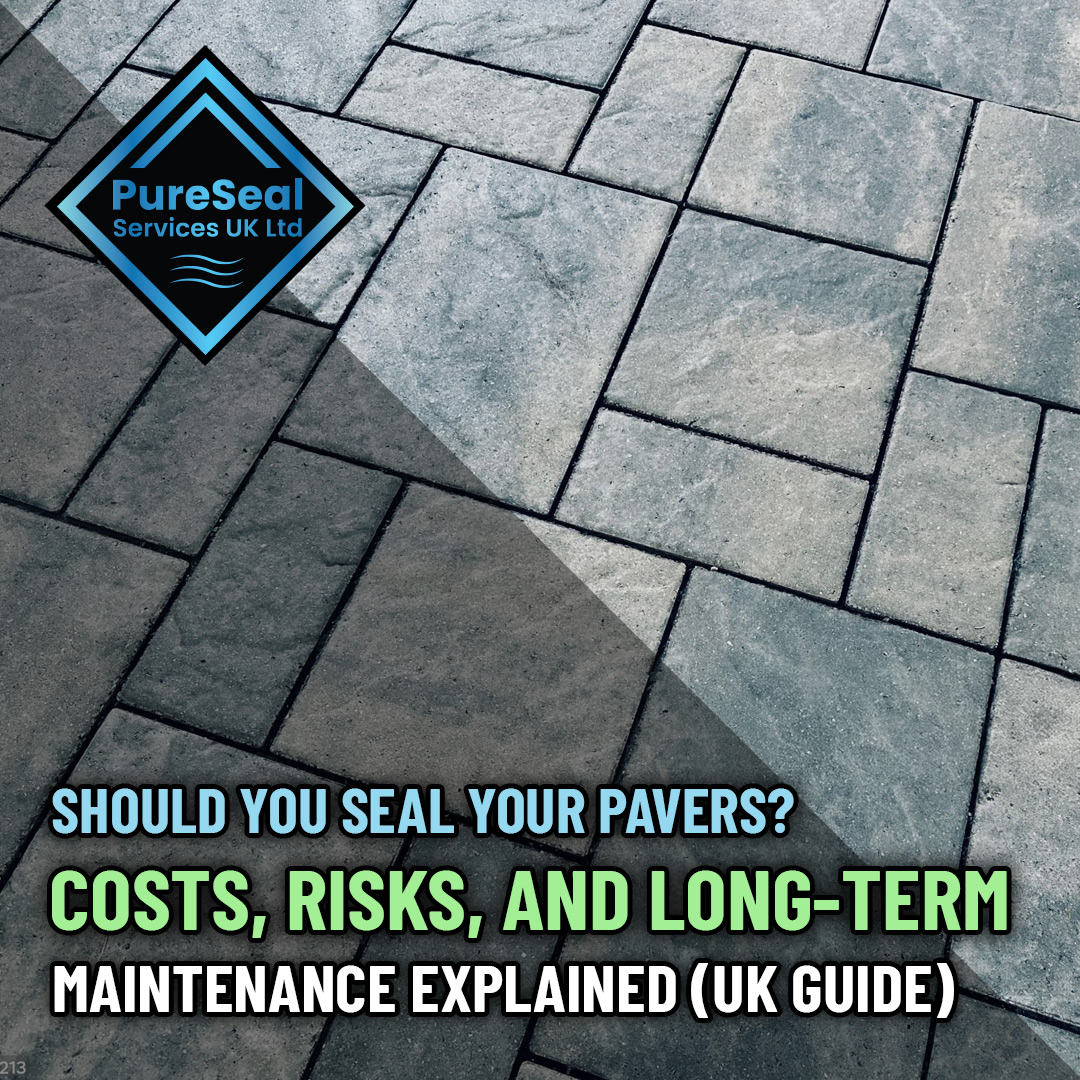
Should You Seal Your Pavers? Costs, Risks, and Long-Term Maintenance Explained (UK Guide)
Is There a Downside to Sealing Pavers?
Sealing pavers — whether on a patio, driveway, or pathway — is one of the most popular ways to protect and enhance hard landscaping. Sealers promise to bring out the colour, stop stains, reduce weed growth, and make cleaning easier. But, as with most home improvements, there are both advantages and drawbacks.
This article explores the full picture of sealing pavers in the UK climate, including potential downsides, cost considerations in pounds, types of sealers, maintenance demands, and situations where sealing may not be the best choice. Tables are included to help compare products, prices, and performance over time.
What Does Paver Sealing Actually Do?
A paver sealer is a liquid coating applied to block paving, stone, or concrete surfaces. It penetrates or coats the top layer to form a protective barrier against water, oil, dirt, and UV rays. Depending on the formula, it can produce a wet look, a natural matte finish, or a high-gloss sheen.
In essence, sealing aims to:
-
Repel stains from vehicles, food, or garden materials.
-
Reduce water absorption that causes freeze–thaw damage.
-
Lock sand joints to stabilise blocks.
-
Enhance the pavers’ natural colour and texture.
-
Make cleaning easier by preventing algae adhesion.
However, sealing doesn’t come without trade-offs, particularly if it’s applied incorrectly, on the wrong surface, or maintained poorly.
Types of Paver Sealers
| Type | Finish | Main Benefit | Typical Lifespan | Approx. Cost (materials only) | Suitable Surfaces |
|---|---|---|---|---|---|
| Acrylic solvent-based | Gloss or semi-gloss | Enhances colour, resists oil stains | 2–4 years | £3–£6 per m² | Block paving, concrete |
| Acrylic water-based | Satin or matte | Low odour, easier to apply | 2–3 years | £2–£4 per m² | Brick, concrete |
| Polyurethane (PU) | Gloss | Very durable, resists chemicals | 4–6 years | £5–£9 per m² | Driveways, industrial |
| Silane/Siloxane penetrating | Natural, invisible | Breathable, prevents water absorption | 5–10 years | £4–£8 per m² | Natural stone, clay |
| Epoxy (two-part) | High-gloss, strong film | Superior chemical resistance | 5–10 years | £6–£12 per m² | Commercial/garage floors |
Note: Prices vary with brand, quantity, and whether you DIY or hire professionals. A typical UK patio (30 m²) will need £60–£300 worth of sealer plus application tools or labour.
The Main Downsides of Sealing Pavers
While sealing can improve the look and longevity of pavers, it’s not without drawbacks. Let’s break down the most common disadvantages that homeowners face after sealing.
1. Slippery Surfaces When Wet
One of the biggest complaints after sealing is loss of traction. Gloss or “wet look” finishes can become slippery in rain, especially on smooth concrete or clay pavers.
| Sealer Type | Slip Risk (Wet) | Comments |
|---|---|---|
| Gloss solvent-based acrylic | High | Looks attractive but can be unsafe near pools or steps. |
| Matte or natural finish | Low | Better for patios and paths. |
| Silane/Siloxane (penetrating) | Very Low | Maintains original surface texture. |
Solution (if you must seal): add a non-slip additive like silica or polymer grit into the sealer. But note — this slightly dulls the shine and adds cost (typically £1–£2/m² extra).
2. Peeling, Flaking, or Whitening
If the surface isn’t properly cleaned or dried before sealing, trapped moisture can cause whitening, blistering, or peeling. This is especially common in damp UK conditions.
-
Efflorescence (white salt deposits) trapped under the film looks unsightly.
-
Over-application can suffocate the surface, preventing it from “breathing”.
-
Once peeling begins, the entire section often needs stripping and resealing, which can be labour-intensive and costly.
Average cost to strip failed sealer:
-
DIY chemicals and tools: £2–£4 per m²
-
Professional re-seal service: £8–£15 per m²
That means a 40 m² driveway could cost £320–£600 to fix a bad job.
3. Colour Change or Yellowing Over Time
Some sealers, particularly cheaper solvent-based types, yellow as they age or when exposed to UV light. Others darken the surface more than expected.
This can be disappointing for homeowners expecting a “natural” enhancement but ending up with a plastic-like sheen. The effect may also differ from one batch to another, making touch-ups obvious.
Tip: Always test on a small hidden area before coating the entire surface.
4. Regular Maintenance Still Required
A common misconception is that sealing means no more maintenance. In reality, sealers reduce staining but do not stop algae, lichen, or weeds completely. Dirt still settles on the sealed film.
Even the best sealer needs:
-
Gentle washing every few months.
-
Top-up coats every few years (depending on wear).
-
Occasional joint re-sanding if blocks shift.
Neglecting maintenance allows organic growth on top of the sealer, making it look dull and dirty, which defeats the purpose.
5. Cost and Reapplication Cycle
Sealing adds an ongoing expense. While initial material costs might be modest, maintenance over time adds up. Let’s compare a decade-long scenario for a 40 m² driveway.
| Scenario | Initial Cost | Recoat Interval | 10-Year Total |
|---|---|---|---|
| Unsealed (basic cleaning only) | £0 | – | £0–£400 (occasional cleaning) |
| Water-based acrylic | £150 | Every 3 years | £150 + £150 + £150 = £450 |
| Solvent-based gloss | £200 | Every 4 years | £200 + £200 = £400 |
| Penetrating sealer | £300 | Every 6–8 years | £300 + £150 (optional top-up) = £450 |
In short, sealing adds long-term cost and commitment — worth it for appearance and protection, but not necessarily for everyone.
6. Difficult or Expensive to Reverse
Once a sealer is applied, you can’t easily go back to the original raw surface. Removing sealant requires:
-
Harsh chemical strippers
-
Pressure washing
-
Possible re-sanding or re-laying
Natural stone, in particular, may never return to its exact original texture. This permanence means homeowners should be absolutely sure they want the “sealed look” before committing.
7. Application Sensitivity (Weather and Skill)
Sealer performance depends heavily on weather conditions during application. In the UK, that’s a constant challenge:
-
Temperatures below 10°C can prevent proper curing.
-
High humidity or rain within 24 hours can trap moisture.
-
Direct sunlight can cause uneven drying and streaks.
DIYers often underestimate these factors, leading to premature failure. Professionals time the job carefully — often charging more for that reliability.
8. Trapped Moisture and Breathability Issues
Especially with non-breathable film-forming sealers (acrylic or polyurethane), moisture from below the paver can get trapped.
This creates:
-
Cloudy patches or white blooming.
-
Accelerated freeze–thaw damage in cold spells.
-
Algae growth between pavers due to damp microclimates.
Penetrating sealers (silane/siloxane) reduce this risk since they allow vapour transmission, but even they can hinder natural evaporation if over-applied.
9. Possible Environmental Impact
Many solvent-based sealers contain volatile organic compounds (VOCs) that release fumes during application and curing. These can be unpleasant for users and contribute to air pollution.
Modern water-based formulations have improved, but even these may contain small amounts of polymers and additives that wash into drainage systems over time. Eco-conscious homeowners sometimes prefer to avoid sealing altogether to minimise chemical footprint.
10. Patchy or Uneven Finish
Uneven absorption is common with porous pavers or mixed-age surfaces. Older blocks may soak up more sealer, while newer ones stay lighter, resulting in a patchwork look.
This is especially noticeable on patterned or multi-toned block paving where uniformity matters. Achieving an even finish often requires two coats, careful rolling, and consistent overlap — not always easy for a DIY job.
When Sealing Might Be a Bad Idea
| Situation | Why Sealing Can Be Problematic | Recommended Alternative |
|---|---|---|
| Newly laid paving (under 6 months old) | Residual salts and moisture can cause efflorescence and peeling. | Wait at least 6–12 months before sealing. |
| Damp, shaded areas | Persistent moisture encourages trapped algae and film failure. | Use breathable penetrating sealer or leave unsealed. |
| Heritage or listed properties | Gloss finish may alter character or violate restrictions. | Use unsealed natural finish with regular brushing. |
| Permeable block systems | Sealer may block drainage pores and invalidate SuDS compliance. | Avoid sealing or use breathable products only. |
| Pavers with existing sealer of unknown type | Incompatibility may cause reaction or whitening. | Strip old sealer before reapplying. |
Benefits vs. Drawbacks Summary
| Category | Benefits | Potential Drawbacks |
|---|---|---|
| Appearance | Enhances colour, adds gloss or wet look | Can look artificial or patchy; may yellow |
| Protection | Resists stains, reduces water absorption | Can trap moisture or peel if misapplied |
| Maintenance | Easier to clean, slows weed growth | Still needs cleaning; reapplication every few years |
| Durability | Extends life of pavers | Poor prep shortens lifespan; costly to strip |
| Safety | Locked joints reduce movement | Smooth gloss surfaces can be slippery |
| Cost | May prevent long-term damage | Adds ongoing expense and effort |
Lifespan Expectations by Material
| Paver Material | Sealing Benefit | Common Issue | Suggested Sealer Type | Expected Recoat |
|---|---|---|---|---|
| Concrete block paving | Enhances colour, locks joints | Peeling or whitening | Acrylic or PU film | 3–4 years |
| Clay bricks | Richer colour, water protection | Surface slipperiness | Water-based acrylic or silane | 3–5 years |
| Natural sandstone | Prevents algae, colour fade | Dark patches from trapped moisture | Silane/siloxane penetrating | 5–8 years |
| Limestone | Prevents oil stains | Risk of discolouration (acid-sensitive) | Breathable penetrating | 4–6 years |
| Porcelain | Usually non-porous; sealing adds little benefit | Minimal absorption | None or specialist nano-coat | 6–10 years if used |
Cost Breakdown for UK Homeowners
Example: 40 m² Driveway
| Item | Quantity | Cost Range | Notes |
|---|---|---|---|
| Sealer (water-based acrylic, 5L covers 20 m²) | 2 tins | £40–£80 | Mid-range brand |
| Application tools (roller, tray, gloves, mask) | – | £20–£40 | One-time purchase |
| Cleaning chemicals / jet wash | – | £15–£30 | Pre-seal preparation |
| Total DIY cost | – | £75–£150 | Around £2–£4 per m² |
| Professional labour | – | £8–£15 per m² | £320–£600 total job |
Resealing every 3 years brings the 10-year cost to roughly £600–£1,000 including materials and labour.
Long-Term Maintenance Considerations
Even sealed pavers need ongoing care to keep them looking good.
Recommended annual routine:
| Season | Task | Notes |
|---|---|---|
| Spring | Pressure wash gently at low pressure | Avoid stripping sealer. |
| Summer | Inspect for fading or flaking | Apply top-up coat if dull or patchy. |
| Autumn | Sweep leaves, treat algae early | Prevent staining and slipperiness. |
| Winter | Avoid salt-based de-icers | They can degrade some sealers. |
If your sealer develops milky patches or dullness, consider a top-up coat rather than a full reapplication to extend life.
Pros and Cons Recap
| Pros of Sealing | Cons of Sealing |
|---|---|
| Protects from oil, stains, and UV | Risk of slipperiness when wet |
| Enhances colour and finish | Can peel or whiten if applied wrong |
| Reduces weed and moss growth | Needs reapplication every few years |
| Easier to clean surface | Adds maintenance and cost |
| Prevents water ingress and frost damage | May alter appearance permanently |
| Locks jointing sand | Requires dry weather and prep |
Environmental and Safety Notes
-
Ventilation: Always apply sealers outdoors or with good airflow to avoid inhaling VOC fumes.
-
Runoff control: Block drains temporarily during sealing to prevent chemicals entering stormwater systems.
-
Disposal: Dispose of leftover sealer according to local council hazardous waste rules — never pour into drains or soil.
-
Slip testing: If sealing areas near pools or slopes, consider anti-slip granules or textured sealers.
When Sealing Makes Sense
Although there are clear downsides, sealing remains valuable when:
-
The pavers are porous and prone to staining (e.g. concrete, sandstone).
-
You want a wet or enhanced look for decorative appeal.
-
The surface sees frequent traffic or vehicles.
-
You’re willing to commit to periodic resealing and maintenance.
-
You’ve experienced joint erosion or weed intrusion before.
In these contexts, the benefits can outweigh the drawbacks — as long as the application is done correctly and maintained over time.
Common Myths About Sealing
| Myth | Reality |
|---|---|
| “Sealing makes pavers maintenance-free.” | It reduces effort but doesn’t remove cleaning duties. |
| “You can seal any time after laying.” | Wait at least 3–6 months for moisture and salts to evaporate. |
| “One coat is enough.” | Most surfaces need two thin coats for consistent coverage. |
| “You can apply with any weather.” | Ideal conditions are dry, 12–20°C, with 24 hours rain-free. |
| “All sealers look shiny.” | Penetrating sealers leave a natural, matte finish. |
Key Takeaways
-
Sealing is optional, not essential — it improves looks and protection but comes with commitments.
-
The biggest downsides are slipperiness, peeling, moisture entrapment, and ongoing maintenance cost.
-
Always consider climate, surface type, and use before sealing.
-
Preparation and timing matter more than the product itself.
-
Once sealed, surfaces will need resealing periodically for best results.
Example Decision Table: Should You Seal or Not?
| Factor | If You Seal | If You Don’t Seal |
|---|---|---|
| Appearance | Richer colour, wet look | Natural matte finish |
| Maintenance Effort | Moderate (brush + recoat) | Slightly higher cleaning frequency |
| Upfront Cost (40 m²) | £150–£600 | £0 |
| Long-Term Cost (10 years) | £450–£1,000 | £0–£400 |
| Durability | Better against stains | Slightly more prone to algae |
| Surface Safety (wet) | Potentially slippery | Naturally grippy |
| Flexibility | Harder to reverse | Can choose later if needed |
Conclusion
So, is there a downside to sealing pavers?
Yes — several. While sealing offers undeniable benefits in appearance, protection, and longevity, it also introduces risks like slipperiness, trapped moisture, discolouration, and added maintenance costs.
For many UK homeowners, sealing is worth it only if you understand the upkeep involved and choose the right sealer for your material and environment. Those wanting the most natural look, minimal chemicals, or zero maintenance may be better off keeping pavers unsealed and simply cleaning them seasonally.
In short: sealing pavers is a protective treatment, not a permanent solution. Done correctly, it enhances; done poorly, it disappoints. Always weigh the pros, cons, and ongoing effort before deciding — because once sealed, your paving surface is changed for years to come.
The importance of surface preparation
The success of any sealing job depends heavily on how well the pavers are prepared beforehand. Dirt, oil stains, moss, and even tiny traces of detergent can interfere with adhesion, causing patchy or peeling finishes later. In the UK’s damp climate, moisture trapped in joints or under blocks is a frequent culprit of milky or white blotches after sealing. Before application, the surface must be completely clean and bone dry, ideally following at least 48 hours of dry weather. Skipping or rushing this step is the most common reason homeowners regret sealing, as fixing it later can cost more than the original job.
Weather and timing challenges in the UK
Unlike warmer regions, the UK rarely offers long stretches of ideal sealing weather. Most sealers require a dry surface, moderate temperature (typically between 12°C and 20°C), and no rain for 24 hours afterward. This limits good sealing windows to late spring and early autumn. Wind can also carry dust onto freshly coated areas, ruining the finish. DIYers often underestimate this and seal too early or too late in the year, only to see the coating haze, whiten, or fail prematurely. Good timing can make the difference between a sealer lasting a decade or peeling within months.
Aesthetic considerations
Sealing alters not only the durability of your pavers but also their appearance and texture. A glossy “wet look” may intensify colours, but some homeowners find it artificial or too reflective in bright light. On heritage or natural-stone patios, the aesthetic mismatch can be jarring. Conversely, matte or invisible sealers maintain a more authentic appearance but provide subtler protection. Once sealed, it’s difficult to undo the change — especially on porous materials like sandstone or brick. Testing a small, hidden patch is the best way to avoid disappointment before coating the full area.
The impact on drainage and permeability
Permeable paving systems are designed to allow rainwater to soak through into the sub-base, helping manage stormwater and comply with Sustainable Drainage Systems (SuDS) regulations. Applying an impervious sealer can block those pathways, leading to surface runoff and potential local flooding. In the UK, this can even raise compliance concerns for newer developments. For driveways built with permeable block paving, sealing may invalidate performance guarantees or alter the drainage characteristics. If you have a SuDS-compliant surface, only use breathable or semi-permeable sealers that maintain water infiltration.
Balancing aesthetics with practicality
Ultimately, the choice to seal or not comes down to balancing visual appeal against practicality and upkeep. Homeowners seeking a pristine, richly coloured surface may accept the cost and effort of resealing every few years. Others may prefer the natural weathered look of unsealed stone, finding it blends better with the landscape and needs less long-term attention. In climates like the UK, where moisture, frost, and algae are ongoing challenges, sealing can be useful — but it’s not mandatory. The best results come from understanding your priorities, local conditions, and how much time you’re willing to invest in maintenance.
Tags: Patio cleaning, Driveway cleaning, pressure washing, Roof Cleaning, Exterior cleaning, gutter cleaning, window cleaning
 Artificial and Sports Surfaces
 Awnings / Canopies / Gazebos
 Block Paving
 Brickwork
 Composite Surfaces
 Decking / Timber
 Granite
 Imprinted Concrete
 Internal Masonry
 Limestone
 Marble
 Metal Cladding
 Polished or Honed Stone
 Porcelain
 Render
 Resin Bond
 Road and Rail Signs
 Roof Tiles / Slates
 Sandstone
 Slate
Slate Solar Panels and Glass
 Stone Sills and Pier Caps
 Tarmac and Asphalt
 Gutters & UPVC
 Acid Damage
 Biofilm
 Bitumen
 Blood
Blood Carbon
 Concrete / Grout / Mortar
 Copper Oxide
 Efflorescence
 Egg
Egg Failed Sealer
 Fire Damage
 Fuel / Oil
 Graffiti
 Grease / Fat / Cooking Oil
 Lawn Fertiliser
 Lead Carbonate
 Lead Oxide
 Paint Splashes
 Rust
Rust Tar & Glue
 Tannin Removers
 Traffic Film Removers
 Trapped Moisture / Sealer Repairs
 Urine Neutralisers