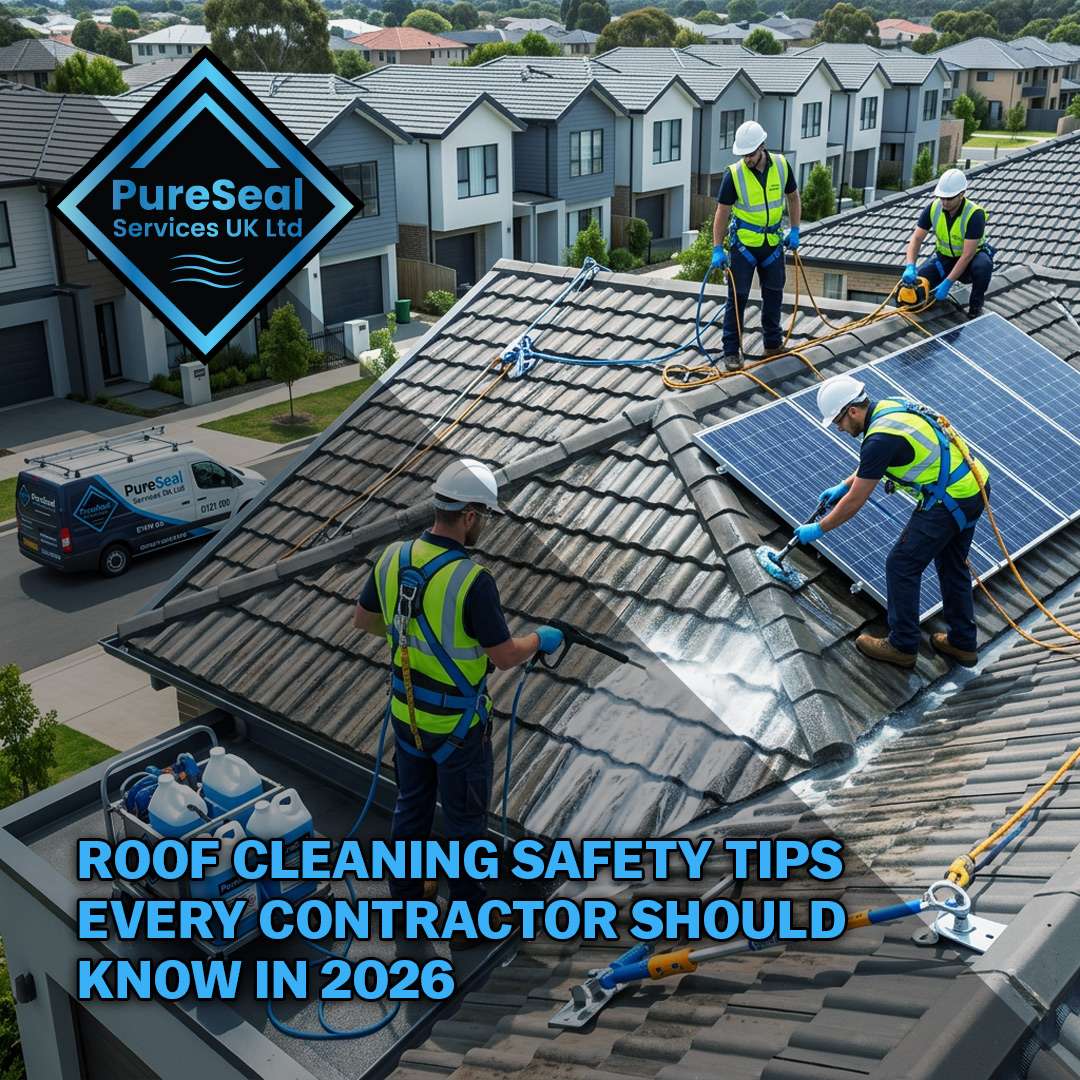
Roof Cleaning Safety Tips Every Contractor Should Know in 2026
Working at height has always been one of the biggest risks within the exterior cleaning industry, and roof cleaning remains one of the most hazardous services contractors undertake. While professional equipment, modern access solutions and improved training have made the industry considerably safer, accidents can still occur when proper procedures are not followed.
In 2026, clients are increasingly expecting professional contractors to demonstrate high safety standards alongside exceptional workmanship. Whether cleaning residential homes or large commercial buildings, safety should never be viewed as an optional extra—it should be built into every stage of every project.
At Pure Seal Services, safety is considered just as important as achieving outstanding cleaning results. Careful planning, suitable equipment and experienced operatives help ensure every project is completed to the highest possible standard.
Why Roof Cleaning Carries Significant Risks
Roof cleaning combines several hazards that require careful management.
Contractors may be working:
Several metres above ground
On wet or slippery roof surfaces
Around fragile roof materials
Close to overhead cables
With specialist cleaning products
Using access equipment
Even a straightforward domestic roof can present risks that require a professional assessment before work begins.
Common Hazard
Potential Risk
Working at height
Falls
Moss-covered tiles
Slips
Fragile roof sections
Roof collapse or tile breakage
High winds
Loss of balance
Wet weather
Reduced grip
Access equipment
Incorrect setup or misuse
Begin Every Job with a Risk Assessment
Every property is different, making a site-specific risk assessment essential before any equipment arrives.
A proper assessment should consider:
Roof pitch
Roof material
Property height
Access restrictions
Weather conditions
Public access
Nearby roads
Trees
Conservatories
Solar panels
Skylights
Identifying hazards early allows contractors to plan the safest working method before work begins.
Choose the Right Access Equipment
One of the biggest mistakes contractors make is choosing equipment based on convenience rather than safety.
Possible access options include:
Mobile elevated work platforms
Scaffold towers
Fixed scaffolding
Roof ladders
Access platforms
Each has advantages depending on the property.
For larger or more complex projects, specialist access equipment often allows work to be completed more safely while reducing unnecessary contact with the roof surface.
Never Assume Every Roof Can Be Walked On
Many homeowners assume roof cleaners simply walk across every roof.
In reality, this can be dangerous.
Some roofs contain:
Cracked tiles
Rotten battens
Fragile membranes
Loose ridge tiles
Previous repairs
Hidden damage
Walking directly on these areas can create unnecessary risks for both the contractor and the property.
Monitor the Weather Carefully
Weather conditions can change rapidly throughout the working day.
Contractors should continually monitor:
Weather Condition
Safety Impact
Heavy rain
Increased slip risk
Strong winds
Unsafe working at height
Ice
Extremely hazardous
Thunderstorms
Stop work immediately
Extreme heat
Fatigue and dehydration
If conditions become unsafe, work should be postponed rather than rushed.
Wear Appropriate PPE
Personal protective equipment (PPE) forms an important part of every roof cleaning project.
Depending on the work involved, contractors may require:
Safety helmets
Protective gloves
Eye protection
Non-slip footwear
High-visibility clothing
Respiratory protection
Harnesses where appropriate
PPE should always be inspected before use and replaced if damaged.
Keep Roof Surfaces as Clear as Possible
Loose moss, wet leaves and debris create slipping hazards.
Good housekeeping should continue throughout the project by:
Removing loose debris regularly
Keeping access points tidy
Preventing tools from being left on the roof
Maintaining clear working areas
Small improvements in housekeeping can significantly reduce the likelihood of accidents.
Protect Members of the Public
Roof cleaning doesn’t just involve protecting the workforce.
Pedestrians, neighbours and customers should also be considered.
Measures may include:
Barrier systems
Warning signage
Controlled working areas
Temporary footpath restrictions
Spotters where required
Objects falling from height can cause serious injury, making exclusion zones an important part of site safety.
Inspect Equipment Before Every Job
Equipment should never be assumed to be safe simply because it was used the previous day.
Daily inspections should include:
Equipment
Inspection Points
Ladders
Damage, feet, locking mechanisms
Harnesses
Webbing, stitching, buckles
Access platforms
Controls, tyres, emergency lowering
Hoses
Leaks and wear
Pumps
Correct operation
Extension poles
Secure fittings
Faulty equipment should be removed from service immediately.
Handle Cleaning Products Responsibly
Professional roof cleaning often involves specialist treatment products.
Contractors should:
Read manufacturer guidance
Wear appropriate PPE
Store products securely
Prevent unnecessary overspray
Protect nearby planting where required
Follow correct dilution procedures
Proper handling protects both the operator and the surrounding environment.
Avoid Working Alone
Lone working increases risk considerably.
Having another trained operative on site means assistance is immediately available if:
Equipment fails
Weather changes
Medical emergencies occur
Access becomes difficult
Emergency services need guiding onto site
Good communication between team members improves both safety and efficiency.
Prevent Fatigue
Roof cleaning is physically demanding.
Contractors may spend several hours:
Carrying equipment
Working in awkward positions
Wearing PPE
Operating machinery
Climbing access systems
Regular breaks, hydration and sensible workload planning help reduce fatigue-related accidents.
Communicate Clearly with Customers
Before work starts, customers should understand:
Which areas will be restricted
Where vehicles will be parked
Expected working hours
Any temporary access limitations
Safety precautions being taken
Clear communication reduces misunderstandings and helps keep everyone safe while work is underway.
Invest in Ongoing Training
The roof cleaning industry continues to evolve, with new equipment, products and safety practices introduced regularly.
Professional contractors should refresh their knowledge through ongoing training in:
Working at height
Access equipment
Safe chemical handling
Emergency procedures
Manual handling
First aid awareness
Keeping skills up to date not only improves safety but also demonstrates professionalism to customers.
Why Professional Roof Cleaning Is Worth the Investment
Choosing a professional contractor should never be based solely on the lowest quotation.
Premium roof cleaning services typically invest heavily in:
Investment Area
Benefit
Staff training
Safer working practices
Specialist access equipment
Reduced risk and improved efficiency
High-quality PPE
Better protection for operatives
Professional cleaning products
Reliable, long-lasting results
Comprehensive insurance
Greater peace of mind for customers
While premium services often come at a higher price, that investment supports safer working methods, better equipment and higher standards throughout the project.
Building a Strong Safety Culture
Safety should never be treated as a checklist completed at the beginning of the day. The safest contractors create a culture where every team member feels responsible for identifying hazards, reporting concerns and following established procedures.
Simple habits such as holding a short site briefing each morning, checking weather forecasts throughout the day and encouraging open communication can prevent small issues from becoming serious incidents.
By combining thorough planning, appropriate access equipment, regular training and professional working practices, contractors can protect both their workforce and their customers while maintaining the high standards expected within the roof cleaning industry. At Pure Seal Services, delivering exceptional workmanship goes hand in hand with putting safety first on every project.
Understanding the Work at Height Regulations
Every professional roof cleaning contractor should have a good understanding of the UK’s Work at Height Regulations. These regulations are designed to reduce the risk of falls by ensuring work is properly planned, supervised and carried out by competent people.
The regulations encourage contractors to follow a simple hierarchy:
Avoid working at height where possible.
Prevent falls by using suitable access equipment.
Minimise the consequences if a fall were to occur.
This means contractors should always consider whether specialist access equipment can safely complete the work instead of unnecessarily walking across roof tiles.
Safety Principle
Why It Matters
Proper planning
Reduces unexpected hazards
Competent operatives
Improves decision making on site
Suitable equipment
Lowers the chance of accidents
Regular supervision
Maintains safe working standards
Emergency planning
Faster response if problems occur
Manual Handling Should Never Be Overlooked
Roof cleaning doesn’t only involve working at height. Contractors frequently move heavy equipment throughout the day.
Items commonly lifted include:
Cleaning systems
Hoses
Water containers
Access equipment
Extension poles
Treatment products
Poor lifting technique can result in back injuries, muscle strains and long-term health problems.
Simple measures such as team lifting, using mechanical assistance where possible and breaking loads into smaller sections can significantly reduce manual handling risks.
Vehicle Safety on Site
Work begins long before anyone steps onto a roof.
Company vehicles often carry expensive equipment and may need to park close to customers’ homes.
Safe vehicle management includes:
Parking without obstructing emergency access
Avoiding pedestrian routes where possible
Using hazard lights when appropriate
Securing equipment before unloading
Keeping loading areas tidy
Planning vehicle positioning also reduces the distance heavy equipment needs to be carried.
Protecting the Property During Roof Cleaning
Professional contractors should think beyond cleaning the roof itself.
Before work begins, surrounding areas may need protecting, including:
Patios
Driveways
Garden furniture
Conservatories
Vehicles
Decorative planting
Outdoor lighting
Taking time to prepare the site demonstrates professionalism and reduces the likelihood of accidental damage.
Keeping Gutters Safe Throughout the Project
Roof cleaning naturally dislodges moss, leaves and debris.
If gutters are ignored during the cleaning process, they can quickly become blocked.
Blocked gutters may lead to:
Overflowing rainwater
Damp walls
Water staining
Blocked downpipes
Regularly clearing gutters during and after roof cleaning helps maintain proper drainage and prevents unnecessary problems once the work has been completed.
Gutter Check
Benefit
Remove moss
Prevents blockages
Flush downpipes
Confirms free water flow
Inspect brackets
Identifies loose sections
Check joints
Helps prevent leaks
Emergency Planning Is Essential
Every contractor should have a clear emergency procedure before work begins.
Planning ahead allows the team to react quickly if an incident occurs.
Emergency planning should include:
Site address readily available
Emergency contact numbers
First aid equipment
Nearest hospital information
Rescue procedures for working at height
Clear communication between team members
Although emergencies are uncommon, preparation can make a significant difference if one does occur.
Maintaining Professional Standards
Safety and professionalism go hand in hand.
Customers often judge a contractor long before any cleaning begins.
Professional contractors typically arrive with:
Clean branded vehicles
Well-maintained equipment
Suitable PPE
Organised work areas
Clear communication
Respect for the customer’s property
These standards not only improve safety but also give customers confidence that their property is in experienced hands.
Reviewing Every Completed Project
One of the best ways to improve safety is by learning from previous jobs.
After completing each project, contractors can review:
Review Area
Questions to Ask
Equipment
Did everything perform correctly?
Access
Was there a safer method available?
Planning
Were any hazards missed initially?
Communication
Was the customer kept fully informed?
Efficiency
Could the work be completed more safely next time?
Continuous improvement helps maintain consistently high standards across future projects.
Building Customer Confidence Through Safe Working
Many homeowners are understandably cautious about allowing contractors to work on their roof.
Visible safety practices provide reassurance that the work is being carried out responsibly.
Customers appreciate seeing contractors who:
Carry out a thorough inspection before starting.
Use appropriate access equipment.
Keep the site organised and tidy.
Explain the process clearly.
Prioritise the protection of both the property and everyone on site.
A strong reputation for safe working practices is often just as valuable as delivering an excellent cleaning result. Contractors who consistently invest in training, equipment and careful planning demonstrate a commitment to quality that sets them apart. At Pure Seal Services, maintaining the highest standards of safety is an integral part of providing a premium roof cleaning service, ensuring every project is completed with professionalism, care and attention to detail.

 Artificial and Sports Surfaces
 Awnings / Canopies / Gazebos
 Block Paving
 Brickwork
 Composite Surfaces
 Decking / Timber
 Granite
 Imprinted Concrete
 Internal Masonry
 Limestone
 Marble
 Metal Cladding
 Polished or Honed Stone
 Porcelain
 Render
 Resin Bond
 Road and Rail Signs
 Roof Tiles / Slates
 Sandstone
 Slate
Slate Solar Panels and Glass
 Stone Sills and Pier Caps
 Tarmac and Asphalt
 Gutters & UPVC
 Acid Damage
 Biofilm
 Bitumen
 Blood
Blood Carbon
 Concrete / Grout / Mortar
 Copper Oxide
 Efflorescence
 Egg
Egg Failed Sealer
 Fire Damage
 Fuel / Oil
 Graffiti
 Grease / Fat / Cooking Oil
 Lawn Fertiliser
 Lead Carbonate
 Lead Oxide
 Paint Splashes
 Rust
Rust Tar & Glue
 Tannin Removers
 Traffic Film Removers
 Trapped Moisture / Sealer Repairs
 Urine Neutralisers