
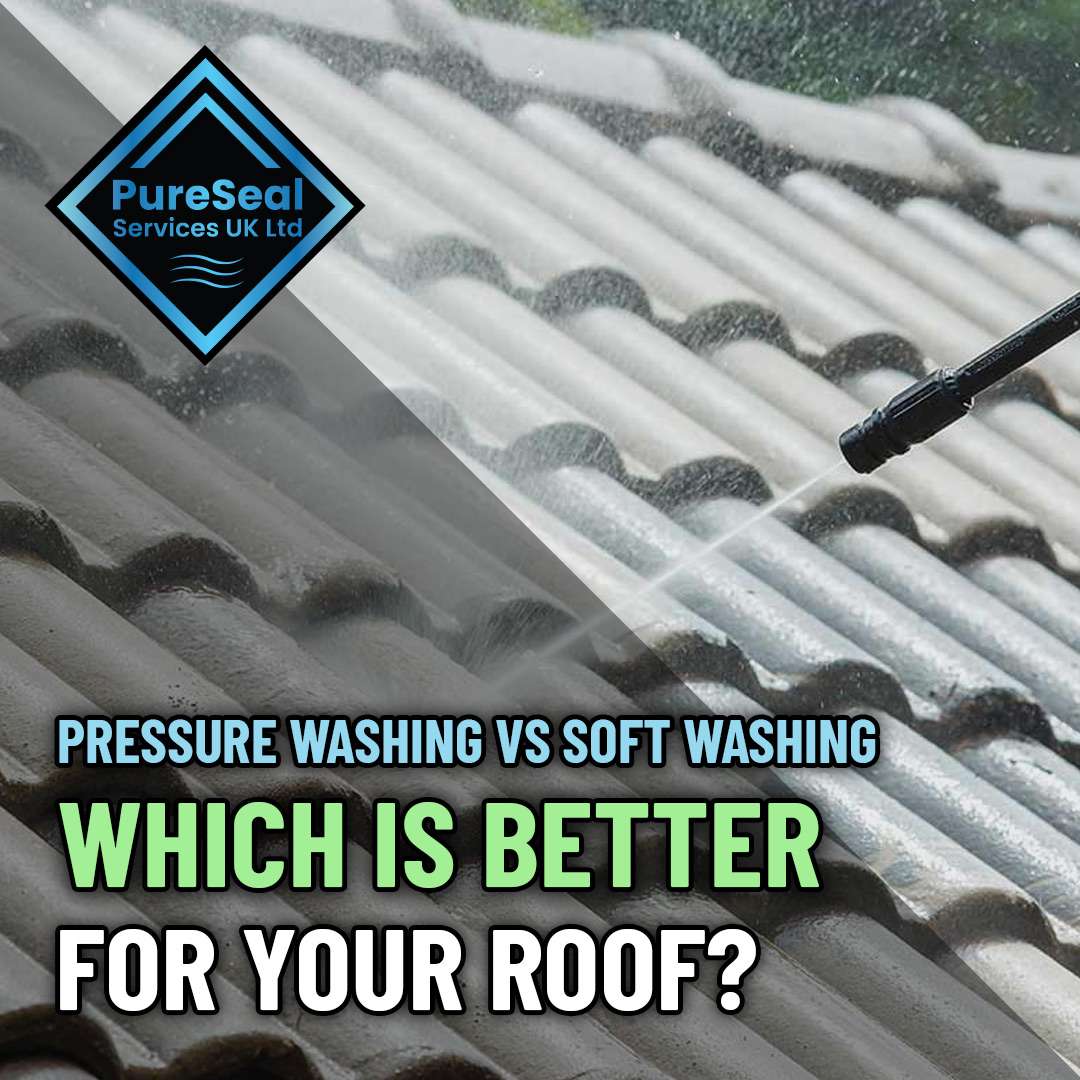
Pressure Washing vs Soft Washing: Which Is Better for Your Roof?
Is It Better to Pressure Wash or Soft Wash a Roof?
Introduction
Roof cleaning is often overlooked, yet it plays a crucial role in protecting one of a home’s most valuable components. Over time, roofs collect moss, algae, lichen, black streaks, and general dirt. These not only look unsightly but can trap moisture, weaken roofing materials, and reduce a roof’s lifespan.
When it comes to cleaning methods, two main approaches dominate:
-
Pressure washing (also called power or jet washing)
-
Soft washing (a low-pressure, chemical-assisted cleaning process)
Determining which is “better” depends on several factors — including the roof’s age, material, level of contamination, cost, and environmental concerns. In general, soft washing is safer and more suitable for most roof types, but pressure washing still has its place when handled correctly.
What Each Method Means
Pressure Washing
Pressure washing involves spraying water at high pressure — often hundreds or even over a thousand pounds per square inch (psi) — to dislodge dirt, moss, and stains from surfaces. The cleaning action is primarily mechanical, with the water’s kinetic energy doing most of the work.
While this method can remove thick grime quickly, it can also damage roofing materials if misused. The high pressure can strip away protective coatings, loosen shingles, and even force water beneath tiles.
Soft Washing
Soft washing, on the other hand, relies on low pressure and specialized cleaning solutions. The water flow is gentle — typically under 500 psi — and is used mainly to deliver and rinse off the cleaning chemicals.
These solutions are designed to kill algae, moss, and lichen at their roots. After a dwell period of 10–20 minutes, the roof is gently rinsed. Soft washing cleans deeply, reduces regrowth, and preserves the roof’s integrity.
Comparison Overview
| Feature / Consideration | Pressure Washing | Soft Washing |
|---|---|---|
| Cleaning method | High-pressure water jet | Low-pressure rinse with cleaning chemicals |
| Main cleaning action | Physical force | Chemical breakdown of organic growth |
| Speed of cleaning | Fast | Slower |
| Risk of damage | High | Low |
| Longevity of results | Shorter – moss regrows faster | Longer – kills roots and spores |
| Water usage | High | Lower |
| Environmental impact | More runoff and debris | Less runoff, depends on chemicals used |
| Skill required | High – needs careful control | Moderate – requires correct chemical mixing |
| Suitability for delicate roofs | Poor | Excellent |
| Overall maintenance cost | Can be cheaper short-term | More cost-effective long-term |
Performance and Effectiveness
Pressure washing provides instant visual results. Stains, moss, and dirt vanish almost immediately under the jet. However, it only removes surface-level contamination. Moss and algae spores that remain can regrow within months.
Soft washing takes longer to show results, but it addresses the root cause. The biocides and detergents penetrate and kill organic growth at the source. The clean appearance can last 3–5 years or more, depending on local conditions.
For roofs heavily infested with moss, pressure washing may seem appealing for its speed, but without applying a biocidal treatment afterward, the moss will quickly return. Soft washing inherently includes this treatment, extending the clean period substantially.
Risk and Potential Damage
Pressure Washing Risks
The main disadvantage of pressure washing is the potential for damage:
-
Dislodging tiles or shingles: The force can lift edges or even remove parts of the roof.
-
Stripping protective coatings: Asphalt shingles, for instance, have a granulated surface that can be eroded.
-
Water ingress: High-pressure water can penetrate under tiles, leading to leaks and dampness.
-
Cracking fragile materials: Clay, slate, or aged concrete tiles can break under strong jets.
-
Voiding warranties: Many roofing manufacturers advise against high-pressure cleaning.
Soft Washing Safety
Soft washing is far gentler. The low pressure poses minimal physical risk to the roof structure. As long as the cleaning solution is properly mixed and rinsed, there’s little danger of damage.
The primary caution with soft washing is chemical handling. Using overly strong solutions or poor rinsing can discolour surfaces or harm nearby vegetation. When performed by trained professionals, though, it’s considered the safest roof-cleaning method available today.
Cost Comparison
Actual roof-cleaning costs vary depending on roof size, complexity, and contamination level. However, here’s a rough guide based on typical UK pricing:
| Roof Type / Size | Pressure Washing (Approx.) | Soft Washing (Approx.) | Notes |
|---|---|---|---|
| Small house (90–140 m² roof) | £150 – £300 | £250 – £400 | Soft wash costs more due to chemicals and labour time |
| Medium detached (around 200 m² roof) | £300 – £500 | £400 – £700 | Steeper or complex roofs add to cost |
| Large or multi-level roof | £500 – £1,000+ | £700 – £1,500+ | Requires more time, scaffolding, and safety equipment |
Although soft washing is typically 25–50% more expensive upfront, its results last longer and the risk of roof damage is much lower. Considering potential repair bills (which can easily exceed £1,000 if tiles or waterproof layers are compromised), soft washing often proves more economical in the long run.
Environmental Impact
Pressure washing uses large volumes of water and creates heavy runoff filled with debris, dirt, and possibly chemicals. This runoff can pollute soil and drains if not properly managed.
Soft washing, by contrast, uses less water and controlled application. Most professional solutions today are biodegradable and designed to break down safely after rinsing. Operators also take precautions to protect plants and direct runoff safely.
However, soft washing chemicals should still be used responsibly — following manufacturer guidelines, avoiding overspray, and ensuring adequate rinsing to protect gardens and lawns.
Suitability by Roof Material
| Roof Material | Pressure Washing | Soft Washing | Recommendation |
|---|---|---|---|
| Asphalt shingles | Not recommended – damages granules | Excellent | Soft wash only |
| Clay tiles | Risk of cracking / water intrusion | Ideal | Soft wash preferred |
| Concrete tiles | Possible with controlled pressure | Excellent | Soft wash or hybrid |
| Slate | Fragile, can break easily | Safe | Soft wash strongly advised |
| Metal roofs | Tolerates higher pressure | Works well | Either method, use caution |
| Flat membrane (EPDM, felt, fibreglass) | Unsafe under pressure | Safe | Soft wash only |
| Cedar or wood shingles | Very delicate | Gentle wash only | Soft wash only |
In most residential cases, soft washing is clearly the safer option. Pressure washing should be limited to strong, well-anchored materials like concrete or metal roofs — and even then, performed at reduced pressures.
When Pressure Washing Might Be Suitable
Pressure washing isn’t entirely obsolete. Under certain conditions, it can still be useful:
-
Heavily soiled or industrial roofs: Thick dirt or soot layers sometimes require mechanical removal.
-
Durable materials: Concrete or metal roofs can tolerate moderate pressure.
-
Pre-renovation cleaning: Before applying sealants or paints, pressure washing can strip away old coatings effectively.
-
Hybrid methods: Using soft wash chemicals first to kill organic growth, followed by gentle pressure to rinse residue.
Even then, it’s essential to keep the pressure low, maintain a safe spray angle, and avoid direct impact on seams or edges.
Hybrid Cleaning: The Best of Both Worlds
Some professionals combine the two techniques to balance safety and effectiveness. The process generally follows these steps:
-
Soft wash first — apply biocide and surfactant to kill growths and loosen debris.
-
Allow dwell time — typically 15–30 minutes, depending on conditions.
-
Gentle rinse — using low to moderate pressure to remove dead material.
This hybrid approach works well on concrete tile roofs, offering both thorough cleaning and reduced risk.
Chemical and Safety Considerations
Soft washing uses various chemicals, often including mild biocides, sodium hypochlorite, or surfactants. Safe handling is essential:
-
Correct dilution: Follow manufacturer ratios precisely. Overly strong mixes can bleach materials or harm plants.
-
PPE for operators: Gloves, eye protection, respirators, and waterproof clothing.
-
Surface protection: Cover sensitive plants, soak surrounding soil before and after cleaning to dilute any runoff.
-
Rinsing: Ensure all chemical residues are thoroughly rinsed off to prevent corrosion or staining.
-
Weather conditions: Avoid applying in strong sunlight, high wind, or freezing temperatures.
Environmental regulations may also govern chemical discharge. Professionals should ensure compliance with local water and waste management standards.
Longevity and Maintenance Frequency
Pressure washing may provide immediate results, but regrowth of algae and moss often begins within six to twelve months.
Soft washing, however, kills spores at the root, keeping roofs cleaner for much longer — typically two to five years before noticeable regrowth occurs.
To maintain a clean roof:
-
Regular inspections: Check annually for new moss or algae patches.
-
Gutter maintenance: Keep gutters clear to prevent moisture buildup.
-
Tree trimming: Reduce shade and leaf litter to discourage moss.
-
Biocidal re-treatment: Apply a light biocide every 1–2 years to prevent regrowth.
Over a ten-year period, the overall cost of periodic soft washing is often lower than repeated pressure washes and subsequent repairs.
Realistic Case Examples
| Property Example | Roof Description | Problem | Recommended Method | Reasoning |
|---|---|---|---|---|
| Detached suburban house (asphalt shingles) | 25 years old | Heavy black algae streaks | Soft washing | Low pressure protects shingles; chemicals kill algae and roots |
| Modern bungalow (concrete tiles) | 15 years old | Moss buildup and dirt | Soft washing or hybrid | Tiles durable; chemical treatment provides longer-lasting results |
| Industrial unit (metal roof) | 10 years old | Grease and soot | Pressure washing (controlled) | Strong metal surface tolerates higher pressure |
| Period property (slate roof) | 80 years old | Moss and lichen | Soft washing | Slate is brittle and expensive to repair |
Best Practice Checklist
To ensure safe and effective roof cleaning:
-
Inspect roof condition before cleaning — repair loose tiles or damaged flashing first.
-
Use professional-grade equipment — consumer pressure washers can be unpredictable.
-
Work from the top down — prevents water from getting under tiles.
-
Never spray upwards — always aim downward at a shallow angle.
-
Use scaffolding or harnesses — safety first, especially on steep roofs.
-
Avoid cleaning in extreme weather — strong sun or cold affects chemical action.
-
Test a small patch first — check for discolouration or damage.
-
Rinse thoroughly — whether pressure or soft wash, proper rinsing prevents residue issues.
Long-Term Value and Property Impact
A clean roof enhances curb appeal, improves water drainage, and extends lifespan. Moss and algae not only trap moisture but can lead to freeze–thaw damage in colder months.
From a property value standpoint, a professionally maintained roof signals care and upkeep, potentially increasing resale appeal. Estate agents often note that clean roofs and gutters improve the overall presentation of a home.
Cost–Benefit Snapshot
| Aspect | Pressure Washing | Soft Washing |
|---|---|---|
| Initial cost | Lower | Slightly higher |
| Expected roof lifespan impact | May shorten | Extends lifespan |
| Likelihood of regrowth within 1 year | High | Low |
| Risk of roof damage | High | Minimal |
| Average maintenance frequency | Every 1–2 years | Every 3–5 years |
| Average 10-year total cost (est.) | £1,500 – £2,500 | £1,200 – £1,800 |
Soft washing tends to win economically once the long-term benefits and reduced repair risk are factored in.
Common Mistakes to Avoid
-
DIY high-pressure washing: Consumer pressure washers can exceed safe limits and cause serious damage.
-
Incorrect chemical use: Overly strong bleach or biocides can corrode metal fittings or harm plants.
-
Ignoring runoff: Chemical runoff can harm lawns, ponds, and drains if not managed.
-
Neglecting safety equipment: Roof falls are a significant risk; always use proper support.
-
Skipping aftercare: Without post-treatment, moss will return quickly even after cleaning.
Final Comparison Table
| Criterion | Pressure Wash | Soft Wash | Verdict |
|---|---|---|---|
| Effectiveness on heavy dirt | Very good | Good | Pressure wins |
| Effectiveness on moss/algae | Moderate – doesn’t kill roots | Excellent | Soft wash wins |
| Risk of damage | High | Low | Soft wash wins |
| Roof lifespan impact | May reduce | Extends | Soft wash wins |
| Time required | Fast | Slower | Pressure wins |
| Environmental footprint | More water waste | Fewer resources if biodegradable | Soft wash wins |
| Overall value for money | Good short-term | Better long-term | Soft wash wins overall |
Conclusion
For most UK homeowners, soft washing is the better and safer choice for roof cleaning. It offers:
-
Gentle yet thorough cleaning
-
Long-lasting protection against moss and algae
-
Lower risk of structural or surface damage
-
Improved lifespan and appearance of the roof
Pressure washing still has its place for hard, industrial, or metal roofs where durability permits, but it carries significant risks for typical residential roofing materials.
In the long run, investing in professional soft washing every few years provides the best balance of cost, safety, environmental responsibility, and aesthetic results.
When in doubt, consult a qualified roof-cleaning specialist who can assess your roof’s condition and recommend the safest, most effective method for your property.
Roof Cleaning Frequency and Seasonal Considerations
The ideal time to clean a roof in the UK is during the milder months — typically from late spring through early autumn. These months provide steady temperatures, reduced rainfall, and longer daylight hours, allowing cleaning solutions to work effectively.
Winter cleaning is not recommended because frost, snow, and moisture make roofs slippery and unsafe. Cold temperatures can also cause certain chemical treatments to lose their effectiveness.
As a general rule, a well-maintained roof should be cleaned every three to five years. However, properties surrounded by trees or located in shaded or damp areas may require more frequent attention — perhaps every two years. Regular inspection after winter is a good habit, as debris buildup and moisture retention often occur during the colder months. Preventive maintenance is always cheaper than major restoration work.
The Role of Preventive Treatments and Sealants
Once a roof has been thoroughly cleaned, whether by pressure or soft washing, it’s wise to consider applying a protective roof treatment or sealant. These coatings create a barrier that helps prevent moisture absorption and slow down the regrowth of moss, algae, and lichen.
For soft-washed roofs, a biocidal after-treatment can extend the time between cleans by killing remaining spores. For certain types of tiles — especially concrete or clay — a breathable, water-repellent sealant can further enhance protection.
However, it’s important that these coatings are vapour-permeable, meaning they allow the roof to “breathe.” Non-breathable sealants can trap moisture, leading to internal condensation or frost damage. Professional roof cleaners will typically recommend specific products compatible with the roof material and local weather conditions.
Environmental Sustainability and Roof Care
Modern roof-cleaning methods are becoming increasingly eco-conscious. Soft washing, in particular, can be adapted to meet sustainability goals through biodegradable detergents, water-efficient equipment, and controlled application techniques.
Responsible operators also use runoff management systems — for example, diverting and filtering wash water before it reaches drains or gardens. Collecting and properly disposing of contaminated runoff protects local ecosystems and aligns with UK environmental standards.
In addition, keeping a roof clean naturally improves a home’s energy efficiency. Dark algae and moss absorb heat, leading to higher loft temperatures in summer. A clean, reflective surface helps regulate indoor temperatures, reducing cooling costs and carbon footprint. Thus, roof cleaning plays an indirect but important role in overall sustainability.
Comparing DIY and Professional Roof Cleaning
While DIY pressure washers are widely available at garden centres and hardware stores, roof cleaning is not a task most homeowners should attempt without proper training. Roofs are hazardous environments, with risks of slips, falls, and damage to fragile materials.
Professionals not only bring safety gear such as harnesses, scaffolding, and stabilised ladders, but also understand the correct pressure levels and chemical dilutions for each roof type. They also carry liability insurance in case of accidental damage — something most DIY attempts lack.
In addition, professionals can identify underlying roof issues — such as loose tiles, blocked gutters, or failing flashing — that may otherwise go unnoticed. While DIY cleaning might seem cheaper, the risk of costly mistakes often outweighs any savings. Hiring an experienced, fully insured roof-cleaning company ensures both safety and quality results.
Long-Term Financial and Property Benefits
Roof cleaning is more than an aesthetic service — it’s a form of asset protection. A clean, well-maintained roof can add measurable value to a property by improving its appearance, structural integrity, and buyer appeal.
By preventing moss buildup, homeowners avoid potential roof leaks, damp insulation, and even internal ceiling stains that can require expensive repairs. Extending the lifespan of roofing materials by five to ten years through regular soft washing can easily save thousands of pounds in premature replacement costs.
Furthermore, clean roofs contribute to better rainwater drainage, reducing the risk of blocked gutters and downpipes. Over time, this helps prevent fascia board rot and damp penetration along exterior walls. When combined with periodic gutter cleaning, roof maintenance becomes a cost-effective, preventative investment — protecting both the home’s value and its occupants’ comfort.
Tags: Patio cleaning, Driveway cleaning, pressure washing, Roof Cleaning, Exterior cleaning, gutter cleaning, window cleaning
 Artificial and Sports Surfaces
 Awnings / Canopies / Gazebos
 Block Paving
 Brickwork
 Composite Surfaces
 Decking / Timber
 Granite
 Imprinted Concrete
 Internal Masonry
 Limestone
 Marble
 Metal Cladding
 Polished or Honed Stone
 Porcelain
 Render
 Resin Bond
 Road and Rail Signs
 Roof Tiles / Slates
 Sandstone
 Slate
Slate Solar Panels and Glass
 Stone Sills and Pier Caps
 Tarmac and Asphalt
 Gutters & UPVC
 Acid Damage
 Biofilm
 Bitumen
 Blood
Blood Carbon
 Concrete / Grout / Mortar
 Copper Oxide
 Efflorescence
 Egg
Egg Failed Sealer
 Fire Damage
 Fuel / Oil
 Graffiti
 Grease / Fat / Cooking Oil
 Lawn Fertiliser
 Lead Carbonate
 Lead Oxide
 Paint Splashes
 Rust
Rust Tar & Glue
 Tannin Removers
 Traffic Film Removers
 Trapped Moisture / Sealer Repairs
 Urine Neutralisers