
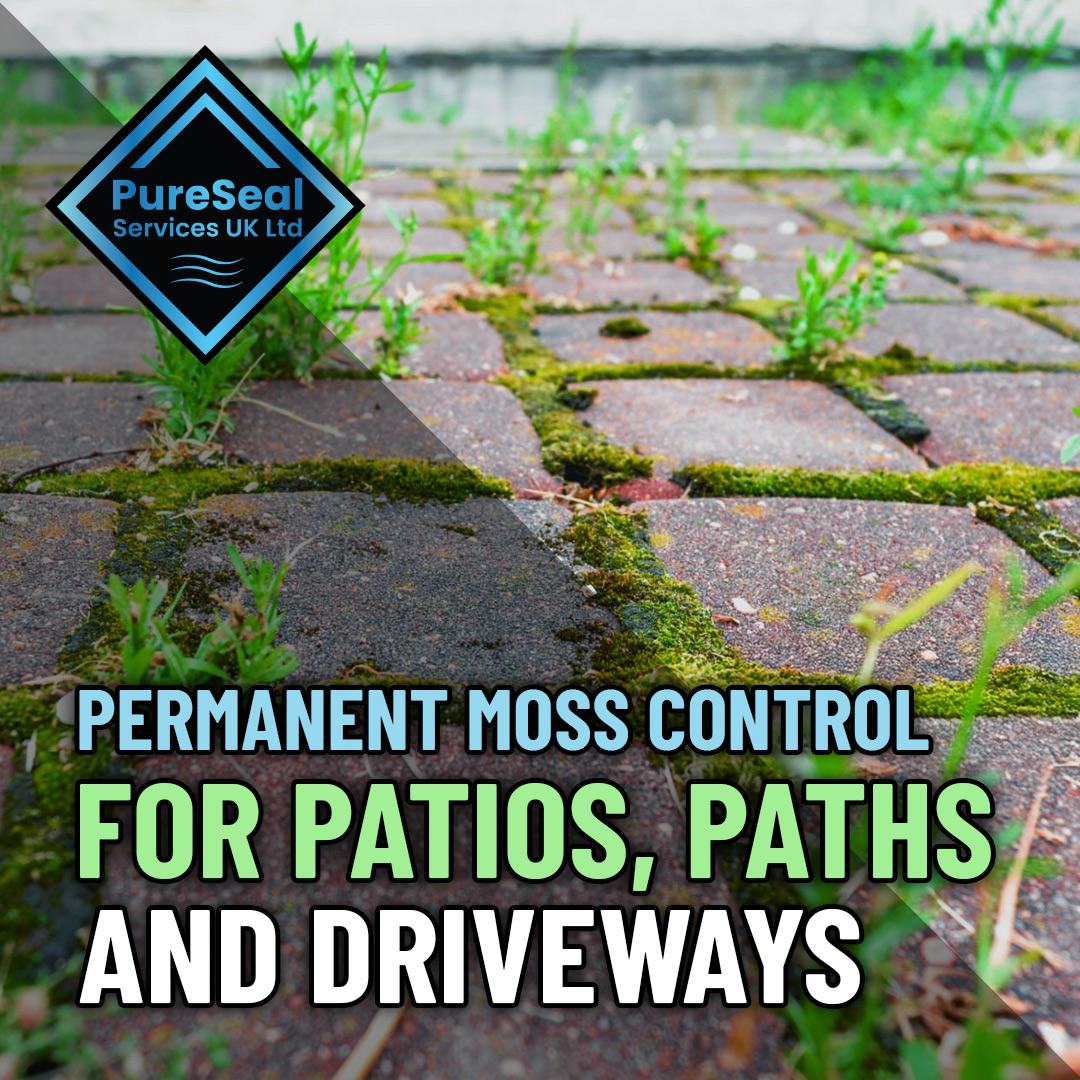
Permanent Moss Control for Patios, Paths and Driveways
How to Stop Moss from Growing Between Pavers
Introduction
Moss between pavers is a common problem for homeowners with patios, driveways, garden paths, or decorative paving. Although moss is not structurally damaging in the same way as weeds, it creates a slippery surface, holds moisture, and makes the space look neglected. Understanding why moss grows and achieving permanent moss control for patios, paths, and driveways, including how to remove and prevent it long-term, is the key to maintaining a clean, low-maintenance paved area.
Moss thrives in shade, moisture, compacted joints, and poor drainage. If any of these elements exist between your pavers, moss will eventually form a soft green carpet that spreads rapidly. Stopping moss permanently is not a single-step solution — it requires a combination of cleaning, joint stabilisation, and environmental control.
This guide explains:
-
Why moss forms between pavers
-
How to remove it manually, chemically, or naturally
-
How to prevent regrowth
-
Maintenance schedule
-
Costs in £
-
Mistakes to avoid
-
Long-term design solutions (jointing sand, drainage, sealing etc.)
Why Moss Grows Between Pavers
| Moss Growth Factor | Description | How It Encourages Moss |
|---|---|---|
| Moisture | Water remains trapped between or under pavers | Gives moss a constant water source |
| Shade | Overhanging trees, fences, north-facing patios | Moss prefers low-light areas |
| Compacted joints | Old sand washed away and replaced with soil + debris | Organic material becomes planting bed |
| Lack of airflow | Enclosed courtyards or high walls | Dampness lingers |
| Drainage issues | Poor slope or blocked gaps | Water doesn’t evaporate or run off |
| Neglected maintenance | No sweeping, no re-sand, no sealing | Moss spores have ideal conditions |
Step-by-Step Removal Methods
There are four main ways to remove moss: manual, natural, chemical, and mechanical. The best choice depends on your preference, time, and budget.
1. Manual Removal (No Chemicals)
| Method | Tools Needed | Effort Level | Cost |
|---|---|---|---|
| Scraping | Joint scraper, flat screwdriver, or weeding hook | High | £0–£15 (tools) |
| Brushing | Stiff broom or wire brush | Medium | £5–£12 |
| Pressure washing | Pressure washer | Medium to high | £80–£250 (machine purchase) or £30/day hire |
Steps
-
Brush away loose moss first.
-
Use a joint scraper to dig out remaining moss.
-
Sweep debris away so it does not settle back in the gaps.
-
Optional: pressure wash to finish.
Pros
-
No chemicals.
-
Immediate visual improvement.
Cons
-
Moss will return unless joints are treated and re-filled.
-
Can dislodge jointing sand, requiring re-sand.
2. Natural Moss Killers
| Treatment | How It Works | Application | Estimated Cost |
|---|---|---|---|
| Boiling water | Heat kills moss cells instantly | Pour directly onto moss | £0 |
| White vinegar (5–10%) | Acid dehydrates moss | Spray and leave 24 hrs, brush away | £1–£3 per litre |
| Bicarbonate of soda | Raises pH so moss cannot survive | Sprinkle, leave overnight, brush | £0.50–£2 |
| Salt solution | Draws moisture out of moss | Use with caution – can damage soil | £0.50 |
Note: Natural treatments still require prevention steps afterward, or moss will regrow in weeks.
3. Chemical Moss Control
| Product Type | Active Ingredient | Works On | Longevity | Cost (Approx) |
|---|---|---|---|---|
| Moss & algae killer | Benzalkonium chloride | Moss, lichens, algae | 3–6 months | £8–£20 per bottle |
| Patio cleaner with biocide | Quaternary ammonium compounds | Soft growth + stains | Up to 12 months | £12–£25 |
| Weedkiller (for moss) | Contains iron sulphate or glyphosate | Moss + weeds | 3–9 months | £6–£15 |
Important: Follow label instructions. Avoid runoff to lawns or ponds.
Benefit: Kills moss to root level, faster result than natural methods.
4. Mechanical Removal (Pressure Washing)
Advantages:
-
Fast
-
Removes spores and dirt
-
Restores original paver colour
Disadvantages:
-
Blasts away jointing sand – MUST be replaced
-
Can damage older or brittle pavers
-
Requires 24–48 hours drying time before re-sanding
The Most Important Step: Re-Sanding the Joints
Once moss is physically removed, the gaps must be refilled. Empty joints collect soil, spores, and moisture — moss will return quickly without sand.
Types of Jointing Sand
| Type | Best For | Features | Price per 25kg |
|---|---|---|---|
| Standard kiln-dried sand | Patios & paths | Cheapest, needs topping up | £4–£6 |
| Polymer (resin) sand | Driveways & heavy-use areas | Hardens when wet, resists moss | £15–£30 |
| Anti-weed sand (with additives) | Low-maintenance areas | Contains minerals to block moss growth | £10–£18 |
Recommended process:
-
Let the pavers dry fully after cleaning.
-
Brush kiln-dried or polymer sand into the joints.
-
Compact using a broom or plate compactor.
-
Lightly mist polymer sand to activate bonding.
-
Sweep surface clean to avoid staining.
Long-Term Prevention Strategies
| Strategy | How It Prevents Moss | Maintenance Level |
|---|---|---|
| Resanding joints annually | Removes organic build-up | Low |
| Sealing the pavers | Blocks moisture + spores | Medium |
| Improving drainage/slope | Removes standing water | High (install work) |
| Regular sweeping | Stops dirt becoming compost | Low |
| Trimming nearby plants | Reduces shade + moisture | Low |
| Applying annual biocide | Kills spores before growing | Medium |
Should You Seal Pavers?
Pros
-
Reduces water absorption
-
Blocks moss spores
-
Protects against stains
-
Extends paver lifespan
Cons
-
Needs reapplication every 2–4 years
-
Can darken paver colour
-
Costs more per m² than sanding
| Type of Sealer | Finish | Price per m² | Lifespan |
|---|---|---|---|
| Matt acrylic | Natural look | £3–£5 | 2–3 yrs |
| Wet-look | Enhanced colour | £4–£7 | 3–4 yrs |
| Penetrating sealer | Invisible | £5–£8 | 4–5 yrs |
Typical Cost Breakdown (DIY vs Professional)
| Task | DIY Cost | Professional Cost |
|---|---|---|
| Manual moss removal | £0–£20 | £60–£120 |
| Pressure washing | £30 hire / £150 buy | £80–£150 |
| Re-sanding joints | £4–£30 | £60–£120 |
| Sealing | £30–£120 (materials) | £200–£450 |
| Annual biocide application | £10–£25 | £60–£100 |
If doing everything DIY, total cost is around £40–£180 depending on products used. Full professional treatment may cost £250–£600 depending on area size.
Seasonal Maintenance Plan
| Season | Tasks | Purpose |
|---|---|---|
| Spring | Sweep, inspect joints, light wash | Remove winter debris |
| Summer | Apply moss killer if needed, re-sand joints | Optimal drying weather |
| Autumn | Clear leaves, trim plants, check drainage | Reduce shade + composting |
| Winter | Avoid letting ice form in joints, no pressure washing | Prevent cracking & erosion |
Common Mistakes to Avoid
| Mistake | Why It’s a Problem | Better Alternative |
|---|---|---|
| Pressure washing without re-sanding | Leaves open joints for moss | Always refill joints within 48 hrs |
| Using bleach | Damages pavers + soil | Use biocide-based cleaner |
| Leaving soil in joints | Becomes moss bed | Sweep weekly |
| Ignoring drainage | Water pooling = moss factory | Re-level or add soakaways |
| Overusing salt | Corrodes pavers and nearby plants | Use bicarbonate or vinegar instead |
Frequently Asked Questions
Does moss damage pavers?
No, moss does not break down concrete or stone, but it causes slippery surfaces and accelerates joint erosion.
How often should I re-sand?
Typically once per year, or after every pressure wash.
Can I stop moss permanently?
You can’t stop spores landing, but you can make the surface unsuitable for growth — dry, well-filled joints with good sunlight rarely grow moss.
Is vinegar safe on all pavers?
Yes, on stone and concrete, but avoid overuse on limestone — it is mildly acidic.
Full 10-Step Prevention Method (Summary)
-
Remove moss by scraping or pressure washing
-
Allow surface to dry fully
-
Brush out debris from gaps
-
Apply moss killer or natural alternative
-
Wait recommended time (usually 24–48 hrs)
-
Re-sweep and vacuum loose material
-
Re-sand joints with kiln-dried or polymer sand
-
Compact sand and top up if needed
-
Seal surface if desired
-
Sweep regularly and treat yearly
Final Notes
Stopping moss is not complicated, but it does require three key elements:
-
Remove existing moss thoroughly
-
Refill the joints so no organic matter collects
-
Control moisture and shade
If even one of those steps is ignored, moss will eventually return.
By applying a consistent maintenance routine — sweeping once a week, re-sanding once a year, and applying a moss treatment when needed — patios and driveways can stay clean, safe, and moss-free for many years.
Difference Between Moss, Algae, and Weeds on Pavers
Homeowners often confuse moss with algae, lichen, or weeds, but each behaves differently and requires a slightly different treatment.
-
Moss is a small, soft, sponge-like plant with no roots. It thrives in damp, shaded joints.
-
Algae appears as a thin green, black, or dark film across the paver surface, becoming slippery when wet.
-
Lichen is a flaky, crust-like growth that bonds to the stone surface and is harder to remove.
-
Weeds have roots, seeds, and stems, and can push pavers apart if left to grow.
Understanding the difference helps select the right strategy. For example, algae is better removed with surface cleaning, while moss grows within the joints and requires deeper removal and re-sanding.
How Climate and Location Influence Moss Growth
Moss thrives in areas with prolonged dampness, low sunlight, and cool temperatures. For this reason, patios on the north side of a house or driveways shaded by trees grow moss far more quickly than open, sun-exposed areas. Coastal regions, areas with heavy rainfall, and shaded garden paths are more likely to suffer persistent moss problems.
In cold climates, moss also benefits from freeze–thaw cycles that widen gaps between pavers, creating perfect germination pockets. In contrast, very hot or dry locations rarely have moss issues unless irrigation, leaking gutters, or poor drainage add constant moisture.
Knowing your site conditions allows you to focus on the right long-term prevention, such as improving run-off or increasing air circulation.
Eco-Friendly Moss Control Methods
For homeowners wanting to avoid chemical solutions, there are several environmentally conscious ways to control moss:
| Method | Environmental Impact | Best Use |
|---|---|---|
| Boiling water | No residue | Small patches |
| Vinegar spray | Biodegradable | Light moss on patios |
| Bicarbonate of soda | Safe for pets, soil | Between pavers only |
| Manual scraping | Zero chemicals | All areas |
| Brushing with stiff broom | Prevents early growth | Weekly maintenance |
Eco-friendly methods work best when applied early, before moss becomes thick and established. They are most effective when combined with good airflow, regular sweeping, and proper jointing sand.
How to Improve Drainage to Stop Moss Returning
Poor drainage is one of the main reasons moss returns again and again. Standing water in joints keeps the surface damp, giving moss the humidity it needs. Improvements may include:
-
Re-grading the patio so it slopes away from the house (ideal fall is 1:60)
-
Adding a drainage channel along the lowest edge
-
Replacing soil under the paving with compacted MOT Type 1 or sharp sand
-
Installing drainage holes or soakaways in enclosed courtyards
-
Clearing blocked gutters and downpipes that spill onto the paving
Good drainage does more than stop moss: it also extends the life of the pavers, slows frost damage, and keeps jointing sand stable.
When Re-Laying Pavers Is the Best Option
In severe cases — such as old, uneven patios with sunken joints or heavy soil contamination — preventing moss may require more than cleaning and sanding. If the base has shifted, the joints have eroded, or the gaps hold more soil than sand, re-laying the pavers may be the most effective long-term fix.
Signs that re-laying is worth considering:
-
Persistent water pooling after rain
-
Large gaps where sand will not stay in place
-
Pavers wobbling or rocking when walked on
-
Moss returning within weeks even after full cleaning
-
Visible subsidence, dips, or edges rising
Re-laying allows you to install a fresh, compacted sub-base, correct the slope, and use modern polymeric sand, dramatically reducing the chance of moss returning.
Tags: gutter cleaning, window cleaning, Patio cleaning, Driveway cleaning, pressure washing, Roof Cleaning, Exterior cleaning
 Artificial and Sports Surfaces
 Awnings / Canopies / Gazebos
 Block Paving
 Brickwork
 Composite Surfaces
 Decking / Timber
 Granite
 Imprinted Concrete
 Internal Masonry
 Limestone
 Marble
 Metal Cladding
 Polished or Honed Stone
 Porcelain
 Render
 Resin Bond
 Road and Rail Signs
 Roof Tiles / Slates
 Sandstone
 Slate
Slate Solar Panels and Glass
 Stone Sills and Pier Caps
 Tarmac and Asphalt
 Gutters & UPVC
 Acid Damage
 Biofilm
 Bitumen
 Blood
Blood Carbon
 Concrete / Grout / Mortar
 Copper Oxide
 Efflorescence
 Egg
Egg Failed Sealer
 Fire Damage
 Fuel / Oil
 Graffiti
 Grease / Fat / Cooking Oil
 Lawn Fertiliser
 Lead Carbonate
 Lead Oxide
 Paint Splashes
 Rust
Rust Tar & Glue
 Tannin Removers
 Traffic Film Removers
 Trapped Moisture / Sealer Repairs
 Urine Neutralisers