
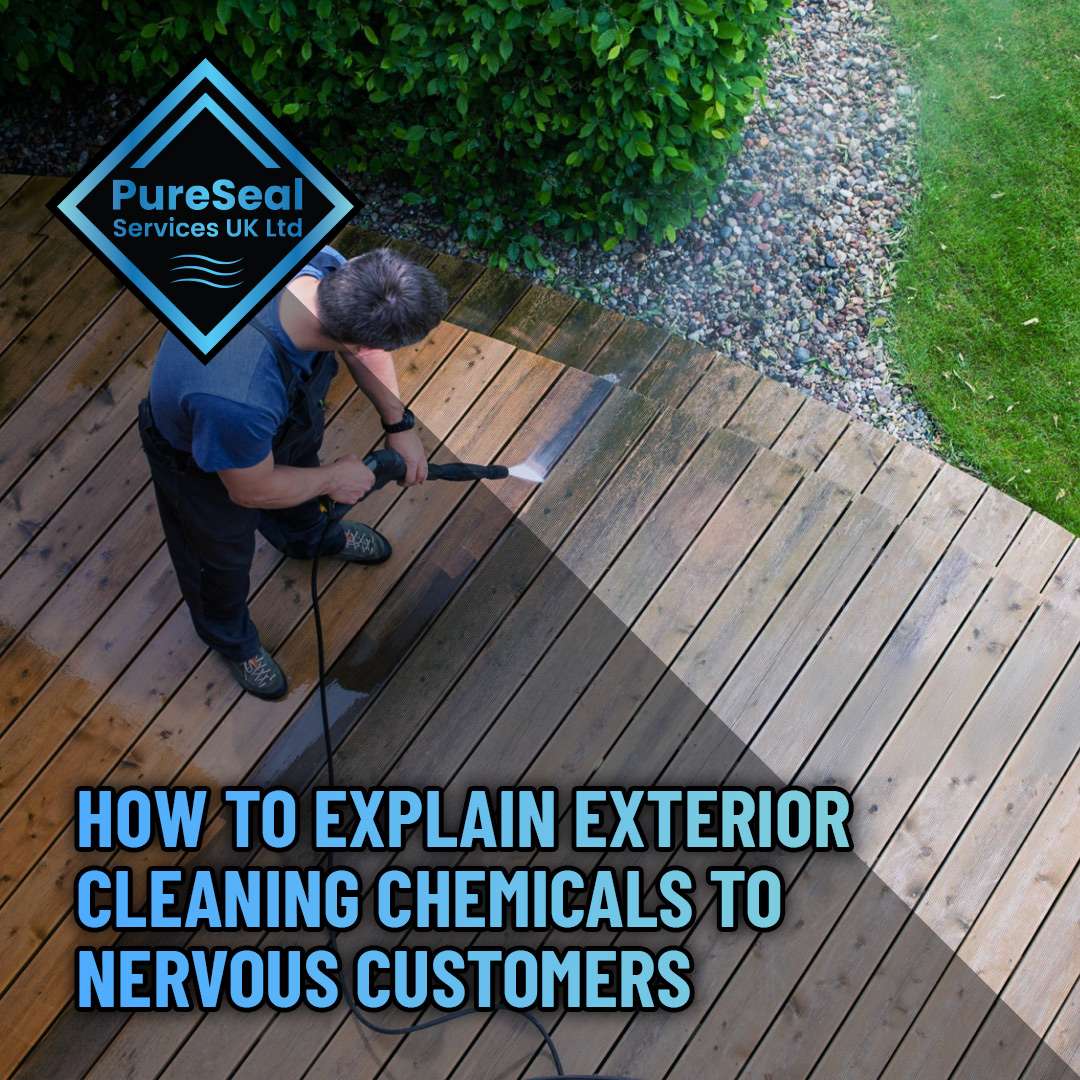
How to Explain Exterior Cleaning Chemicals to Nervous Customers
Customers often feel uneasy when they hear that chemicals will be used around their home or business. Words like “bleach,” “acid,” or “cleaning solution” can sound intimidating. For exterior cleaning professionals, the challenge is not just doing the job safely but also explaining the process in a way that builds trust.
Many exterior cleaning jobs require specialised products because water alone cannot remove certain stains or biological growth. When explained properly, customers usually realise that these products are controlled, diluted, and used in a responsible way. The goal is to show that professional exterior cleaning is both effective and safe when handled correctly.
For contractors who want reliable products designed specifically for exterior cleaning tasks, the range of specialist cleaning solutions available at https://puresealservices.co.uk/ provides examples of chemicals formulated for patios, driveways, roofs, and other outdoor surfaces.
Understanding how these chemicals work and how to explain them clearly can make conversations with nervous customers much easier.
Why Customers Worry About Cleaning Chemicals
Before explaining the technical side, it helps to understand why customers are nervous in the first place. Most concerns come from misunderstandings.
Common worries include:
-
Damage to plants or lawns
-
Harm to pets or children
-
Strong smells or fumes
-
Damage to surfaces such as brick, stone, or paint
-
Environmental impact
Many people also assume that pressure washing relies on extremely strong chemicals. In reality, most professional cleaning solutions are diluted and used in controlled quantities.
When talking to customers, it helps to emphasise that the chemicals used in exterior cleaning are designed to break down dirt, algae, and stains that plain water cannot remove. These products act as cleaning aids rather than harsh industrial substances.
A Simple Way to Explain What Cleaning Chemicals Do
Customers rarely need a detailed chemistry lesson. A simple explanation works best.
You can describe exterior cleaning chemicals as helpers that make water more effective.
Instead of relying purely on pressure, cleaning solutions:
-
break down oils and grease
-
kill mould and algae
-
loosen dirt stuck to surfaces
-
restore the natural appearance of stone or concrete
Without chemicals, pressure washing may remove loose dirt but often struggles with deep stains or biological growth. Cleaning solutions help dissolve these contaminants so they can be rinsed away safely.
A helpful comparison is washing dishes at home. Hot water removes some grime, but adding detergent allows grease and food residue to break down more easily.
Common Exterior Cleaning Chemicals Explained
Different cleaning problems require different solutions. Understanding the main categories helps professionals explain the process clearly.
| Chemical Type | Main Purpose | Typical Surfaces |
|---|---|---|
| General cleaners | Remove everyday dirt and grime | Patios, paths, brickwork |
| Degreasers | Break down oil and grease | Driveways, garages |
| Algae and mould removers | Kill biological growth | Roofs, walls, decking |
| Acid cleaners | Remove mineral stains and rust | Stone and concrete |
| Detergents | Improve cleaning efficiency | Siding, render, UPVC |
These chemicals are chosen based on the surface and the type of contamination present.
Professional exterior cleaning is rarely about using a single “strong chemical.” Instead, it involves selecting the right product for each situation.
How Dilution Makes Chemicals Safe
One of the most effective ways to reassure customers is to explain dilution.
Many cleaning solutions are supplied in concentrated form. Before they are applied, they are mixed with water to create a much weaker solution.
For example:
| Product | Concentrate Strength | Typical Working Strength |
|---|---|---|
| Sodium hypochlorite | Around 10–12% | Often diluted to about 0.5–2% |
| Degreasers | Strong alkaline solution | Diluted depending on the stain |
| Acid cleaners | High concentration | Mixed heavily with water |
Dilution reduces the strength of the chemical while still allowing it to break down stains and organic growth.
In many cases, the chemical used on the surface is only a small fraction of the original concentration.
The Role of Soft Washing
Customers often imagine high-pressure jets blasting chemicals into surfaces. In reality, many exterior cleaning jobs use a technique called soft washing.
Soft washing uses low pressure combined with specialised cleaning solutions. The chemical removes algae, mould, and stains while the gentle rinse removes the residue.
This approach is particularly useful for:
-
roof tiles
-
painted surfaces
-
render
-
cladding
-
delicate materials
Using low pressure reduces the risk of surface damage while allowing the cleaning solution to do most of the work.
Explaining Specific Chemicals Without Scaring Customers
Some chemical names sound intimidating, but the key is putting them into context.
Below are examples of common exterior cleaning chemicals and how to explain them in simple terms.
| Chemical | What It Does | How to Explain It |
|---|---|---|
| Sodium hypochlorite | Removes algae and mould | Similar to diluted household bleach used for cleaning |
| Sodium hydroxide | Cuts through grease | Used in many cleaning products and soaps |
| Oxalic acid | Removes rust stains | Common in wood cleaners |
| Citric acid | Removes mineral stains | Found naturally in citrus fruits |
For example, sodium hypochlorite is commonly used in exterior cleaning because it destroys mould and algae that grow on roofs and walls.
When customers understand the purpose of each chemical, they are less likely to see it as something dangerous.
Addressing Environmental Concerns
Environmental questions are becoming more common.
Customers may ask whether the chemicals will affect their garden, pets, or nearby drains.
You can reassure them by explaining the steps professionals take to minimise environmental impact.
Typical practices include:
-
diluting chemicals before application
-
rinsing plants with water before and after cleaning
-
controlling runoff
-
using biodegradable detergents where possible
These measures help ensure that cleaning chemicals are used responsibly.
Safety Measures Professionals Follow
Another important point is demonstrating that professionals follow strict safety procedures.
Chemicals used for cleaning must be handled carefully, and trained technicians understand how to do this.
Typical safety steps include:
| Safety Measure | Purpose |
|---|---|
| Protective equipment | Protects workers from splashes |
| Correct dilution | Prevents damage to surfaces |
| Surface testing | Ensures the chemical is suitable |
| Controlled application | Prevents overspray |
| Proper storage | Avoids dangerous chemical reactions |
Some chemicals can react dangerously if mixed incorrectly, which is why professionals follow clear handling procedures and read safety data sheets before use.
Explaining these precautions helps customers see that the process is carefully managed.
A Simple Conversation Structure
When speaking to a nervous customer, having a clear structure can help.
Step 1 – Acknowledge the Concern
Start by recognising their concern.
Example:
“It’s completely understandable to ask about the cleaning products we use.”
This approach builds trust immediately.
Step 2 – Explain the Purpose
Explain why chemicals are needed.
Example:
“Water removes surface dirt, but algae and stains often need a cleaning solution to break them down.”
Step 3 – Mention Dilution
Highlight that chemicals are diluted.
Example:
“The solutions are mixed with water so they’re strong enough to clean but safe for the surface.”
Step 4 – Describe Safety Measures
Explain what precautions are taken.
Example:
“We protect plants, test surfaces first, and rinse everything thoroughly after cleaning.”
Step 5 – Invite Questions
Encourage further discussion.
Example:
“If you’d like, I can explain exactly what we’ll use on your property.”
This open approach helps customers feel comfortable.
Real-World Examples to Use With Customers
Sometimes the best explanation is a practical example.
Example 1: Cleaning a Driveway
Driveways often collect oil stains, tyre marks, and dirt.
A degreasing solution may be applied to break down oil before pressure washing removes the residue.
Without the chemical, the stain might remain visible.
Example 2: Removing Roof Moss
Roofs frequently develop algae or moss.
A soft washing solution is applied to kill the growth, which prevents it from returning quickly.
High pressure alone could damage roof tiles, so the chemical allows the job to be done safely.
Example 3: Patio Restoration
Patios often develop green staining caused by algae.
A cleaning solution kills the biological growth and restores the original colour of the stone.
This is why patios often look dramatically brighter after professional cleaning.
Building Trust Through Transparency
Customers feel more comfortable when they understand what is happening on their property.
Being transparent about products, processes, and safety measures is one of the most effective ways to build confidence.
Ways to improve transparency include:
-
explaining the cleaning process before starting
-
answering questions clearly
-
describing the chemicals in simple terms
-
reassuring customers about dilution and safety
Providing this information often turns a nervous customer into a confident one.
Tips for Exterior Cleaning Businesses
Professionals who regularly deal with nervous customers can benefit from preparing clear explanations.
Useful tips include:
-
learn the basic chemistry of your products
-
practise simple explanations
-
avoid technical jargon
-
emphasise safety and dilution
-
show examples of previous results
Many professionals also keep information sheets about the cleaning products they use so customers can see exactly what is involved.
Why Education Improves Customer Confidence
Education plays a key role in customer trust.
When people hear unfamiliar chemical names, they often imagine something harmful. Once they understand how the products work, they usually see them as practical tools rather than risks.
Explaining the science in everyday language can make a significant difference.
Customers who understand the process are more likely to:
-
approve cleaning work
-
recommend the service to others
-
book regular maintenance
This turns a potentially difficult conversation into a positive one.
Helping Customers Feel Comfortable With the Process
Exterior cleaning is often about restoring the appearance of buildings while protecting the surfaces underneath.
Specialised cleaning solutions are part of that process because they remove stains, organic growth, and grime that plain water cannot handle.
When contractors explain these chemicals clearly, emphasise dilution, and demonstrate proper safety practices, customers usually feel far more comfortable with the work being carried out.
A calm explanation, combined with transparency about the products used, is often all it takes to turn concern into confidence.
Tags: gutter cleaning, window cleaning, Patio cleaning, Driveway cleaning, pressure washing, Roof Cleaning, Exterior cleaning
 Artificial and Sports Surfaces
 Awnings / Canopies / Gazebos
 Block Paving
 Brickwork
 Composite Surfaces
 Decking / Timber
 Granite
 Imprinted Concrete
 Internal Masonry
 Limestone
 Marble
 Metal Cladding
 Polished or Honed Stone
 Porcelain
 Render
 Resin Bond
 Road and Rail Signs
 Roof Tiles / Slates
 Sandstone
 Slate
Slate Solar Panels and Glass
 Stone Sills and Pier Caps
 Tarmac and Asphalt
 Gutters & UPVC
 Acid Damage
 Biofilm
 Bitumen
 Blood
Blood Carbon
 Concrete / Grout / Mortar
 Copper Oxide
 Efflorescence
 Egg
Egg Failed Sealer
 Fire Damage
 Fuel / Oil
 Graffiti
 Grease / Fat / Cooking Oil
 Lawn Fertiliser
 Lead Carbonate
 Lead Oxide
 Paint Splashes
 Rust
Rust Tar & Glue
 Tannin Removers
 Traffic Film Removers
 Trapped Moisture / Sealer Repairs
 Urine Neutralisers