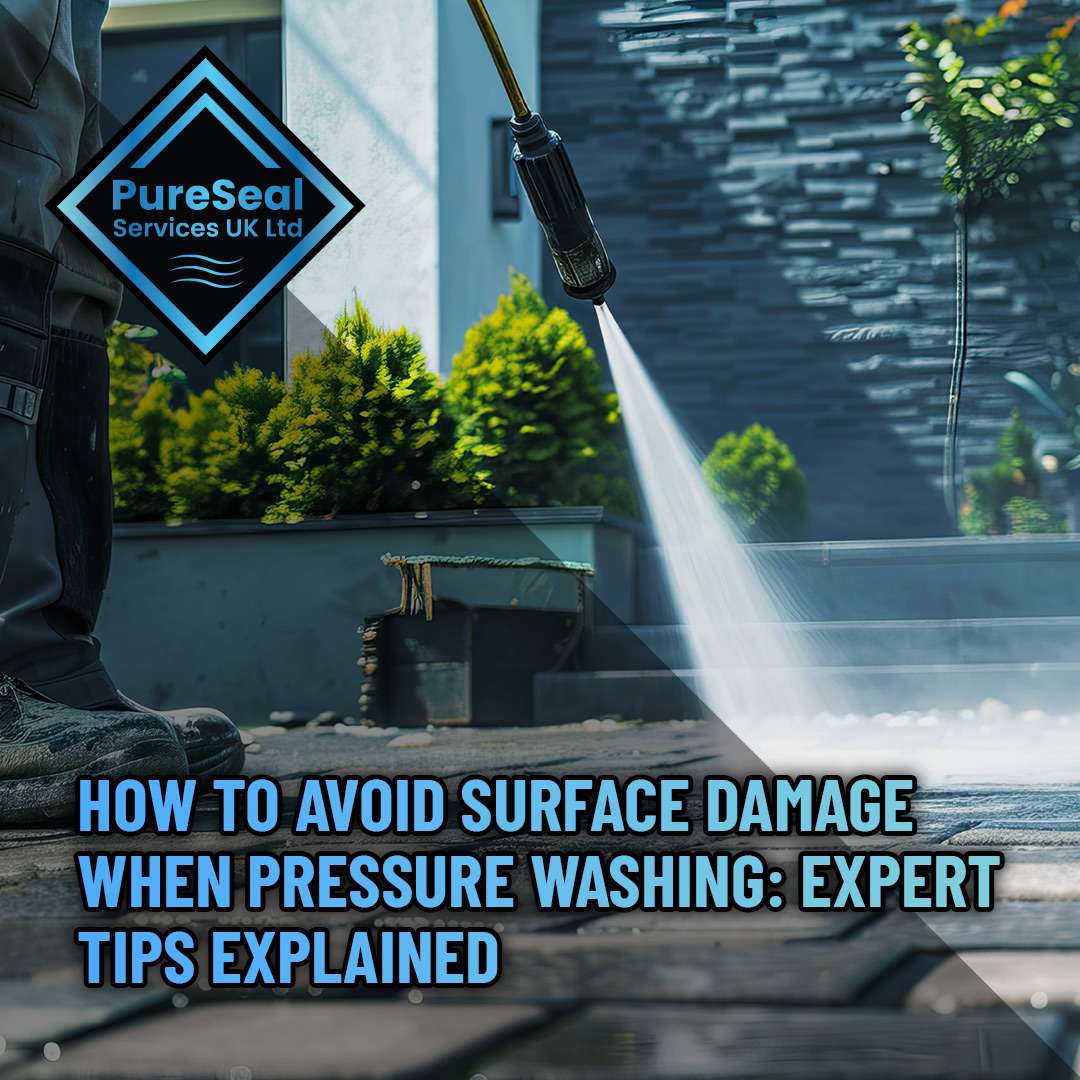
How to Avoid Surface Damage When Pressure Washing: Expert Tips Explained
Pressure washing is one of the most effective methods of restoring exterior surfaces, removing years of built-up dirt, algae, moss, grime and other contaminants. However, when used incorrectly, even professional-grade equipment can cause costly damage.
Understanding how different materials react to pressure, water flow, nozzle selection and cleaning techniques is essential for anyone carrying out exterior cleaning. Whether you’re a homeowner or a professional contractor, avoiding unnecessary surface damage should always be the priority.
At PureSeal Services, we believe that successful pressure washing is about knowledge and technique just as much as using quality equipment. Professional operators know when to reduce pressure, change accessories or choose an entirely different cleaning method to protect every surface.
Why Pressure Washing Can Cause Damage
Pressure washers concentrate large volumes of water through a small nozzle, creating tremendous cleaning power.
While this makes them extremely effective, excessive force can:
Remove protective coatings
Etch concrete
Damage mortar joints
Lift block paving sand
Splinter timber
Strip paint
Crack render
Damage roof coverings
Force water behind cladding
Break seals around windows and doors
In nearly every case, damage occurs because the equipment is being used incorrectly rather than because pressure washing itself is unsafe.
Every Surface Is Different
One of the biggest mistakes beginners make is assuming every exterior surface can be cleaned using identical settings.
Different materials require completely different approaches.
Surface
Risk Level
Recommended Approach
Concrete
Low
Moderate pressure with correct nozzle
Block paving
Medium
Controlled pressure with surface cleaner
Natural stone
Medium
Lower pressure and wider spray pattern
Brick
Medium
Avoid damaged pointing
Timber decking
High
Low pressure following timber grain
Render
High
Gentle cleaning methods
Painted surfaces
High
Low pressure testing first
Composite materials
Medium
Manufacturer guidance recommended
Understanding the surface before cleaning dramatically reduces the chance of accidental damage.
Pressure Isn’t Everything
Many people assume higher pressure equals better cleaning.
Professional contractors know that water flow, dwell time and cleaning chemicals often play a much bigger role.
Lower pressure combined with:
Suitable detergents
Proper dwell time
Correct nozzles
Multiple passes
often produces far better results than blasting surfaces with maximum pressure.
Start With the Lowest Effective Pressure
One golden rule applies to virtually every pressure washing job:
Start low and increase only if necessary.
Testing a small hidden area first allows you to judge:
Surface strength
Existing coatings
Dirt removal
Water absorption
Risk of damage
This simple step can prevent expensive repairs later.
Choose the Correct Nozzle
Different nozzles produce completely different cleaning patterns.
Nozzle
Spray Pattern
Best Use
0°
Pencil jet
Specialist use only
15°
Narrow fan
Heavy dirt
25°
Medium fan
General cleaning
40°
Wide fan
Delicate surfaces
Soap nozzle
Low pressure
Chemical application
Turbo nozzle
Rotating jet
Stubborn contamination (with care)
Using an aggressive nozzle unnecessarily is one of the quickest ways to damage exterior materials.
Maintain the Correct Distance
Holding the lance too close significantly increases the force hitting the surface.
As a guide:
Surface
Typical Working Distance
Concrete
200–300 mm
Block paving
250–350 mm
Timber
300–450 mm
Render
Greater distance with lower pressure
Painted surfaces
Test carefully before proceeding
Maintaining a consistent distance helps produce even cleaning without leaving visible marks.
Keep the Lance Moving
Stopping in one place for too long concentrates pressure on a small area.
This may cause:
Etching
Striping
Surface erosion
Paint removal
Uneven colouring
Smooth, overlapping movements provide much more consistent cleaning.
Professional contractors rarely hold the spray stationary unless carrying out highly controlled work.
Why Surface Cleaners Reduce Damage
Surface cleaners are among the safest accessories for cleaning large flat areas.
Benefits include:
Consistent pressure
Even cleaning
Reduced operator fatigue
Less striping
Controlled spray angle
Reduced overspray
Compared with cleaning using only a lance, surface cleaners usually produce a much more uniform finish.
Be Careful Around Mortar Joints
Brickwork often suffers unnecessary damage because operators focus purely on removing dirt.
Old or weathered pointing can easily be washed out.
Avoid directing concentrated pressure directly into:
Mortar joints
Cracks
Loose bricks
Expansion joints
Instead, clean across the surface rather than into vulnerable areas.
Block Paving Requires Special Care
Pressure washing block paving removes more than dirt.
It can also remove:
Jointing sand
Weed suppressant
Stabilisation between blocks
After cleaning, many block paved driveways require fresh kiln-dried sand before any sealing work takes place.
Failing to replace the jointing sand can allow blocks to move over time.
Timber Is Easily Damaged
Decking and timber fencing require considerably lower pressure than concrete.
High pressure may:
Raise the grain
Create splinters
Leave visible cleaning lines
Damage softwood fibres
Professional operators usually clean timber using:
Wide fan nozzles
Lower pressure
Longer working distance
Cleaning along the grain
Patience generally produces better results than excessive force.
Painted Surfaces Need Extra Attention
Paint adhesion varies considerably depending on:
Age
Surface preparation
Weather exposure
Previous maintenance
Pressure washing may remove loose paint even when working correctly.
Always test first before cleaning:
Fascias
Garden furniture
Timber cladding
Painted masonry
Metal railings
Where paint is already failing, pressure washing may accelerate its removal.
Render Should Never Be Aggressively Pressure Washed
Modern render systems can be surprisingly delicate.
Incorrect pressure washing may:
Remove coloured finishes
Cause cracking
Drive water into the wall
Damage protective coatings
Many rendered properties are better suited to low-pressure cleaning methods combined with specialist treatments rather than aggressive pressure washing.
Be Careful Around Windows and Doors
Water under pressure can penetrate surprisingly small gaps.
Avoid directing pressure directly at:
Window seals
Door frames
Air vents
Electrical fittings
Letterboxes
Water ingress may lead to expensive internal repairs.
Reducing pressure around openings significantly lowers this risk.
Cleaning Chemicals Can Reduce Pressure Requirements
Professional cleaning isn’t always about increasing pressure.
Appropriate cleaning products often soften contamination before rinsing.
Benefits include:
Lower pressure required
Faster cleaning
Less operator fatigue
Reduced risk of damage
Improved overall results
Allowing products sufficient dwell time is often far more effective than simply increasing machine output.
Weather Conditions Matter
Environmental conditions affect both cleaning quality and safety.
Weather
Recommendation
Heavy rain
Avoid if possible
Strong wind
Increased overspray
Frost
Delay cleaning
High temperatures
Monitor chemical drying
Mild overcast conditions
Often ideal
Cleaning during extreme weather can increase the likelihood of inconsistent results or accidental damage.
Common Surfaces That Need Special Care
Surface
Common Damage
Sandstone
Surface erosion
Limestone
Etching
Slate
Delamination
Resin-bound driveways
Loose aggregate
Tarmac
Surface scarring
Composite decking
Surface marking
Each material reacts differently to pressure washing, making experience invaluable.
Don’t Ignore Existing Damage
Before cleaning begins, inspect every surface carefully.
Look for:
Loose pointing
Cracked render
Flaking paint
Damaged sealants
Broken paving
Loose slabs
Existing chips
Structural movement
Cleaning cannot repair existing defects and may make them more noticeable.
Documenting pre-existing damage also helps avoid misunderstandings with customers.
Why Experience Makes a Difference
Professional contractors adjust their equipment continuously throughout a job.
They consider:
Surface age
Material hardness
Dirt type
Previous repairs
Weather conditions
Water flow
Spray angle
Cleaning speed
These adjustments are often small but have a significant impact on cleaning quality and surface protection.
Personal Safety Also Protects Property
Working safely often leads to better cleaning.
Proper control of equipment reduces accidental contact with:
Vehicles
Garden furniture
Lighting
Decorations
Plants
Drain covers
A rushed operator is more likely to cause both property damage and personal injury.
Equipment Maintenance Helps Prevent Damage
Poorly maintained equipment may create inconsistent spray patterns.
Regular checks should include:
Nozzle wear
Hose condition
Trigger operation
Pump pressure
Filter cleanliness
Water supply
A worn nozzle may alter pressure characteristics without the operator immediately noticing.
Replacing worn components helps maintain predictable cleaning performance.
Typical Mistakes That Lead to Surface Damage
Mistake
Possible Result
Using maximum pressure everywhere
Surface erosion
Standing too close
Etching
Wrong nozzle
Striping or damage
Cleaning too slowly
Uneven finish
Ignoring pre-existing defects
Worsened damage
Skipping test patches
Unexpected surface reaction
Using turbo nozzle on delicate materials
Permanent marking
Avoiding these common mistakes dramatically improves cleaning results.
Why Patience Produces Better Results
Many beginners attempt to complete jobs as quickly as possible by increasing pressure.
Professional contractors understand that careful preparation often saves time overall.
Taking time to:
Inspect surfaces
Select the correct equipment
Apply cleaning products
Test pressure
Work methodically
usually produces cleaner results with far less risk of damage.
Protecting Surrounding Areas
Pressure washing affects more than the surface being cleaned.
Before starting, protect nearby items such as:
Vehicles
Garden ornaments
Outdoor furniture
Electrical sockets
Decorative gravel
Flower beds
Delicate plants
Using protective sheeting where appropriate and controlling overspray helps prevent unnecessary mess and accidental damage. Taking a few extra minutes to prepare the work area demonstrates professionalism and reduces the risk of costly claims.
When Lower Pressure Is the Better Choice
Some contractors mistakenly believe customers expect the highest possible pressure. In reality, customers expect excellent results without damage.
Situations where lower pressure is usually the safest option include:
Situation
Recommended Approach
Older brickwork
Moderate pressure with careful technique
Historic stone
Gentle cleaning with wider spray pattern
Timber fencing
Low pressure following the grain
Decorative paving
Test area first before full cleaning
Recently repaired mortar
Allow repairs to fully cure before cleaning
Professional judgement is often more valuable than machine specifications. Knowing when to reduce pressure protects both the surface and your reputation.
Training and Practice Matter
Pressure washing may appear straightforward, but achieving consistently high-quality results without damaging surfaces requires practice.
New contractors should spend time learning how different materials respond to varying pressures, spray angles and water flow rates before tackling larger or more delicate projects.
Developing good habits from the beginning—such as testing inconspicuous areas, monitoring the condition of the surface throughout the clean and adjusting equipment as conditions change—helps prevent expensive mistakes.
High-quality commercial equipment combined with the correct techniques allows operators to clean efficiently while protecting the property’s appearance. Investing in reliable machinery and professional accessories from PureSeal Services gives contractors the tools they need to complete work safely, effectively and to the high standards customers expect.
Understanding Spray Angles and Their Impact
The angle at which water strikes a surface is just as important as the machine’s pressure setting. Spraying directly at a vulnerable surface concentrates the force into a small area, whereas approaching at a slight angle can reduce the risk of damage while still removing dirt effectively.
Professional operators often adjust their technique depending on what they are cleaning.
Surface
Recommended Spray Technique
Concrete
Consistent overlapping passes
Brickwork
Across the face of the brick, avoiding direct attack on mortar joints
Timber
Follow the direction of the grain
Natural stone
Wide, even movements with reduced pressure
Render
Gentle sweeping motions without lingering
Maintaining a consistent spray angle also helps achieve a more uniform finish, preventing visible cleaning lines or patchy areas.
Know When Pressure Washing Isn’t the Right Solution
Although pressure washing is highly versatile, it isn’t always the most appropriate cleaning method for every surface or every type of contamination.
For example, heavily weathered materials or surfaces with failing coatings may require a gentler cleaning approach rather than increasing pressure. Attempting to force stubborn staining away with excessive pressure often causes more harm than good.
Experienced contractors assess several factors before starting work, including:
The age of the surface
Existing wear and tear
Previous repairs
Type of staining
Surface coating or sealant
Overall structural condition
Taking these factors into account allows the cleaning method to be tailored to the property rather than relying on a one-size-fits-all approach.
The Importance of Post-Clean Inspection
Once the cleaning has been completed, it’s good practice to carry out a thorough inspection of the area.
This allows you to identify:
Areas requiring a second light pass
Remaining organic growth
Any loose debris that needs removing
Drainage channels that should be cleared
Areas suitable for further treatment or sealing
Inspecting your work before leaving site ensures the highest possible standard has been achieved while reducing the likelihood of customer queries later.
Investing in Quality Equipment Reduces Risk
While it can be tempting for beginners to purchase the least expensive pressure washer available, higher-quality commercial equipment generally offers greater control over both pressure and water flow.
Professional machines often feature:
More consistent operating pressure
Better quality pumps
Improved hose and fitting durability
Greater reliability during long periods of use
Superior compatibility with professional accessories
This increased level of control makes it easier to adapt the machine to different surfaces, helping minimise the risk of accidental damage while improving cleaning efficiency.
For contractors building a long-term exterior cleaning business, investing in dependable commercial equipment from PureSeal Services provides the confidence to tackle a wide variety of cleaning projects safely, professionally and to a consistently high standard, while supporting the premium level of service that discerning customers expect.

 Artificial and Sports Surfaces
 Awnings / Canopies / Gazebos
 Block Paving
 Brickwork
 Composite Surfaces
 Decking / Timber
 Granite
 Imprinted Concrete
 Internal Masonry
 Limestone
 Marble
 Metal Cladding
 Polished or Honed Stone
 Porcelain
 Render
 Resin Bond
 Road and Rail Signs
 Roof Tiles / Slates
 Sandstone
 Slate
Slate Solar Panels and Glass
 Stone Sills and Pier Caps
 Tarmac and Asphalt
 Gutters & UPVC
 Acid Damage
 Biofilm
 Bitumen
 Blood
Blood Carbon
 Concrete / Grout / Mortar
 Copper Oxide
 Efflorescence
 Egg
Egg Failed Sealer
 Fire Damage
 Fuel / Oil
 Graffiti
 Grease / Fat / Cooking Oil
 Lawn Fertiliser
 Lead Carbonate
 Lead Oxide
 Paint Splashes
 Rust
Rust Tar & Glue
 Tannin Removers
 Traffic Film Removers
 Trapped Moisture / Sealer Repairs
 Urine Neutralisers