
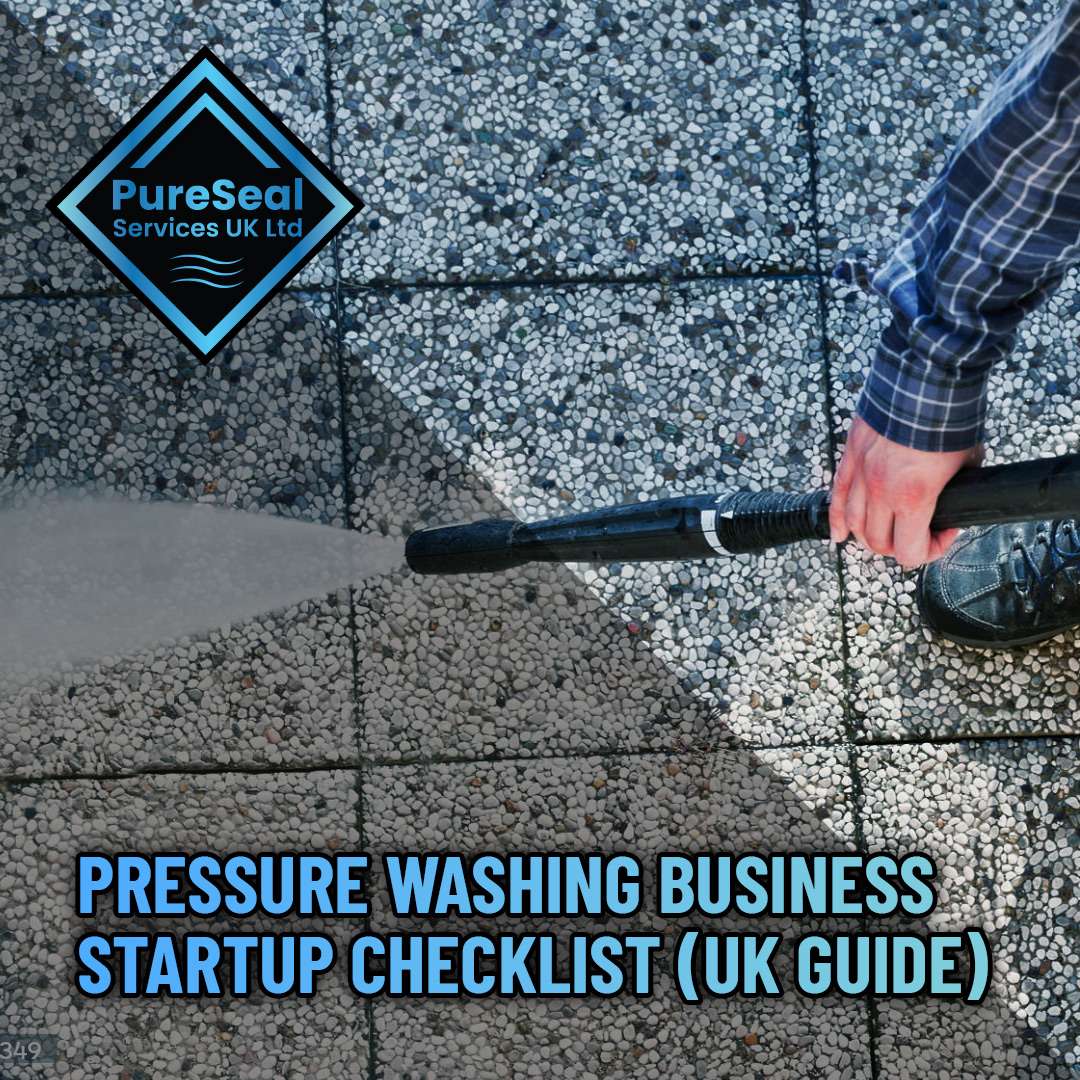
Pressure Washing Business Startup Checklist (UK Guide)
Starting a pressure washing business in the UK requires organised planning, smart spending, and attention to legal and safety requirements. A checklist approach makes sure nothing gets missed. This guide will walk you through priorities, costs, registrations, equipment, pricing and marketing. It’s designed to be practical and actionable.
1. Define Your Service Offering
Start by deciding the types of pressure washing services you will provide. A clear offering helps with pricing, marketing and equipment needs.
Common Service Types
| Service Type | Typical Customers | Notes |
|---|---|---|
| Driveways & Paths | Homeowners | Popular residential service |
| Patios & Decking | Homeowners | Seasonal demand rises in spring/summer |
| Exterior Walls | Residential & Commercial | Often includes detergents |
| Garages & Car Parks | Businesses | Larger surface area, higher pricing |
| Industrial Equipment | Factories & Workshops | High‑pressure machines and safety focus |
👉 Focus on 2–3 core service types to begin with. Once established, you can expand.
2. Market Research & Target Area
Before spending money, understand your local demand and competition.
Research Checklist
-
Survey local neighbourhoods — note surface types (concrete, block paving).
-
Identify commercial properties that may need regular cleaning.
-
Estimate average service fees in your area.
-
Check seasonal patterns (residential demand increases from March to September).
📊 A simple table to track your findings:
| Area/Neighbourhood | Potential Clients | Notes |
|---|---|---|
| Town Centre | Shops & Offices | High footfall, commercial demand |
| Suburban Areas | Houses | Residential driveways/patio work |
| Industrial Estate | Warehouses | Industrial cleaning potential |
3. Legal Setup and Business Structure
Setting up correctly from day one avoids issues later.
Options for Business Registration
| Structure | Description | Key Considerations |
|---|---|---|
| Sole Trader | Simple setup under your name | Easy to manage taxes, less paperwork |
| Limited Company | Business operates as a separate legal entity | More paperwork, protects personal assets |
| Partnership | Shared ownership with others | Agreements needed on roles and profit split |
📌 Register your business with HMRC for tax purposes. If choosing limited company, register with Companies House.
4. Insurance and Risk Management
Insurance protects you and your clients if damage or injury occurs.
Types of Insurance to Consider
| Insurance Type | Why You Need It |
|---|---|
| Public Liability Insurance | Covers damage to client property or injury |
| Employers’ Liability | Only if you hire staff |
| Equipment Insurance | Protects your machinery against theft or damage |
👉 Quotes vary by coverage, profession and turnover. Get an accurate estimate early.
5. Health and Safety Planning
Pressure washing can be hazardous without correct procedures.
Safety Essentials
-
Personal Protective Equipment (PPE) – goggles, gloves, boots, ear protection.
-
Risk assessments for every job type.
-
Training on handling chemicals and equipment.
📋 Create a safety checklist for each job:
| Checklist Item | Yes/No | Notes |
|---|---|---|
| PPE Available | ☐ | |
| Chemicals Stored Safely | ☐ | |
| Area Cordoned for Public Safety | ☐ | |
| Equipment Checked Before Use | ☐ |
6. Equipment and Supplies
Quality gear improves your results and speeds up jobs.
Essential Equipment
| Equipment | Purpose | Estimated Cost (£) |
|---|---|---|
| Pressure Washer (electric or petrol) | Core cleaning tool | 400 – 1,500 |
| Surface Cleaner Attachment | Faster cleaning for flat surfaces | 100 – 300 |
| Water Tank | For sites without tap access | 200 – 600 |
| High‑Pressure Hoses | For flexible operation | 50 – 150 |
| PPE | Safety gear for you/staff | 50 – 150 |
| Vehicle (van/trailer) | Equipment transport | 3,000 – 15,000 |
💧 Cleaning Chemicals: Professional detergents and degreasers are vital for effective results. You can source a variety of cleaning products from https://puresealservices.co.uk/ tailored to different surfaces and stains.
7. Budget and Startup Costs
Estimate your startup expenses so you know how much capital you need.
Sample Startup Cost Table
| Category | Estimated Low (£) | Estimated High (£) |
|---|---|---|
| Business Registration | 0 | 100 |
| Insurance | 150 | 500 |
| Equipment | 700 | 3,000 |
| Vehicle | 3,000 | 15,000 |
| PPE & Consumables | 100 | 400 |
| Marketing | 100 | 600 |
| Training | 0 | 300 |
| Total | 4,050 | 19,900 |
👉 You can begin with a modest setup and upgrade as the business grows.
8. Pricing Strategy
Setting competitive yet profitable prices influences client decisions.
Sample Pricing Guide (UK)
| Service | Small Job (£) | Medium Job (£) | Large Job (£) |
|---|---|---|---|
| Driveway Cleaning | 60 | 90 | 150 |
| Patio/Decking | 50 | 80 | 120 |
| Exterior Walls | 80 | 130 | 200 |
| Commercial Car Park | 150 | 250 | 400 |
| Industrial Equipment | 80 | 150 | 300 |
⚠️ Prices vary by size, surface type, complexity and location.
9. Branding and Identity
A clear brand helps clients remember you.
Branding Checklist
-
Business name that reflects cleaning services.
-
Logo and colour scheme.
-
Branded uniforms.
-
Vehicle decals or wraps.
📌 Consider designing a simple logo and using your brand colours consistently on marketing materials.
10. Marketing Checklist
Marketing drives enquiries and builds your customer base.
Offline Marketing
-
Flyers and brochures distributed locally.
-
Door‑to‑door leafleting in target neighbourhoods.
-
Local adverts on community boards.
Online Marketing
-
Create a basic website with services and pricing.
-
Set up social media profiles to share before/after photos.
-
Collect customer reviews for trust and visibility.
📋 Use this table to track marketing tasks:
| Task | Completed | Notes |
|---|---|---|
| Website Created | ☐ | |
| Flyers Printed | ☐ | |
| Social Media Set Up | ☐ | |
| First Campaign Launched | ☐ |
11. Scheduling, Systems and Workflow
Efficient operations save time and money.
Tools You Might Use
| Tool Type | Purpose |
|---|---|
| Online Scheduler | Book jobs and allocate time slots |
| Invoicing Software | Send invoices and record payments |
| CRM (Client Relationship Management) | Track clients and history |
| GPS/Route Planner | Plan efficient travel between jobs |
🔑 Set up your systems before day one to avoid admin bottlenecks.
12. Hiring and Staff Planning (Optional)
If you plan to scale, you may hire helpers.
Hiring Considerations
-
Define roles (technician, admin support).
-
Ensure training for all staff.
-
Set clear pay rates or contracts.
📊 Simple staff planning chart:
| Role | Duties | Pay/Rate |
|---|---|---|
| Technician | On‑site cleaning | £12–£15/hr |
| Admin | Scheduling, invoicing | £10–£13/hr |
13. Waste and Environmental Compliance
Wastewater and chemicals must be managed responsibly.
Wastewater Management Checklist
-
Check local council regulations on discharge.
-
Use containment mats where needed.
-
Avoid letting chemicals enter drains or watercourses.
📌 Document your compliance steps for client trust and legal protection.
14. Client Communication and Quotes
Clear communication increases booking rates.
Quote Process
-
Visit the site or review photos to assess work.
-
Provide a written quote with clear prices.
-
Include terms such as payment method, deposit, cancellation policy.
Sample Quote Format
| Description | Quantity | Unit Price | Total (£) |
|---|---|---|---|
| Driveway cleaning | 1 job | 90 | 90 |
| Patio cleaning | 1 job | 80 | 80 |
| Travel surcharge | 1 | 10 | 10 |
| Total | — | — | £180 |
15. Quality Assurance
Delivering consistent results builds reputation and referrals.
QA Checklist
-
Check surface before cleaning.
-
Use correct pressure and chemicals for each surface.
-
After cleaning, walk the site with the client.
-
Resolve any issues immediately.
16. Health & Safety Documentation
Create and maintain these documents:
-
Risk assessment forms.
-
Method statements for common job types.
-
Training records.
-
Incident logs.
📌 Store them digitally for easy access.
17. Tracking Growth and Performance
Set key metrics to measure success.
Metrics to Monitor
| Metric | What It Shows |
|---|---|
| Jobs Completed | Workload and demand level |
| Average Job Value | Pricing effectiveness |
| Repeat Clients | Customer loyalty |
| Marketing ROI | Value of advertising spend |
| Profit Margin | Financial health |
18. Seasonal Planning
Demand often rises in warmer months.
Planning Table
| Month | Expected Demand | Notes |
|---|---|---|
| Jan | Low | Weather slows down |
| Feb – Mar | Medium | Spring clean demand rises |
| Apr – Sep | High | Peak season |
| Oct – Nov | Medium | Autumn cleaning |
| Dec | Low | Holiday season slows jobs |
19. Record Keeping
Keep accurate financial and job records.
Records You Must Keep
-
Invoices and receipts.
-
Expense logs.
-
Tax documents.
-
Equipment maintenance history.
📌 Consider accounting software to reduce manual work.
20. Upselling and Add‑Ons
Increase revenue by offering complementary services.
Upsell Ideas
| Add‑On | Description | Typical Price (£) |
|---|---|---|
| Sealing patios | Seal post‑cleaning | 50–150 |
| Gutter cleaning | Remove debris | 40–100 |
| Regular maintenance plan | Scheduled clean | Discounted rate |
21. Competitive Advantage
Differentiate your business:
-
Offer flexible booking times.
-
Use high‑quality detergents (from https://puresealservices.co.uk/).
-
Provide fast quotes.
-
Share before/after photos in marketing.
22. Customer Retention Strategies
Keeping customers reduces marketing costs.
Retention Tactics
-
Send annual reminders for seasonal clean.
-
Offer loyalty discounts.
-
Ask for reviews and referrals.
23. Pricing Adjustments and Inflation
Materials and fuel costs can change.
Review Pricing
| Frequency | Reason |
|---|---|
| Quarterly | Review fuel, supplies cost |
| Annually | Adjust for inflation and demand |
24. Handling Complaints Professionally
Accept feedback and address concerns quickly.
Complaint Handling Steps
-
Listen calmly.
-
Acknowledge the issue.
-
Offer corrective action.
-
Follow up to ensure satisfaction.
25. Next Steps After Launch
Once operational:
-
Collect feedback.
-
Review marketing results.
-
Refine pricing or service area.
-
Plan for equipment upgrades.
Tags: Patio cleaning, Driveway cleaning, pressure washing, Roof Cleaning, Exterior cleaning, gutter cleaning, window cleaning