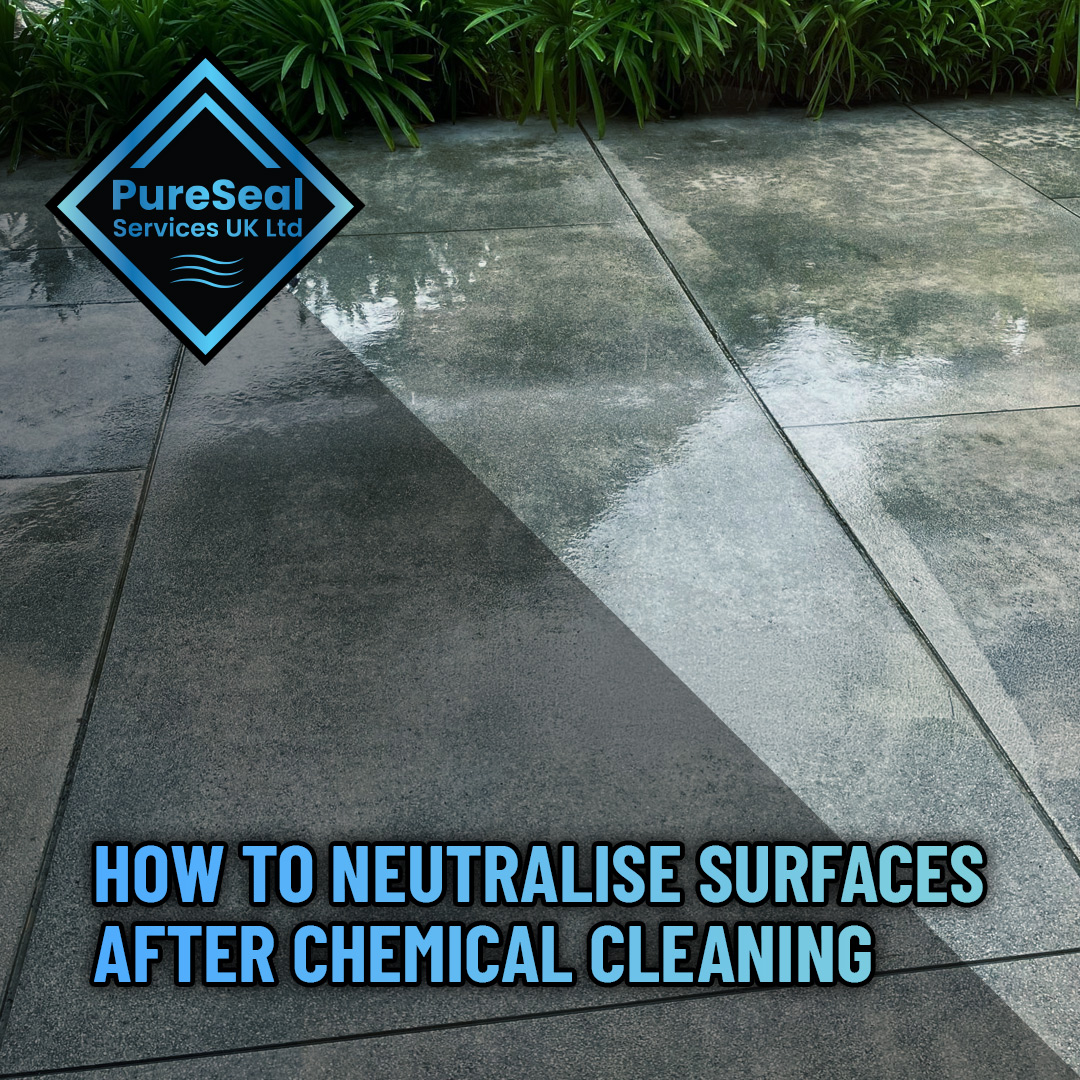
How to Neutralise Surfaces After Chemical Cleaning
Chemical cleaning is an essential part of exterior and interior surface maintenance. Whether removing algae from roofs, restoring patios, cleaning render, or degreasing industrial flooring, chemical agents provide powerful results that water alone cannot achieve. However, once the cleaning stage is complete, a crucial step remains: neutralisation.
Neutralising a surface ensures that chemical residues are rendered harmless, preventing long-term damage, staining, surface degradation, or environmental harm. Failure to neutralise properly can undo the benefits of cleaning and may even shorten the lifespan of the treated material.
Professional cleaners and property owners alike rely on correct neutralisation procedures to protect surfaces, ensure safety, and deliver lasting results. Quality chemical products and neutralising solutions are available from specialist suppliers such as https://puresealservices.co.uk/, who provide cleaning and treatment solutions designed for exterior surfaces.
What Is Surface Neutralisation?
Surface neutralisation is the process of stopping or reversing the chemical activity of cleaning agents after they have done their job. Many cleaning chemicals are either acidic or alkaline, and leaving them active on a surface can cause ongoing reactions.
Neutralisation involves bringing the surface pH back towards neutral (around pH 7), ensuring:
The cleaning process stops completely
No further chemical reactions occur
The surface remains stable and protected
Surrounding materials are not damaged
This process is especially important when using:
Sodium hypochlorite-based cleaners
Acidic brick or masonry cleaners
Alkaline degreasers
Biocides and fungicides
Efflorescence removers
Why Neutralisation Is Essential
Chemical residues left on surfaces can continue reacting long after cleaning. This can lead to serious problems over time.
Risks of Not Neutralising Properly
Problem
Cause
Result
Surface bleaching
Residual oxidisers
Permanent colour loss
Material degradation
Ongoing chemical reaction
Weakening or erosion
Streaking and staining
Uneven chemical drying
Visible cosmetic defects
Plant damage
Chemical runoff
Dead grass or plants 🌱
Corrosion
Chemical contact with metals
Rust or structural damage
Reduced lifespan
Chemical deterioration
Early replacement costs
Neutralisation prevents these issues and protects your investment.
Understanding pH and Chemical Reactions
To neutralise effectively, it helps to understand pH.
The pH scale runs from 0 to 14:
0–6 = Acidic
7 = Neutral
8–14 = Alkaline
Different cleaning chemicals fall into different categories.
Chemical Type
pH Range
Common Use
Acidic
1–6
Brick cleaning, mineral stain removal
Neutral
7
Mild cleaning
Alkaline
8–14
Degreasing, organic growth removal
Neutralisation works by applying an opposite-type solution to balance the pH.
For example:
Acid cleaners are neutralised with alkaline solutions
Alkaline cleaners are neutralised with acidic solutions
Common Chemical Cleaning Agents and Their Neutralisation Requirements
Different chemicals require different neutralisation methods.
Cleaning Chemical
Type
Neutralising Agent
Sodium hypochlorite
Alkaline
Mild acidic rinse
Caustic soda
Strong alkaline
Weak acid neutraliser
Hydrochloric acid
Acidic
Alkaline neutraliser
Render cleaners
Acidic
Alkaline wash
Biocide treatments
Variable
Water rinse or neutraliser
Degreasers
Alkaline
Acidic neutraliser
Using the correct neutralising method ensures proper chemical shutdown.
Step-by-Step Neutralisation Process
Professional neutralisation follows a structured approach.
Step 1: Allow Chemical Dwell Time
Before neutralising, allow the cleaning chemical to complete its intended function.
Typical dwell times:
Surface
Chemical
Dwell Time
Roof tiles
Biocide
15–45 minutes
Brickwork
Acid cleaner
5–20 minutes
Concrete
Degreaser
10–30 minutes
Render
Softwash chemical
10–30 minutes
Neutralising too early reduces cleaning effectiveness.
Step 2: Initial Rinse
Before applying neutraliser, rinse the surface thoroughly with clean water.
This removes:
Loose chemical residue
Dirt and debris
Excess chemical concentration
Use:
Low pressure for delicate surfaces
Moderate pressure for durable surfaces
Avoid excessive pressure which could damage the material.
Step 3: Apply Neutralising Solution
Apply the neutralising agent evenly across the surface.
Application methods include:
Pump sprayer
Softwash system
Watering can
Brush application
Low-pressure spray
Ensure full coverage to prevent uneven neutralisation.
Step 4: Allow Neutraliser Dwell Time
Neutralisers need time to react with residual chemicals.
Typical neutraliser dwell time:
Surface
Neutraliser Dwell Time
Roof tiles
5–15 minutes
Render
5–10 minutes
Brick
5–15 minutes
Concrete
10–20 minutes
This ensures full chemical neutralisation.
Step 5: Final Rinse
After neutralisation, rinse thoroughly with clean water.
This removes:
Neutralised residues
Remaining salts
Chemical byproducts
This step prevents staining and ensures surface stability.
Types of Neutralising Solutions
Several neutralising solutions are commonly used.
Mild Acid Neutralisers
Used for alkaline chemicals such as sodium hypochlorite.
Examples include:
Citric acid solutions
Vinegar-based neutralisers
Specialist neutralising products
These restore proper pH balance safely.
Alkaline Neutralisers
Used to neutralise acidic cleaning products.
Examples include:
Sodium bicarbonate solutions
Mild alkaline washes
Specialised alkaline neutralisers
These prevent acid damage to surfaces.
Water Neutralisation
In some cases, extensive rinsing alone can neutralise chemicals.
This is effective when:
Chemicals are diluted
Low-strength solutions were used
Surfaces are non-porous
However, chemical neutralisers are usually safer and more reliable.
Neutralising Different Surface Types
Each surface material requires specific neutralisation methods.
Roof Tiles
Roof tiles are commonly cleaned using biocides or softwash chemicals.
Neutralisation protects:
Tile coatings
Colour pigmentation
Structural integrity
Recommended neutralisation process:
Step
Method
Rinse
Low pressure rinse
Neutralise
Mild acidic neutraliser
Rinse again
Clean water rinse
This ensures tile protection and longevity.
Render and Painted Surfaces
Render is particularly sensitive to chemical damage.
Neutralisation prevents:
Discolouration
Patchiness
Premature coating failure
Careful application is essential.
Brick and Masonry
Brick cleaning often involves acidic chemicals.
Neutralisation prevents:
Neutralisation in Commercial and Industrial Settings
Neutralisation is critical in commercial environments.
Common applications include:
Factory floors
Warehouse cleaning
Industrial equipment
Car parks
Building exteriors
Professional neutralisation prevents costly damage.
Choosing Quality Neutralising Products
Using professional-grade products improves results significantly.
Benefits include:
Reliable neutralisation
Surface protection
Consistent performance
Reduced risk of damage
Specialist cleaning and neutralising solutions are available from https://puresealservices.co.uk/, offering products suitable for exterior cleaning, softwashing, and surface protection.
Neutralisation Timing and Weather Considerations
Weather conditions affect neutralisation effectiveness.
Best conditions:
Mild temperatures
Dry weather
No rain during dwell time
Avoid neutralising during:
Heavy rain
Extreme heat
Freezing conditions
This ensures proper chemical reaction.
Long-Term Maintenance After Neutralisation
After neutralisation, surfaces remain stable and protected.
Maintenance recommendations include:
Regular inspections
Gentle cleaning methods
Avoiding harsh chemicals unnecessarily
Using appropriate cleaning products
This keeps surfaces in optimal condition.
Neutralising surfaces after chemical cleaning is an essential part of professional surface care. Proper neutralisation ensures chemical reactions stop completely, protects surface integrity, prevents costly damage, and ensures safe, long-lasting cleaning results.
Neutralisation When Softwashing Exterior Surfaces
Softwashing is widely used across the UK for cleaning roofs, render, cladding, and masonry. It typically involves sodium hypochlorite-based solutions, surfactants, and biocides. While highly effective, these solutions are alkaline and must be neutralised properly to prevent ongoing oxidation.
Neutralising after softwashing helps protect:
Painted render finishes
uPVC fascias and soffits
Roof tile coatings
Sealants and pointing
Metal fixtures such as gutter brackets
Softwash residue can remain active for several hours if not neutralised. This may result in fading, brittleness, or patchy finishes.
Recommended neutralisation sequence:
Stage
Action
Purpose
Initial rinse
Remove surface residue
Reduce chemical strength
Neutraliser application
Apply mild acidic neutraliser
Stop oxidation
Dwell time
Allow 5–10 minutes
Ensure full reaction
Final rinse
Remove neutralised salts
Prevent staining
This process stabilises the cleaned surface and ensures the finish remains intact.
Neutralising Porous vs Non-Porous Surfaces
Surface porosity significantly affects how chemicals behave and how neutralisation should be performed.
Porous surfaces absorb chemicals, meaning neutralisation must reach below the surface level.
Examples of porous surfaces include:
Concrete
Sandstone
Clay roof tiles
Render
Brick
Non-porous surfaces include:
uPVC
Metal
Glass
Painted surfaces
Comparison of neutralisation requirements:
Surface Type
Chemical Absorption
Neutralisation Difficulty
Recommended Approach
Concrete
High
Moderate
Multiple rinses and neutraliser
Brick
Moderate
Moderate
Full neutralisation required
Render
High
High
Careful, even application
uPVC
Low
Easy
Simple rinse and neutraliser
Metal
None
Easy
Quick neutralisation
Porous surfaces require extra attention to ensure complete neutralisation.
Neutralising After Acid Brick Cleaning
Acid cleaning is commonly used to remove cement staining, mortar smears, and efflorescence from brickwork. However, acid residues can continue attacking mortar joints if not neutralised properly.
Problems caused by poor neutralisation include:
Mortar weakening
White staining
Surface etching
Structural deterioration
Neutralising acid-treated brick involves applying an alkaline neutraliser.
Typical process:
Step
Action
Rinse surface
Remove bulk acid
Apply alkaline neutraliser
Balance pH
Allow dwell time
5–15 minutes
Final rinse
Remove salts
This protects mortar integrity and prevents long-term damage.
Neutralisation and Metal Surface Protection
Metal surfaces are particularly vulnerable to chemical damage. Residual cleaning chemicals can accelerate corrosion, especially on steel, aluminium, and galvanised components.
Common vulnerable items include:
Gutters
Flashings
Fixings
Railings
Industrial equipment
Neutralisation prevents corrosion by stopping chemical reactions.
Metal protection neutralisation table:
Metal Type
Risk Level
Neutralisation Importance
Steel
High
Essential
Aluminium
Moderate
Recommended
Galvanised metal
High
Essential
Stainless steel
Low
Beneficial
Even small amounts of chemical residue can initiate corrosion if not neutralised.
Neutralising Around Sensitive Areas
Some areas require extra care due to vulnerability.
Sensitive areas include:
Painted surfaces
Glass
Wood
Landscaping
Electrical fixtures
Neutralising protects these materials from unintended exposure.
Protection checklist:
Area
Protection Method
Glass
Immediate rinse and neutralise
Plants
Pre-wet and rinse thoroughly
Wood
Gentle neutralisation
Electrical fixtures
Controlled application
This prevents accidental damage.
Neutralisation and Preventing Surface Whitening
Surface whitening is a common issue caused by chemical residue crystallisation.
It appears as:
White streaks
Chalky deposits
Patchy fading
This occurs when chemical salts remain on the surface.
Neutralisation prevents salt formation by stopping chemical activity before drying.
Salt residue formation factors:
Factor
Risk Level
Strong chemicals
High
Poor rinsing
High
Hot weather
Moderate
Porous surfaces
High
Proper neutralisation prevents these cosmetic defects.
Neutralising During Large-Scale Cleaning Projects
Large commercial or industrial cleaning projects require structured neutralisation planning.
Examples include:
Block paving cleaning
Warehouse cleaning
Roof cleaning on commercial buildings
Industrial surface restoration
Large areas require systematic neutralisation.
Professional neutralisation plan:
Stage
Method
Section cleaning
Clean manageable area
Immediate neutralisation
Neutralise before moving on
Controlled rinsing
Prevent runoff spread
Final inspection
Verify neutralisation
This ensures consistent protection across large surfaces.
Training and Professional Standards in Neutralisation
Professional cleaning technicians are trained to understand chemical reactions and neutralisation procedures.
Proper training ensures:
Correct chemical use
Surface protection
Safe handling
Effective neutralisation
Professional standards include:
pH testing procedures
Correct dilution ratios
Proper dwell times
Equipment use
Training benefits table:
Benefit
Result
Improved safety
Reduced accidents
Better results
Longer-lasting clean
Surface protection
Prevents damage
Cost savings
Avoids repairs
Proper neutralisation is a key part of professional cleaning standards and ensures surfaces remain protected, stable, and visually appealing long after chemical cleaning has been completed.

 Artificial and Sports Surfaces
 Awnings / Canopies / Gazebos
 Block Paving
 Brickwork
 Composite Surfaces
 Decking / Timber
 Granite
 Imprinted Concrete
 Internal Masonry
 Limestone
 Marble
 Metal Cladding
 Polished or Honed Stone
 Porcelain
 Render
 Resin Bond
 Road and Rail Signs
 Roof Tiles / Slates
 Sandstone
 Slate
Slate Solar Panels and Glass
 Stone Sills and Pier Caps
 Tarmac and Asphalt
 Gutters & UPVC
 Acid Damage
 Biofilm
 Bitumen
 Blood
Blood Carbon
 Concrete / Grout / Mortar
 Copper Oxide
 Efflorescence
 Egg
Egg Failed Sealer
 Fire Damage
 Fuel / Oil
 Graffiti
 Grease / Fat / Cooking Oil
 Lawn Fertiliser
 Lead Carbonate
 Lead Oxide
 Paint Splashes
 Rust
Rust Tar & Glue
 Tannin Removers
 Traffic Film Removers
 Trapped Moisture / Sealer Repairs
 Urine Neutralisers