
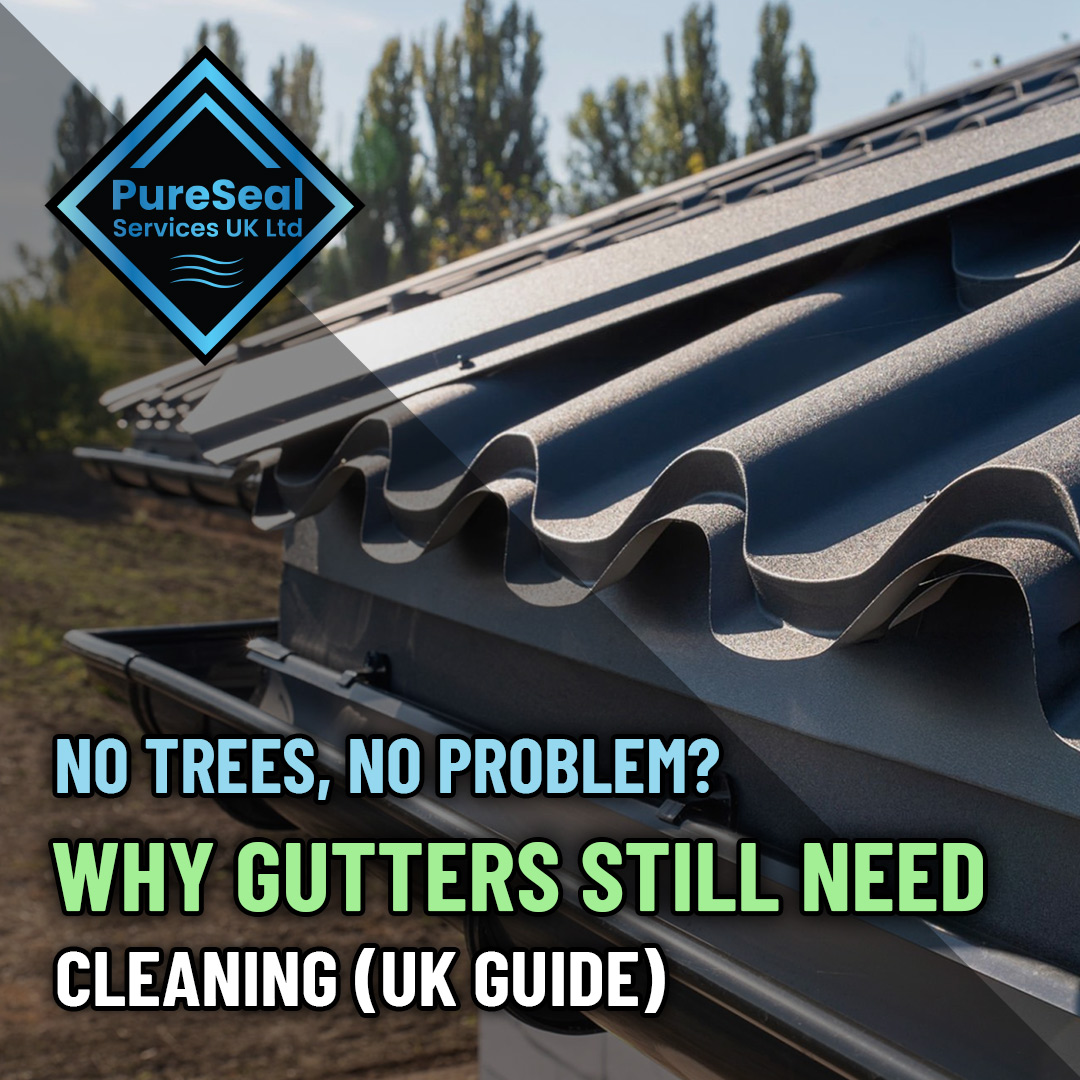
No Trees, No Problem? Why Gutters Still Need Cleaning (UK Guide)
Do Gutters Need Cleaning If There Are No Trees Around?
Gutter cleaning is one of those home maintenance tasks that most people know they should do — but often postpone. For homes surrounded by large trees, it’s easy to understand why: falling leaves, twigs, and moss can quickly block gutters. But what about properties without any nearby trees?
It’s a common assumption that if your home isn’t near foliage, your gutters will stay clean indefinitely. Unfortunately, that’s not quite true. Even in open areas or new housing estates without mature trees, gutters still collect debris, dirt, and residue from other sources. Over time, this build-up can cause the same problems as leaf blockages — including damp, leaks, and expensive repairs.
This article explains why gutters still need cleaning even when no trees are nearby, what kind of debris can accumulate, how often you should inspect them, and the potential costs of neglect.
1. The Purpose of Gutters
Before exploring why cleaning is important, it helps to understand what gutters actually do.
Gutters are designed to:
-
Collect rainwater from the roof.
-
Channel it through downpipes.
-
Direct it safely away from the walls and foundation.
A clear gutter system ensures water flows freely. If it becomes blocked, even partially, rainwater can overflow, soak into walls, and damage the roofline or foundations.
| Gutter Component | Function | Risk if Blocked |
|---|---|---|
| Gutter trough | Carries water from roof to downpipe | Overflow, staining |
| Downpipe | Transfers water to ground drain | Backflow or leaks |
| Hopper head | Collects water from multiple sections | Debris accumulation |
| Brackets & joints | Support structure | Leaks, gutter sagging |
So, while falling leaves are a common cause of blockage, they’re far from the only threat.
2. Common Misconception: “No Trees = No Cleaning Needed”
It’s easy to assume that a property free of trees doesn’t need regular gutter cleaning. After all, where would the debris come from? The reality is that other sources of dirt can be just as problematic.
In the UK, gutters fill with:
-
Roof moss and algae granules.
-
Airborne dust and pollution particles.
-
Bird nests, feathers, and droppings.
-
Lichen, insects, and pollen build-up.
-
Roof tile grit that washes down with rain.
These materials might be small, but over time they accumulate, mix with rainwater, and form a sludge that blocks outlets or traps standing water. Even without trees, gutters can become half-filled within 18–24 months.
3. Sources of Gutter Debris Without Trees
Let’s break down the main debris types you might find in “tree-free” gutters.
| Source | How It Enters the Gutter | Impact Over Time |
|---|---|---|
| Roof moss and algae | Washed down by rainfall | Creates thick green sludge, blocks outlets |
| Dust and pollution | Settles from the air | Builds compacted dirt layer |
| Birds and pests | Nesting or perching | Feathers, droppings, and twigs |
| Roof tile grit | Weathering and erosion | Sediment build-up in corners |
| Insects and seeds | Carried by wind | Small blockages, plant growth |
| Rain splash from nearby soil | During storms | Adds silt and organic material |
Even a single bird’s nest can block an entire downpipe, while moss runoff can coat the inside of gutters in a sticky green film that holds moisture long after rain has stopped.
4. How Moss Contributes to Blockages
Moss is a major factor in gutter maintenance — even more so than leaves in some regions. It thrives on damp, shaded roof tiles and spreads quickly, especially on older or north-facing roofs. When rain falls, small clumps of moss detach and wash into the gutters.
Over time, this material traps dust and grit, forming dense clogs. In dry weather, it acts like a sponge, holding water long after rain stops. This constant damp environment encourages algae growth, making gutters slippery, heavy, and prone to overflow.
| Roof Condition | Expected Moss Shedding Rate | Impact on Gutters |
|---|---|---|
| Clean, treated tiles | Low | Minor sediment |
| Moderate moss (typical UK roof) | Medium | Regular blockages |
| Heavy moss infestation | High | Constant clogging, standing water |
Regular cleaning prevents this build-up and helps spot early signs of roof moss before it becomes a more costly roofing issue.
5. Urban and Coastal Pollution
Even in city centres or coastal towns with few trees, gutters still collect significant grime due to pollution particles and salt deposits.
Urban air carries fine dust from vehicle emissions, construction, and heating systems. These particles settle on roofs, then wash into gutters with rainfall. Coastal areas experience similar problems from sea spray, which leaves behind fine salt crystals that can corrode metal guttering and stain uPVC systems.
| Location Type | Common Contaminants | Cleaning Frequency Needed |
|---|---|---|
| Urban (traffic-heavy) | Dust, soot, roof grit | Every 12–18 months |
| Coastal (near sea) | Salt, algae | Every 6–12 months |
| Rural (open fields) | Pollen, soil dust | Every 12–18 months |
Even in completely treeless areas, these environmental factors can make gutters dirty and inefficient faster than most homeowners expect.
6. Impact of Roof Material on Gutter Condition
Different roof materials shed different types of debris that can affect gutter health.
| Roof Type | Common Runoff Material | Impact on Gutter |
|---|---|---|
| Concrete tile | Sand/grit, moss | Sludge buildup |
| Slate | Fine dust, algae | Minimal but steady residue |
| Metal | Rust flakes (if aged) | Discolouration and staining |
| Flat felt roof | Bitumen flakes | Sticky deposits |
| Synthetic tiles | Plastic particles (rare) | Slight sediment buildup |
Older roofs, especially those with porous surfaces, tend to shed more material as they weather. Cleaning the gutters once or twice a year helps manage this runoff and ensures rainwater flows freely.
7. Birds, Insects, and Wildlife
Birds are one of the biggest causes of blockages in the UK, regardless of trees. Many species — including starlings, pigeons, and sparrows — build nests under roof eaves or directly inside gutters.
A single nest can block an entire downpipe, leading to water overflow and even internal damp patches. Insects such as wasps or bees occasionally create hives under fascia boards, while spiders and other insects collect around damp areas near the gutters.
| Wildlife Type | Problem Caused | Estimated Removal / Repair Cost (£) |
|---|---|---|
| Birds (nests) | Blockages, leaks | £100–£250 |
| Wasps / insects | Nesting around soffits | £70–£150 |
| Rodents (rare) | Gnawing on fascia edges | £100–£200 |
So, even without leaves, nature still finds its way into gutter systems.
8. Damp and Water Damage from Blocked Gutters
The purpose of gutter cleaning isn’t just aesthetic — it’s about protecting your home’s structure. A partially blocked gutter can cause rainwater to overflow and soak into walls or fascia boards, leading to damp patches and mould.
| Damage Type | Cause | Typical Repair Cost (GBP) |
|---|---|---|
| Wall staining | Overflow during heavy rain | £150–£400 |
| Damp or mould inside | Prolonged water seepage | £300–£800 |
| Rotten fascia or soffits | Standing water | £500–£1,200 |
| Foundation damage | Water pooling near base | £800–£2,000 |
Even small blockages can create costly consequences over time. Preventative cleaning is far cheaper and less disruptive than major repairs.
9. How Often Should You Clean Gutters Without Trees?
While homes surrounded by trees might need cleaning twice a year (spring and autumn), properties without trees still benefit from annual maintenance.
| Home Type | Tree Presence | Recommended Cleaning Frequency |
|---|---|---|
| Urban flat | None | Every 18–24 months |
| Semi-detached (no nearby trees) | Few | Every 12–18 months |
| Detached (no overhanging trees) | None | Every 12 months |
| Rural bungalow (open field) | None | Every 12–18 months |
| Coastal property | None | Every 6–12 months |
If you notice overflowing water, staining, or sagging gutters sooner, it’s best to clean immediately rather than waiting for the next scheduled maintenance.
10. Visible Signs Gutters Need Cleaning (Even Without Trees)
You don’t need to climb a ladder to tell if your gutters are struggling. Look out for these signs:
-
Water spilling over during rainfall
-
Damp patches under the roofline
-
Sagging or uneven gutters
-
Plants or moss growing from the gutter edge
-
Peeling paint or water streaks on walls
-
Musty smells indoors near upper walls
These symptoms mean that water isn’t draining properly, and even without tree leaves, your gutters are likely filled with sludge or roof debris.
11. How to Check Gutters Safely
You don’t always need professional tools to monitor your gutters. From ground level, a pair of binoculars or a smartphone camera can help identify overflowing areas, dirt streaks, or vegetation.
If you do inspect from a ladder, ensure:
-
The ladder is stable and placed on level ground.
-
A second person holds it for balance.
-
You wear gloves to avoid cuts from metal edges.
Never overreach or lean too far; most minor inspections can be done visually from below.
Alternatively, inspection cameras and telescopic poles with mirrors are affordable tools that allow safe, ground-level checks.
12. Gutter Cleaning Costs in the UK
Even without trees, having your gutters cleaned once a year remains a modest investment compared to potential repair costs.
| Property Type | Typical Cleaning Cost (£) | Access Level |
|---|---|---|
| Small terraced house | £50 – £80 | Easy ladder access |
| Semi-detached | £80 – £120 | Moderate access |
| Detached | £100 – £180 | All sides |
| Bungalow | £60 – £100 | Quick access |
| Large detached / 3-storey | £150 – £300 | May require scaffolding |
For a home with no nearby trees, an annual clean costing under £100 is usually enough to keep the system healthy. This small expense helps avoid hundreds or thousands in structural damage repairs later.
13. The Role of Gutter Guards and Screens
Some homeowners without trees install gutter guards thinking they’ll never need cleaning again. However, as covered in other analyses, these systems can actually trap fine debris such as dust, moss spores, and roof grit.
Over time, guards themselves become coated in grime and require maintenance. For a treeless property, gutter guards offer limited benefit because the main contaminants — moss and dust — can still enter or sit on top of the guard, blocking water flow.
| Guard Type | Effective Against | Less Effective Against |
|---|---|---|
| Mesh screen | Large debris (leaves) | Dust, moss, grit |
| Foam insert | Small debris | Algae, roof grit |
| Brush guard | Twigs | Fine silt, moss spores |
Thus, even if no leaves are nearby, an annual rinse and inspection are still necessary.
14. Differences Between Urban and Rural Homes
Tree-free homes in urban and rural settings experience different kinds of debris build-up.
-
Urban areas: Pollution, construction dust, and traffic soot dominate.
-
Rural areas: Pollen, grass seeds, and soil dust are more common.
-
Coastal areas: Sea salt and moisture encourage corrosion and algae.
| Setting | Typical Debris Type | Cleaning Interval |
|---|---|---|
| City centre | Dust, soot | 18 months |
| Countryside | Pollen, insects | 12–18 months |
| Coastal | Salt, algae | 6–12 months |
So even without trees, location plays a major role in how often gutters need attention.
15. Consequences of Neglecting Gutter Cleaning
Even if your gutters look clean from below, sediment and grime inside can silently cause long-term issues.
| Neglect Period | Likely Outcome |
|---|---|
| 1–2 years | Sediment buildup begins |
| 3–5 years | Partial blockages, slow flow |
| 5–7 years | Overflow, water staining |
| 7–10 years | Damp walls, fascia rot |
| 10+ years | Structural damage, gutter replacement needed |
Neglected gutters can also pull away from fascia boards due to the weight of trapped water and debris. Replacing damaged gutters costs £600–£1,500, depending on the property size — far more than occasional cleaning.
16. Does Roof Angle Affect Gutter Maintenance?
Yes. Steeper roofs tend to shed debris (and rainwater) more quickly, meaning small particles are flushed into the gutters faster. Flatter roofs, on the other hand, may retain dirt that eventually washes down during heavy storms, sending a large surge of sludge into the system.
Homes with flat roofs feeding into side gutters often experience silt buildup even without trees nearby. These sections require particularly careful maintenance and cleaning every 6–12 months.
17. Cleaning Frequency vs Preventative Care
In homes without trees, a simple preventative care schedule can extend gutter lifespan significantly.
| Task | Recommended Frequency | Average Cost if Hired (£) |
|---|---|---|
| Gutter cleaning | Every 12–18 months | £80–£120 |
| Roof moss check | Every 2 years | £60–£100 |
| Downpipe flushing | Every 2 years | £40–£80 |
| Visual inspection | Twice a year | Free (DIY) |
These minimal efforts ensure gutters remain functional without needing major repairs or replacements.
18. How Clean Gutters Protect Other Property Areas
Regularly cleaned gutters benefit more than just the roofline. They help prevent:
-
Basement damp by diverting water away from foundations.
-
Driveway puddling from poorly directed downpipes.
-
Paint peeling caused by constant dampness.
-
Mould growth in loft areas.
Essentially, well-maintained gutters protect the entire building envelope — from roof to ground level — keeping your property in better condition for decades.
19. Environmental and Water Management Benefits
Clear gutters are not just about home care; they also help the environment. Efficient drainage reduces surface runoff and strain on stormwater systems. If you collect rainwater in a water butt, clean gutters mean clearer, odour-free water suitable for garden use.
Conversely, blocked gutters often cause contaminated overflow that carries roof grit and algae directly into drains. Keeping your gutters clean ensures that both your property and local waterways stay healthier.
20. Final Thoughts
So, do gutters need cleaning if there are no trees around?
Absolutely — yes.
Even in areas completely free of overhanging branches, gutters still collect dirt, moss, roof grit, and pollutants. These materials may be invisible from ground level, but over time they restrict water flow and cause overflow that damages your property.
In the UK’s damp climate, a yearly gutter clean is the safest and most cost-effective approach. It prevents rot, protects foundations, and ensures your roof drainage works as intended.
Neglecting this simple maintenance task can lead to far greater costs later — from damp repairs to full gutter replacement. Whether your home is surrounded by trees, open fields, or concrete pavements, clean gutters are essential for a healthy, dry, and long-lasting property.
21. How to Tell If Your Gutters Are Actually Clean
Even if your home has no nearby trees, it’s important to confirm whether your gutters are genuinely clear. From the ground, gutters can appear tidy, but blockages often occur out of sight in corners or downpipes. One simple test is to observe how rainwater behaves during a heavy downpour. If water spills over the edges or drips constantly from one spot, that section is likely obstructed.
Other signs include streaks on fascia boards, dark water marks, or damp patches below the roofline. You can also check visually by using a ladder or a telescopic inspection camera — or by running water from a garden hose into the gutter and observing the flow at the downpipe exit. Even minor pooling or slow drainage suggests the presence of sediment, moss, or grit that needs clearing.
22. Seasonal Cleaning Tips for Treeless Properties
Even without trees nearby, seasonal changes in the UK affect gutter health. Spring cleaning helps remove dirt washed down after winter storms and prevents moss spores from spreading. Autumn cleaning is vital because windblown debris like grass seeds and pollen can settle and turn to sludge during rainy months.
In summer, inspect for algae growth caused by humidity and light exposure on white uPVC fascia or gutters. During winter, check for ice buildup or frozen sections that may warp gutters or break clips. A light clean in spring followed by a full clean before winter is the ideal schedule for homes without heavy leaf fall. This twice-yearly rhythm ensures gutters stay free of pollution, grit, and moss all year long.
23. Common Myths About Gutter Maintenance
Many UK homeowners believe several myths about gutter maintenance — especially when there are no trees nearby. One popular misconception is that modern uPVC gutters are “self-cleaning.” While they resist rust and staining, they still collect dirt and sediment. Another myth claims that gutter guards make cleaning unnecessary, but fine particles and roof moss still pass through most systems.
Some also assume that gutters only clog during autumn, when leaves fall. In reality, moss shedding and bird activity peak in spring, and air pollution settles year-round. Finally, there’s the idea that new homes don’t need gutter maintenance for several years — but construction dust and roof grit can clog brand-new systems surprisingly quickly. Recognising these myths helps homeowners adopt realistic, proactive cleaning habits before costly damage occurs.
24. The Role of Roof Pitch and Shape
The pitch (angle) and design of your roof influence how often gutters need cleaning — even in treeless areas. Steeper roofs shed rainwater faster, which carries down more roof grit and small debris. This means gutters on steep roofs often fill with fine sediment sooner than those on flatter surfaces.
Meanwhile, homes with multiple roof sections or valleys funnel debris into fewer gutters, concentrating buildup in specific spots. Flat roofs feeding into side gutters are especially vulnerable because silt and standing water are common. Properties with dormer windows or extensions also tend to have small, awkward gutter sections that clog easily. Knowing your roof design helps you identify where maintenance should focus — often, it’s these high-volume or hidden areas that need cleaning first.
25. Why Regular Gutter Checks Save Money
Many homeowners skip cleaning because their gutters appear fine — but hidden blockages can lead to costly damage later. Overflowing water can seep into cavity walls, causing damp patches that cost £300–£800 to repair. Rotten fascia boards or soffits may require replacement costing £500–£1,200, and even minor foundation damage from standing water can exceed £1,000.
In contrast, annual cleaning typically costs less than £100–£150, even for detached homes. Regular maintenance also extends gutter lifespan by preventing weight stress and corrosion. Viewed over a decade, that small annual expense easily saves hundreds or even thousands of pounds in avoided repairs. In short: whether or not there are trees nearby, clean gutters are one of the simplest and most cost-effective ways to protect your property’s structure and value.
Tags: Patio cleaning, Driveway cleaning, pressure washing, Roof Cleaning, Exterior cleaning, gutter cleaning, window cleaning
 Artificial and Sports Surfaces
 Awnings / Canopies / Gazebos
 Block Paving
 Brickwork
 Composite Surfaces
 Decking / Timber
 Granite
 Imprinted Concrete
 Internal Masonry
 Limestone
 Marble
 Metal Cladding
 Polished or Honed Stone
 Porcelain
 Render
 Resin Bond
 Road and Rail Signs
 Roof Tiles / Slates
 Sandstone
 Slate
Slate Solar Panels and Glass
 Stone Sills and Pier Caps
 Tarmac and Asphalt
 Gutters & UPVC
 Acid Damage
 Biofilm
 Bitumen
 Blood
Blood Carbon
 Concrete / Grout / Mortar
 Copper Oxide
 Efflorescence
 Egg
Egg Failed Sealer
 Fire Damage
 Fuel / Oil
 Graffiti
 Grease / Fat / Cooking Oil
 Lawn Fertiliser
 Lead Carbonate
 Lead Oxide
 Paint Splashes
 Rust
Rust Tar & Glue
 Tannin Removers
 Traffic Film Removers
 Trapped Moisture / Sealer Repairs
 Urine Neutralisers