
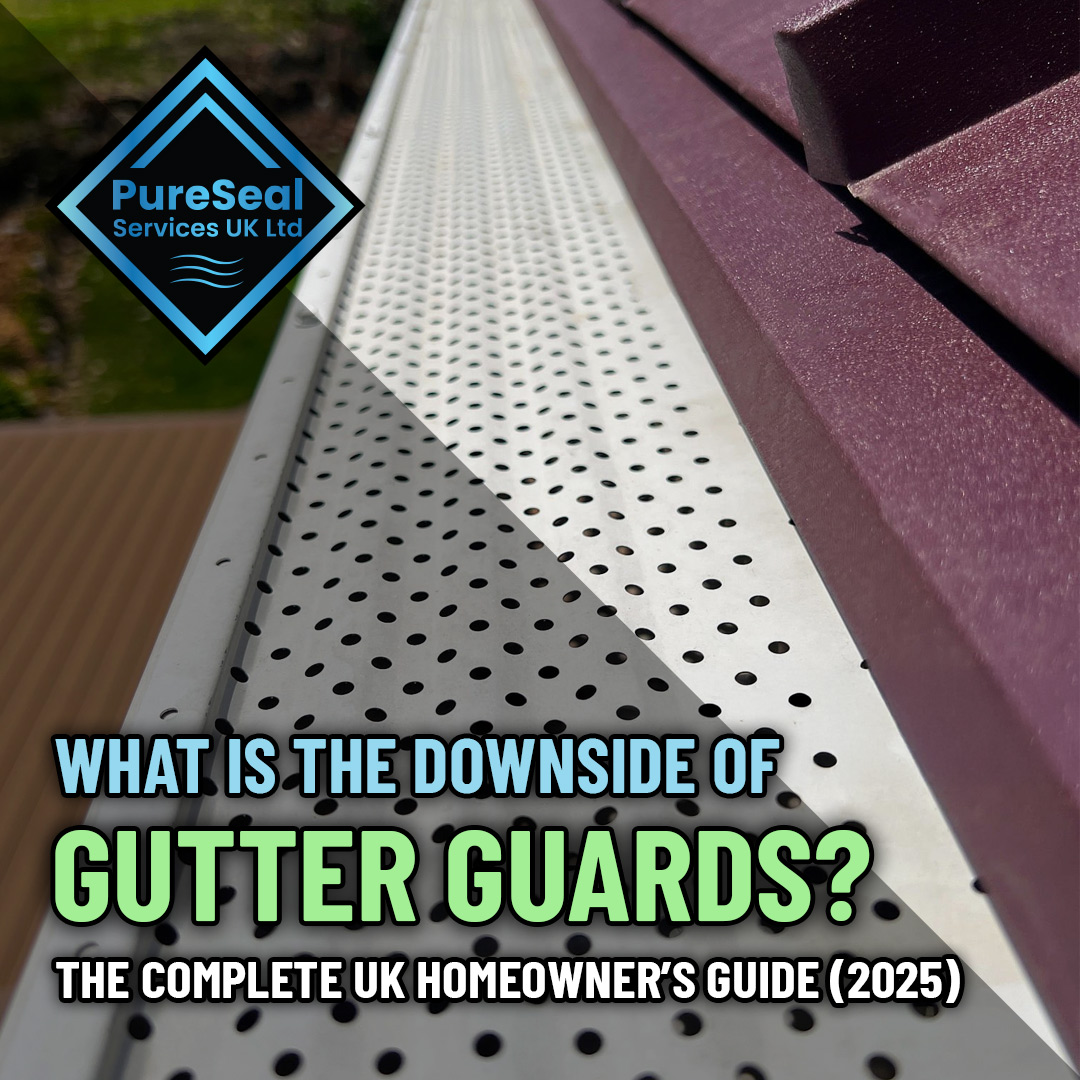
What Is the Downside of Gutter Guards? The Complete UK Homeowner’s Guide (2025)
What Is the Downside of Gutter Guards?
Gutter guards — also called gutter covers, filters, or leaf guards — are designed to reduce the amount of debris entering your gutters. The concept sounds perfect: install a protective layer and never worry about cleaning gutters again. Unfortunately, while gutter guards can be helpful in some circumstances, they also come with significant downsides that many homeowners only discover later.
In the UK, with its wet climate and high tree coverage, gutter guards don’t always perform as expected. This guide explores the disadvantages of gutter guards, including their real-world performance, maintenance issues, costs, and potential for hidden damage.
1. What Are Gutter Guards and How Do They Work?
Before examining the downsides, it helps to understand what gutter guards actually are.
Gutter guards are attachments fitted over or inside gutters to prevent leaves, moss, and debris from clogging the drainage system. They come in various types:
| Type of Gutter Guard | Material / Design | How It Works |
|---|---|---|
| Mesh guards | Fine metal or plastic screen | Blocks large debris while letting water through |
| Foam inserts | Porous foam blocks inside gutter | Allows water absorption but stops leaves |
| Brush guards | Bristle-like rods placed in gutter | Catches debris on top while water flows beneath |
| Reverse curve (surface tension) | Curved metal/plastic cover | Water adheres to surface and flows into gutter slot |
| Perforated guards | Panels with small holes | Filters water while trapping small debris |
The theory is simple: keep debris out, water flows freely. The reality, however, is more complicated — especially in regions with fine organic matter like moss, pine needles, and heavy rain.
2. The Initial Appeal of Gutter Guards
Gutter guards are often marketed as a maintenance-free solution. Common selling points include:
-
Reduced cleaning frequency
-
Prevention of blockages and overflows
-
Protection against pests and nesting birds
-
Extended gutter lifespan
-
Improved rainwater harvesting (cleaner water)
While these benefits are possible, they rarely hold true over time without regular maintenance — which leads to the first major downside.
3. The Myth of “Maintenance-Free” Gutters
The biggest misconception about gutter guards is that once installed, you’ll never have to clean your gutters again. Unfortunately, all types of gutter guards still require maintenance.
Even fine mesh systems allow tiny particles through — such as dust, pollen, moss spores, and decomposed leaves — which mix with rainwater to form sludge at the bottom of the gutter. Over months or years, this buildup blocks outlets and downpipes.
In many cases, cleaning gutters with guards fitted can actually be harder because access is restricted. Panels or inserts often have to be removed, cleaned, and reattached — doubling the labour.
| System Type | Requires Regular Cleaning? | Ease of Access |
|---|---|---|
| Mesh guard | Yes (every 6–12 months) | Moderate |
| Foam insert | Yes (absorbs dirt easily) | Difficult |
| Brush guard | Yes (debris sits on top) | Easy |
| Reverse curve | Yes (edge cleaning needed) | Hard |
| Perforated panel | Yes (holes block easily) | Moderate |
In other words, gutter guards may reduce the volume of debris, but they don’t eliminate the need for cleaning — just change the type of work required.
4. Higher Upfront Costs
Installing gutter guards significantly increases the initial cost of a gutter system.
| Property Type | Typical Gutter Guard Installation Cost (£) | Includes Labour and Materials |
|---|---|---|
| Small terraced house | £300 – £600 | Front and rear gutters |
| Semi-detached | £500 – £900 | Full perimeter |
| Detached house | £800 – £1,500 | All sides, including gables |
| Bungalow | £400 – £800 | Easier access |
| Large detached / 3-storey | £1,000 – £2,000 | May require scaffolding |
Compared to the average £80–£120 annual cost of professional gutter cleaning, it can take 8–15 years for gutter guards to “pay for themselves” — assuming they work perfectly. In reality, maintenance needs and replacements shorten that timescale.
5. Difficulties Cleaning and Inspecting Gutters
Gutter guards make it harder to spot early signs of damage. Because they hide the interior of the gutter, small cracks, rust spots, or detached joints may go unnoticed until leaks appear.
When maintenance is needed, cleaning becomes more complex. Foam or mesh guards often need full removal, which can:
-
Break clips or fasteners.
-
Damage the fascia board.
-
Bend the gutter profile if pried too hard.
This makes maintenance more expensive, as labour time increases. For example, cleaning gutters with mesh guards may cost £120–£200, compared to £80–£100 for open gutters.
6. Reduced Water Flow During Heavy Rain
Another common issue with gutter guards is restricted water flow.
In heavy UK downpours, the fine mesh or perforations can’t always handle the volume of water, leading to overflow. Once debris begins to accumulate on the surface, water sheets over the edge rather than flowing into the gutter.
This defeats the purpose of having gutters entirely, and can lead to:
-
Water soaking fascia boards.
-
Damp patches on walls.
-
Flooding near the foundation.
| Weather Condition | Effect on Guard Performance |
|---|---|
| Light rain | Works efficiently |
| Moderate rain | Slight reduction in flow |
| Heavy rain | Overflow likely if debris present |
| Prolonged rainfall | Saturation of foam / clogging of mesh |
| Snow or ice | Freezing blocks surface holes |
For homes in regions like the North West or Wales, where rainfall is frequent and heavy, these flow restrictions can cause recurring overflow problems.
7. Potential for Ice Damming in Winter
In colder months, gutter guards can actually make ice buildup worse. When snow melts on the roof and hits the guard surface, it refreezes overnight, forming an ice layer that blocks drainage.
This can lead to ice dams, where meltwater backs up under roof tiles, causing leaks or water damage. Metal mesh guards are particularly prone to freezing solid.
| Temperature Conditions | Impact |
|---|---|
| 0°C to -5°C | Ice forms on top of guards |
| Below -5°C | Water freezes in gutter and expands |
| Freeze–thaw cycles | Repeated cracking, seal failure, gutter distortion |
Repairing damage from ice dams can cost £300–£1,000, depending on severity — much more than standard gutter cleaning.
8. Compatibility Issues with Existing Gutters
Not all gutter guards fit all gutter types. In the UK, most homes use half-round or square-line PVC gutters, but there are also deep-flow, ogee, and metal systems.
Some guards don’t fit securely on older gutters, leading to gaps or movement in high winds. Foam and brush types may compress unevenly, creating spaces where debris collects instead of being blocked.
Incorrect fitting can also:
-
Tilt gutters out of alignment.
-
Interfere with fascia boards.
-
Void manufacturer warranties on newer guttering.
If guards are not professionally installed or designed for your exact gutter type, they may cause more issues than they solve.
9. Debris Still Accumulates on Top
Even when guards prevent leaves from entering gutters, the debris doesn’t disappear — it simply collects on top of the guard surface. Over time, this layer of organic matter can:
-
Trap moisture.
-
Encourage moss and algae growth.
-
Add unnecessary weight to gutter brackets.
When wet leaves decompose, they form a sticky sludge that seals the mesh holes, completely stopping water entry. This means the gutters may still overflow, despite being technically “protected.”
Removing this surface layer often requires manual brushing or blowing — another maintenance step to add to the list.
10. Pest Problems
Many homeowners install gutter guards to deter birds or rodents, but they can sometimes have the opposite effect.
Foam and brush guards can provide ideal nesting conditions for birds, particularly sparrows and starlings. Small rodents like mice can also burrow into foam inserts during cold months.
Once pests enter, they may block drainage further or damage the guards. Clearing out nests safely can cost £100–£250, depending on accessibility.
| Pest Type | Likely Guard Type Affected | Problem Caused |
|---|---|---|
| Birds | Brush and foam | Nesting, clogging |
| Rodents | Foam | Chewing, debris movement |
| Wasps | Under mesh | Nesting under covers |
| Moss and insects | All types | Retain moisture |
Instead of solving pest issues, certain guard systems can unintentionally provide new habitats right above your roofline.
11. Shorter Lifespan Than Gutters Themselves
Ironically, gutter guards often don’t last as long as the gutters they’re protecting. While uPVC or aluminium gutters typically last 20–30 years, most guards need replacement every 5–15 years depending on material.
| Gutter Guard Type | Average Lifespan (Years) | Common Failure Point |
|---|---|---|
| Foam insert | 3–5 | Waterlogging and decay |
| Brush | 5–10 | Bristle flattening and algae |
| Plastic mesh | 7–10 | UV brittleness |
| Metal mesh | 10–15 | Rust or corrosion |
| Reverse curve | 10–20 | Seal degradation |
Replacing guards can be expensive, especially when they are tightly integrated with the guttering system.
12. False Sense of Security
Many homeowners assume that installing gutter guards means they can ignore their gutters indefinitely. Unfortunately, this complacency often leads to hidden blockages and structural damage.
Because guards obscure visibility, you may not realise there’s a problem until water begins overflowing or damp patches appear. By then, damage to fascia boards or wall rendering may already be done — potentially costing hundreds or thousands of pounds to fix.
In this sense, gutter guards can encourage neglect rather than prevent it, unless homeowners stay proactive with regular inspections.
13. Additional Weight on Gutters
Though guards don’t weigh much individually, when combined with wet debris and moss buildup, they can exert extra strain on gutter brackets. Over time, this can cause gutters to sag or pull away from the fascia.
Each metre of waterlogged foam or debris can weigh over 2–3 kilograms. On a 10-metre section, that’s 20–30kg pressing down — roughly the weight of a small suitcase hanging from your roof edge.
Sagging gutters cause water to pool, worsening corrosion and overflow problems. Repairing or rebracketing sagging gutters typically costs £80–£250, depending on access.
14. Limited Effectiveness Against Fine Debris
In the UK, much of the debris entering gutters isn’t large leaves — it’s moss, pine needles, and dust from roof tiles. These particles are small enough to pass through most guard systems.
Even high-grade micro-mesh guards can’t stop fine silt from accumulating over time. The result is that downpipes still clog at the elbow joints, where cleaning is most difficult.
| Debris Type | Typical Guard Effectiveness |
|---|---|
| Large leaves | Excellent |
| Twigs | Good |
| Moss | Poor |
| Roof grit / dust | Poor |
| Pine needles | Fair |
| Algae / sludge | Poor |
Thus, while guards handle large leaves well, they struggle against the most common UK gutter blockage materials.
15. Difficulties in Snow and Storm Conditions
During heavy snow or wind, some types of gutter guards can become dislodged. Foam and brush inserts can blow out or collapse under snow weight, while lightweight mesh panels may bend.
Metal guards handle extreme conditions better but can rattle noisily in strong winds if not secured tightly. In freezing temperatures, trapped moisture expands, bending the mesh and breaking clips.
These issues not only reduce performance but can create safety hazards if sections fall to the ground.
16. Clogged Downpipes Still Require Attention
Even if guards keep gutters relatively clean, they don’t prevent blockages in downpipes. Small debris washed through the guard often collects at the top or bottom of the downpipe elbow, forming a plug that stops drainage.
Cleaning downpipes with guards fitted is tricky, as you can’t easily flush through the system. In many cases, the only solution is disassembling parts of the guard or removing entire gutter sections — adding time and labour costs.
Professional cleaning for blocked downpipes typically costs £80–£150, which erodes the savings from having guards in the first place.
17. Maintenance Frequency Reality Check
Even with guards installed, homeowners should plan for regular inspections and occasional cleaning.
| System Type | Inspection Frequency | Full Cleaning Needed Every |
|---|---|---|
| Foam / brush | Twice per year | 12–18 months |
| Mesh / perforated | Once per year | 2–3 years |
| Reverse curve | Once per year | 2–3 years |
In other words, gutter guards may reduce cleaning frequency but not eliminate it. Over a 10-year period, the total maintenance effort often equals that of standard open gutters.
18. Difficult Installation for DIYers
Installing gutter guards can be deceptively complex. Angles, overlaps, and flow direction must all be perfect for them to function properly.
Common DIY errors include:
-
Installing guards too flat, reducing water entry.
-
Overlapping panels incorrectly, causing leaks.
-
Failing to secure edges against wind uplift.
-
Cutting guards to the wrong length, leaving gaps.
Improperly installed guards can actually worsen blockages and overflow. Correcting installation mistakes may require professional rework costing £200–£500, depending on the property size.
19. Potential Damage to Roof and Fascia During Installation
Some guard systems require screws or clips that attach directly to the fascia or roof tiles. Incorrect fitting can cause small cracks in roof edges, which later allow water ingress.
Metal guards, in particular, expand and contract with temperature changes, putting strain on fixings and sealant joints. Over years, this movement can weaken fascia boards or create visible gaps.
Repairing minor fascia damage costs around £100–£300, but larger replacement sections can run into the thousands.
20. Final Thoughts: Are Gutter Guards Worth It?
Gutter guards may sound like a smart, maintenance-free upgrade, but the reality is more nuanced. They can reduce the volume of large debris but rarely eliminate the need for cleaning. In many UK homes, especially those surrounded by mossy roofs or fine debris, guards can actually complicate maintenance rather than simplify it.
| Pros | Cons / Downsides |
|---|---|
| Reduces large leaf blockages | Still needs regular cleaning |
| Prevents nesting birds (some types) | Can trap debris on top |
| Extends gutter lifespan slightly | Restricts water flow in heavy rain |
| Improves appearance | Adds installation cost |
| May reduce overflow in light rain | Can cause ice dams, sagging, and leaks |
For most properties, the biggest downside of gutter guards is the false sense of security they create. Without routine checks, they can hide serious problems that cost far more to fix than standard cleaning ever would.
In summary: gutter guards can work, but they’re not a one-time solution. They demand maintenance, carry ongoing costs, and can introduce new complications if not chosen and managed carefully.
21. Gutter Guard Performance in UK Weather
The UK’s unpredictable weather patterns pose particular challenges for gutter guards. Frequent rain, wind, and moss growth create conditions very different from the dry climates where many guard systems were first developed. During heavy downpours, rain often exceeds the flow capacity of fine-mesh guards, leading to overflow even when gutters are clean. In autumn, falling leaves and wind-driven debris can cover the guard surface within days, forming a mat that prevents water entry entirely.
Cold snaps make the situation worse — when rain freezes overnight, the ice layer on top of the guards acts like a solid barrier. This can push meltwater back toward the roofline, potentially soaking fascia boards and causing damp patches on upper walls. In short, while gutter guards might perform acceptably in mild conditions, the UK’s mix of rain, moss, and freezing temperatures often exposes their weaknesses far sooner than homeowners expect.
22. Long-Term Cost vs Benefit Analysis
Many homeowners install gutter guards hoping to save money on cleaning, but over the long term, the cost advantage is rarely as large as advertised.
| Option | Initial Cost (£) | Maintenance (10 Years) | Replacement Cycle | Total 10-Year Cost (£) |
|---|---|---|---|---|
| Standard open gutters | £0 | £800 (annual cleaning) | — | £800 |
| Gutter guards (installed) | £1,000 | £400 (inspections & cleaning) | Every 10–15 years | £1,400 |
Although guards may reduce the number of cleaning visits, they don’t eliminate maintenance entirely — and replacement or repair costs eat into the savings. Many UK homeowners find that, over a decade, open gutters with annual cleaning are actually cheaper and simpler to maintain than guarded systems. The “fit and forget” promise rarely matches real-world performance or cost outcomes.
23. The Problem of Fine Moss and Roof Grit
One of the most common causes of gutter blockages in the UK isn’t leaves, but moss and roof grit. Concrete and slate roofs shed fine granules as they age, which wash into gutters with every rainfall. These small particles easily pass through mesh or perforated guards, settling underneath and forming sediment layers that restrict water flow.
Moss spores also cling to the guard’s surface and grow in damp, shaded conditions. Once established, moss holds moisture like a sponge, promoting constant dampness and accelerating algae growth on uPVC or metal gutters. Ironically, some guards actually encourage moss spread by trapping spores in crevices. Clearing this buildup requires full removal of the guard, making maintenance slower and more expensive than traditional gutter cleaning.
24. Impact on Roof Warranties and Maintenance Access
Some UK roof manufacturers specify that gutters and roof edges must remain easily accessible for inspection and maintenance. Installing certain types of gutter guards — especially those that screw into the fascia or tuck beneath roof tiles — can technically void these warranties. That’s because they may alter the edge of the roof covering or prevent inspection of eaves trays and felt.
Additionally, if your home ever needs roofline repairs, repainting, or gutter replacement, the guards will need to be removed first, adding extra labour time and cost. In older properties with brittle tiles, lifting roof edges to fit guards can even cause cracks, leading to leaks. While this might not affect every system, it’s a factor many homeowners overlook when calculating long-term value and practicality.
25. Seasonal Maintenance Tips for Homes with Gutter Guards
Even though gutter guards are meant to reduce upkeep, they still need seasonal attention to stay effective. The best approach for UK homeowners is to inspect gutters at least twice a year — once in spring (after winter storms) and again in autumn (after leaf fall). During these checks:
-
Remove any visible debris from the top of the guards.
-
Look for areas where water might be overflowing.
-
Flush sections with a hose to confirm proper flow.
-
Clear nearby roof moss or overhanging branches.
In winter, check after freezing weather for signs of ice buildup or damage. A simple visual inspection from ground level or via a camera pole can prevent larger issues like damp or fascia rot. Regular light maintenance ensures gutter guards function closer to their intended purpose — even if they never become truly maintenance-free.
Tags: Exterior cleaning, gutter cleaning, window cleaning, Patio cleaning, Driveway cleaning, pressure washing, Roof Cleaning
 Artificial and Sports Surfaces
 Awnings / Canopies / Gazebos
 Block Paving
 Brickwork
 Composite Surfaces
 Decking / Timber
 Granite
 Imprinted Concrete
 Internal Masonry
 Limestone
 Marble
 Metal Cladding
 Polished or Honed Stone
 Porcelain
 Render
 Resin Bond
 Road and Rail Signs
 Roof Tiles / Slates
 Sandstone
 Slate
Slate Solar Panels and Glass
 Stone Sills and Pier Caps
 Tarmac and Asphalt
 Gutters & UPVC
 Acid Damage
 Biofilm
 Bitumen
 Blood
Blood Carbon
 Concrete / Grout / Mortar
 Copper Oxide
 Efflorescence
 Egg
Egg Failed Sealer
 Fire Damage
 Fuel / Oil
 Graffiti
 Grease / Fat / Cooking Oil
 Lawn Fertiliser
 Lead Carbonate
 Lead Oxide
 Paint Splashes
 Rust
Rust Tar & Glue
 Tannin Removers
 Traffic Film Removers
 Trapped Moisture / Sealer Repairs
 Urine Neutralisers