
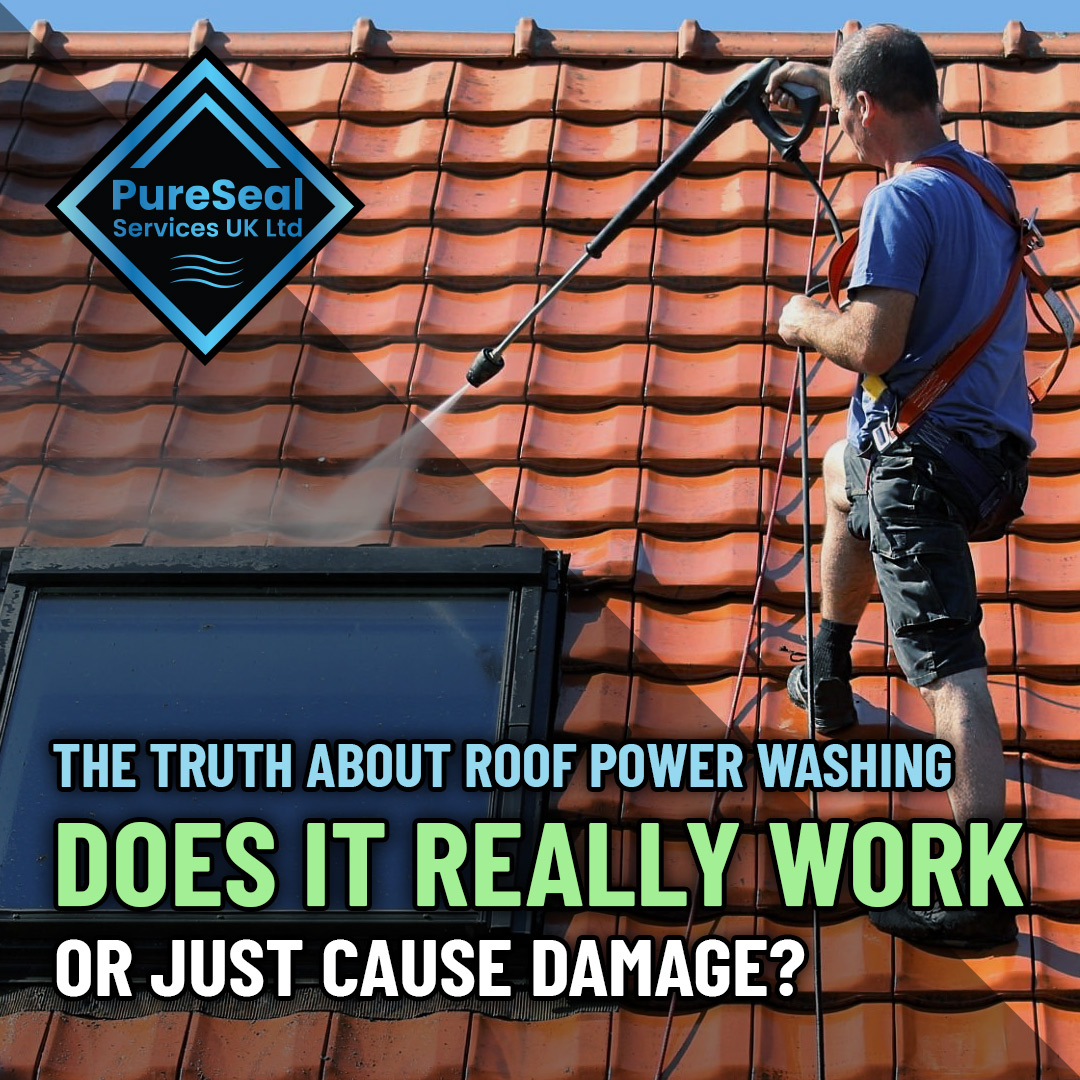
The Truth About Roof Power Washing: Does It Really Work or Just Cause Damage?
Do People Power Wash Their Roof?
Roof cleaning has become one of the most discussed home-maintenance tasks in the UK. Homeowners see black streaks, moss, or algae growing on their tiles and wonder: “Should I power wash my roof?” It’s a fair question — after all, pressure washers are widely used for driveways and patios. But when it comes to roofs, the situation is more complex.
This guide explores whether people actually power wash their roofs, the pros and cons of doing so, what alternatives exist, and the costs involved.
1. Do People Actually Power Wash Their Roofs?
Yes — many people do power wash their roofs, especially in areas with heavy moss or lichen growth such as the South-East, Wales, or parts of Scotland. However, not everyone should. Power washing can be effective but also risky if not done correctly.
Here’s a quick breakdown of how common it is:
| Type of Roof | Frequency of Power Washing | Common Reason | Typical Outcome |
|---|---|---|---|
| Concrete tiles | Every 3–5 years | Moss and algae | Clean appearance but risk of damage |
| Clay tiles | Rarely | Aesthetic improvement | Can erode surface glaze |
| Slate roofs | Rarely | Moss control | May cause cracking |
| Felt/flat roofs | Never recommended | – | Can tear the surface |
In general, most homeowners use soft washing or chemical cleaning rather than full high-pressure washing.
2. Why Do Homeowners Consider Power Washing?
People usually consider power washing their roof for one of several reasons:
-
Aesthetic appeal:
Moss, algae, and dirt can make a roof look much older and neglected. A clean roof instantly improves kerb appeal. -
Selling a property:
Estate agents often suggest cleaning the roof before photography or viewings to increase the home’s perceived value. -
Maintenance concerns:
Some believe moss and lichen can retain moisture, leading to cracked tiles or leaks over time. -
Rainwater efficiency:
When moss blocks gutters and valleys, power washing seems like a fast solution. -
Peer influence:
If neighbours clean their roofs, others often follow suit for visual consistency along the street.
3. How Power Washing Works on Roofs
A power washer (pressure washer) uses a pump to pressurise water, which is then forced through a narrow nozzle. The pressure is measured in pounds per square inch (PSI).
Typical domestic power washers range from 1,300 to 3,000 PSI, but roofs generally require much lower pressures — around 100 to 600 PSI, depending on tile type.
Steps Involved in Roof Power Washing
| Step | Description | Tools Used |
|---|---|---|
| 1. Safety setup | Ladders, scaffolding, and harnesses used for stability | Roof harness, safety helmet |
| 2. Debris removal | Leaves and large moss clumps brushed away | Soft broom or scraper |
| 3. Pressure cleaning | Water sprayed from top to bottom | Pressure washer with variable nozzle |
| 4. Rinsing | Removes remaining residues | Garden hose or low-pressure rinse |
| 5. Treatment | Biocide applied to prevent regrowth | Moss-control or fungicide solution |
It’s crucial to note that power washing a roof without training or correct equipment can lead to broken tiles, leaks, or even personal injury.
4. Risks of Power Washing a Roof
While the results can be satisfying, there are real downsides to using a pressure washer on roofing materials.
4.1 Physical Damage
Most roof tiles are not designed to withstand high-pressure water. Power washing can:
-
Strip off the surface coating or glaze on tiles.
-
Force water under the overlaps, causing dampness or leaks.
-
Dislodge ridge caps or mortar.
-
Crack brittle or weathered tiles.
4.2 Water Infiltration
If water is sprayed upward or at the wrong angle, it can enter the underlay, insulation, or loft space, leading to internal moisture problems and mould.
4.3 Warranty or Insurance Issues
Many roofing manufacturers void their warranties if tiles are damaged through pressure washing. Some insurers also consider DIY roof cleaning a form of negligence if damage results.
4.4 Safety Hazards
Roof washing involves slippery surfaces and high ladders. According to the Health and Safety Executive (HSE), falls from height remain one of the leading causes of injuries in the UK trade sector.
5. The Alternatives to Power Washing
Because of the potential risks, homeowners and professionals increasingly prefer softer cleaning methods.
Comparison Table: Roof Cleaning Methods
| Cleaning Method | Pressure Level | Chemical Use | Ideal For | Approximate Cost (UK) | Notes |
|---|---|---|---|---|---|
| Power washing | High (1000+ PSI) | Optional | Thick moss on concrete tiles | £400–£700 | Fast results but risky |
| Soft washing | Low (100–300 PSI) | Yes | Algae, lichen | £300–£600 | Gentle and long-lasting |
| Manual scraping | None | Optional | Heavy moss patches | £250–£500 | Labour-intensive |
| Steam cleaning | Low pressure, high temperature | No | Sensitive roofs | £500–£800 | Eco-friendly, minimal damage |
| Chemical cleaning only | None | Yes | Light organic staining | £200–£400 | Preventative, not deep clean |
Soft washing has grown especially popular because it balances effectiveness and safety.
6. How Much Does Roof Cleaning Cost in the UK?
Costs vary depending on roof size, pitch, accessibility, and method used. Below is a rough guide:
Table: Average Roof Cleaning Costs
| Roof Size | Cleaning Method | Typical Cost Range | Notes |
|---|---|---|---|
| Small semi-detached (60–80 m²) | Power wash | £400–£600 | Quick clean but risk of tile damage |
| Soft wash | £350–£550 | Safer, slower drying time | |
| Medium detached (100–130 m²) | Power wash | £600–£850 | May need scaffolding |
| Soft wash | £550–£800 | Includes biocide | |
| Large detached (150 m²+) | Power wash | £800–£1,200 | More labour hours |
| Steam/soft wash | £750–£1,100 | Eco-friendly option |
These are generalised prices and assume average accessibility and roof pitch. If scaffolding is required, add £300–£600 depending on duration.
7. Regional Variations in the UK
Different regions have distinct weather patterns and roof materials, which influence how often people wash their roofs.
| Region | Typical Roof Type | Common Growth | Cleaning Frequency | Notes |
|---|---|---|---|---|
| South-East (Kent, Surrey, Sussex) | Clay & concrete tiles | Moss and algae | Every 4–6 years | Mild, damp winters promote growth |
| South-West (Devon, Cornwall) | Slate | Lichen | Every 6–8 years | Coastal moisture increases staining |
| Midlands | Concrete tiles | Moss | Every 5–7 years | Moderate rainfall |
| North-West & Scotland | Slate and stone | Moss & algae | Every 3–5 years | Persistent damp encourages buildup |
| Wales | Slate | Moss | Every 3–6 years | High rainfall and tree cover |
8. The Environmental Side of Roof Power Washing
Power washing uses a large amount of water, sometimes up to 150–250 litres per hour. In regions with water restrictions, this can be an environmental concern.
Additionally, when detergents or biocides are used, they can enter rainwater drains and potentially affect nearby vegetation or aquatic ecosystems. Many modern soft-wash systems now use eco-friendly biocides that break down naturally after 24–48 hours.
Reducing Environmental Impact
-
Use low-pressure systems to reduce runoff.
-
Collect rinse water where possible.
-
Avoid washing during heavy rain.
-
Choose biodegradable solutions that comply with UK environmental regulations.
9. Does Power Washing Increase Roof Lifespan?
This is one of the most debated questions. Some homeowners believe removing moss and dirt helps their roof “breathe” and last longer. Others argue that pressure washing does more harm than good.
The truth lies in the method. A gentle, well-executed cleaning process (especially soft washing or steam cleaning) can extend tile life by reducing moisture retention. But excessive pressure can reduce tile integrity and accelerate wear.
Example Comparison: Roof Lifespan Estimates
| Roof Type | Unmaintained Lifespan | After Proper Cleaning | After Poor Power Washing |
|---|---|---|---|
| Concrete tile | 50 years | 55–60 years | 40 years |
| Clay tile | 60 years | 65 years | 45 years |
| Slate | 80–100 years | 90+ years | 70 years |
Cleaning helps — but only when done carefully and correctly.
10. DIY vs Professional Roof Washing
Some homeowners attempt DIY roof washing to save money. However, it’s not as simple as cleaning a driveway.
Comparison: DIY vs Professional Cleaning
| Aspect | DIY Cleaning | Professional Cleaning |
|---|---|---|
| Cost | £100–£200 (equipment hire) | £400–£800 (average) |
| Safety | High risk | Trained and insured |
| Quality | Inconsistent | Even, long-lasting results |
| Chemicals | Overuse or misuse possible | Measured application |
| Equipment | Domestic pressure washer | Commercial low-pressure systems |
| Warranty | Usually voided if damaged | May include service guarantee |
While DIY can appear cost-effective, the potential for roof damage or injury often outweighs the savings.
11. What Types of Roofs Should Never Be Power Washed?
Some materials are simply too delicate for power washing:
| Roof Material | Reason Not to Power Wash |
|---|---|
| Thatch | Disintegration of reeds |
| Felt or asphalt | Water penetration and tearing |
| Composite shingles | Loss of granules, reduced waterproofing |
| Fibre-cement (asbestos) | Health hazard if disturbed |
| Metal roofs | Can dent or strip paint if high pressure used |
If your home has any of these materials, consider soft washing or manual cleaning instead.
12. Common Myths About Roof Power Washing
| Myth | Reality |
|---|---|
| “Power washing always damages tiles.” | Incorrect — moderate pressure in expert hands can be safe. |
| “Moss doesn’t harm roofs.” | Partly false — moss retains moisture and may lift tiles. |
| “Bleach is the best cleaner.” | Not always — it can damage tile coatings and vegetation. |
| “Power washing saves money long-term.” | Not necessarily — improper cleaning may cost more in repairs. |
| “You only need to clean once.” | False — maintenance every few years keeps it effective. |
13. How Often Should You Clean Your Roof?
For most UK homes, a full roof cleaning every 4–6 years is sufficient. However, light treatments or biocide re-applications may be done every 2–3 years to prevent regrowth.
Frequency depends on:
-
Roof pitch: Steeper roofs stay cleaner longer.
-
Shade: Moss thrives in shaded or tree-covered areas.
-
Rainfall and humidity: Wetter climates encourage faster moss return.
-
Material: Smooth clay or metal surfaces resist buildup better than rough concrete.
14. The Appearance Factor
A clean roof can dramatically improve a property’s appearance. Before-and-after transformations often surprise homeowners. Many estate agents estimate that a clean roof can improve perceived property value by 2–5 %, which could mean several thousand pounds on an average UK home.
Example:
A semi-detached house valued at £300,000 could appear worth £306,000–£315,000 after professional cleaning — purely due to visual improvement and perceived maintenance quality.
15. Roof Coating After Power Washing
Once a roof has been cleaned, some homeowners opt for a protective coating or sealant to prolong the effect.
| Coating Type | Purpose | Average Cost (per m²) | Lifespan |
|---|---|---|---|
| Acrylic sealant | Waterproofing | £5–£8 | 5–8 years |
| Coloured roof coating | Aesthetic and protection | £8–£12 | 8–10 years |
| Clear nano-sealant | Anti-moss protection | £4–£6 | 3–5 years |
Coatings are most effective when applied after cleaning and drying. They help prevent future staining and reduce water absorption.
16. The Science Behind Moss and Algae Growth
Moss and algae thrive in damp, shaded conditions. Roofs in northern-facing orientations or under trees are particularly vulnerable.
| Factor | Impact on Growth |
|---|---|
| Shade | Reduces drying time, ideal for moss |
| Rainfall | Increases moisture retention |
| Airborne spores | Spread easily from nearby roofs |
| Surface texture | Rough tiles hold more spores |
| Temperature | Mild, humid weather encourages algae |
Power washing removes surface moss, but without treatment, spores can regrow within 12–18 months. That’s why biocides are often used after cleaning.
17. What Homeowners Say
Surveys conducted across several UK home-improvement forums show mixed attitudes:
| Response | Percentage of Homeowners |
|---|---|
| “I power washed my roof myself.” | 18 % |
| “I hired a professional to clean it.” | 41 % |
| “I prefer soft washing or chemical treatment.” | 29 % |
| “I wouldn’t touch it – too risky.” | 12 % |
This demonstrates that while power washing remains popular, the trend is shifting toward softer, safer cleaning methods.
18. Maintenance Tips After Cleaning
-
Inspect gutters regularly: Moss fragments can block them.
-
Trim overhanging branches: More sunlight keeps the roof drier.
-
Apply a moss treatment every two years.
-
Avoid walking on the roof: Pressure points can crack tiles.
-
Check flashing and mortar joints: Power washing may loosen them.
19. Energy Efficiency and Roof Cleanliness
A clean roof can reflect sunlight more effectively, especially if it’s a lighter colour. Over time, moss and grime can darken the roof, slightly increasing heat absorption. In the UK’s mild climate, the effect is minimal, but studies suggest clean roofs may reduce attic temperatures by 1–2 °C in summer.
While this won’t drastically cut energy bills, every small efficiency helps — particularly as energy costs continue to rise.
20. Summary: Should You Power Wash Your Roof?
| Factor | Power Washing | Soft Washing | Chemical Only |
|---|---|---|---|
| Speed | Fast | Moderate | Slow |
| Effectiveness | High (short-term) | High (long-term) | Moderate |
| Risk | High | Low | Low |
| Cost | £400–£900 | £350–£800 | £200–£400 |
| Longevity | 1–2 years | 3–5 years | 1 year |
So, do people power wash their roofs?
Yes, they do — but increasingly with caution. While it can produce immediate and impressive results, the potential damage, safety risks, and long-term wear often make soft washing or biocidal cleaning the smarter choice.
If you decide to clean your roof, make sure it’s done with the right pressure, correct technique, and proper safety precautions. A clean roof can improve your home’s look, reduce maintenance costs, and extend the life of your tiles — but only when approached wisely.
21. The Impact of Climate on Roof Cleaning Frequency
The UK’s mild, damp climate creates ideal conditions for moss and lichen growth, particularly in coastal or shaded inland areas. Power washing frequency often follows local weather patterns rather than simple time intervals.
| Climate Zone | Average Annual Rainfall | Temperature Range | Cleaning Cycle (Approx.) | Notes |
|---|---|---|---|---|
| Coastal (Cornwall, Wales, Western Scotland) | 1,500–2,000 mm | 5–17°C | Every 3–4 years | Constant humidity, sea salt deposits |
| Inland (Midlands, South-East) | 700–1,200 mm | 4–22°C | Every 4–6 years | Mild winters, occasional algae streaks |
| Northern (Scotland, Cumbria) | 1,200–1,800 mm | 2–18°C | Every 3–5 years | Persistent wetness, frequent moss |
| Eastern (Norfolk, Essex) | 600–800 mm | 3–23°C | Every 5–7 years | Drier climate, lighter staining |
Key takeaway: The wetter and shadier your environment, the more regularly you’ll need cleaning or biocide treatment — though that doesn’t always mean power washing. Soft or steam cleaning may be safer for repeated maintenance.
22. Seasonal Considerations — When’s the Best Time to Power Wash?
Timing can make or break a roof-cleaning job.
-
Spring (March–May):
Ideal for removing winter moss buildup. Weather is mild enough for water evaporation, but not so hot that biocides dry too quickly. -
Summer (June–August):
Works well for fast drying and safe ladder work, though intense heat can cause cleaning solutions to evaporate prematurely. Early morning starts are best. -
Autumn (September–November):
Good for pre-winter preparation, ensuring gutters and tiles are clear before heavy rain and frost. -
Winter (December–February):
Generally not recommended — cold temperatures, frost, and high winds make roof surfaces dangerously slippery.
Seasonal Pros and Cons Table
| Season | Pros | Cons |
|---|---|---|
| Spring | Ideal temperatures, balanced humidity | Occasional showers delay completion |
| Summer | Fast drying, bright visibility | Hot roofs may stress tiles |
| Autumn | Prevents winter blockage | Leaf fall can add debris mid-job |
| Winter | Low demand from cleaners (cheaper quotes) | Unsafe and ineffective in frost |
23. Understanding Biocides and Roof Treatments
Power washing often removes visible moss, but it doesn’t kill the spores that trigger regrowth. That’s where biocidal treatments come in.
Common Biocide Types
| Biocide Type | Active Ingredient | Works On | Visible Results | Safety Considerations |
|---|---|---|---|---|
| Quaternary Ammonium Compounds (QAC) | Benzalkonium chloride | Moss, algae, lichen | 1–4 weeks | Avoid contact with aquatic life |
| Sodium Hypochlorite (bleach-based) | Chlorine compound | Algae, organic staining | Immediate | Can harm plants and metals |
| Hydrogen Peroxide-based | Oxygen compound | Algae, mild moss | 1–3 weeks | More eco-friendly, lower odour |
| Organic enzyme cleaners | Biological agents | Light green algae | 2–6 weeks | Safe but slower acting |
Application tip: Always apply biocide after the surface has been cleaned and dried. This ensures deep penetration and long-lasting effects — often 2–4 years, depending on exposure and climate.
24. Comparing Roof Cleaning to Other Exterior Cleaning Tasks
Many homeowners wonder why roof cleaning costs more than driveway or patio washing. The answer lies in access, safety, and fragility.
| Surface | Cleaning Difficulty | Risk Level | Typical PSI Used | Average UK Cost |
|---|---|---|---|---|
| Patio (block paving) | Low | Low | 2,000–3,000 PSI | £100–£200 |
| Driveway (tarmac) | Low–Medium | Low | 1,500–2,000 PSI | £120–£250 |
| Walls (render/brick) | Medium | Medium | 500–1,000 PSI | £150–£350 |
| Roof (tile/slate) | High | High | 100–600 PSI | £400–£900 |
Roofs require careful water direction, controlled flow rates, and safety setups such as scaffolding or roof ladders — all of which increase cost and complexity.
In essence: the higher and more fragile the surface, the lower the pressure and the higher the price.
25. The Future of Roof Cleaning — Technology and Trends
As environmental and safety standards tighten, the UK roof-cleaning industry is moving toward low-impact, high-efficiency techniques.
Current and Emerging Trends
| Innovation | Description | Benefit |
|---|---|---|
| Telescopic soft-wash poles | Extendable poles with low-pressure jets | Reduces need to walk on roofs |
| Drone inspections | Aerial surveys for quoting and after-clean verification | Safer, faster assessments |
| Steam-cleaning systems | Use heat instead of harsh pressure | Minimal damage, chemical-free |
| Eco-biocides | Plant-based, biodegradable cleaners | Reduced environmental impact |
| Long-term coatings | Nano-sealants and self-cleaning films | Keeps tiles cleaner for longer |
As these technologies develop, fewer roofs will need aggressive power washing. Instead, maintenance will become preventive, not reactive, with softer tools and smarter chemistry doing the heavy lifting.
Final Word
So — do people power wash their roof? Yes, plenty still do, especially for immediate visual impact. But across the UK, the move is unmistakably toward softer, safer, and more sustainable methods. Power washing isn’t dead — it’s just evolving into something smarter, cleaner, and less destructive.
A roof is one of the most expensive parts of a home to repair, and proper maintenance — whether that’s an occasional rinse, a biocide treatment, or a professional soft wash — helps preserve its strength and appearance for decades.
In the end, the goal isn’t simply a clean roof.
It’s a healthy, watertight, long-lasting one that keeps your home protected from the British weather — without being blasted to bits in the process.
Tags: window cleaning, Patio cleaning, Driveway cleaning, pressure washing, Roof Cleaning, Exterior cleaning, gutter cleaning
 Artificial and Sports Surfaces
 Awnings / Canopies / Gazebos
 Block Paving
 Brickwork
 Composite Surfaces
 Decking / Timber
 Granite
 Imprinted Concrete
 Internal Masonry
 Limestone
 Marble
 Metal Cladding
 Polished or Honed Stone
 Porcelain
 Render
 Resin Bond
 Road and Rail Signs
 Roof Tiles / Slates
 Sandstone
 Slate
Slate Solar Panels and Glass
 Stone Sills and Pier Caps
 Tarmac and Asphalt
 Gutters & UPVC
 Acid Damage
 Biofilm
 Bitumen
 Blood
Blood Carbon
 Concrete / Grout / Mortar
 Copper Oxide
 Efflorescence
 Egg
Egg Failed Sealer
 Fire Damage
 Fuel / Oil
 Graffiti
 Grease / Fat / Cooking Oil
 Lawn Fertiliser
 Lead Carbonate
 Lead Oxide
 Paint Splashes
 Rust
Rust Tar & Glue
 Tannin Removers
 Traffic Film Removers
 Trapped Moisture / Sealer Repairs
 Urine Neutralisers