
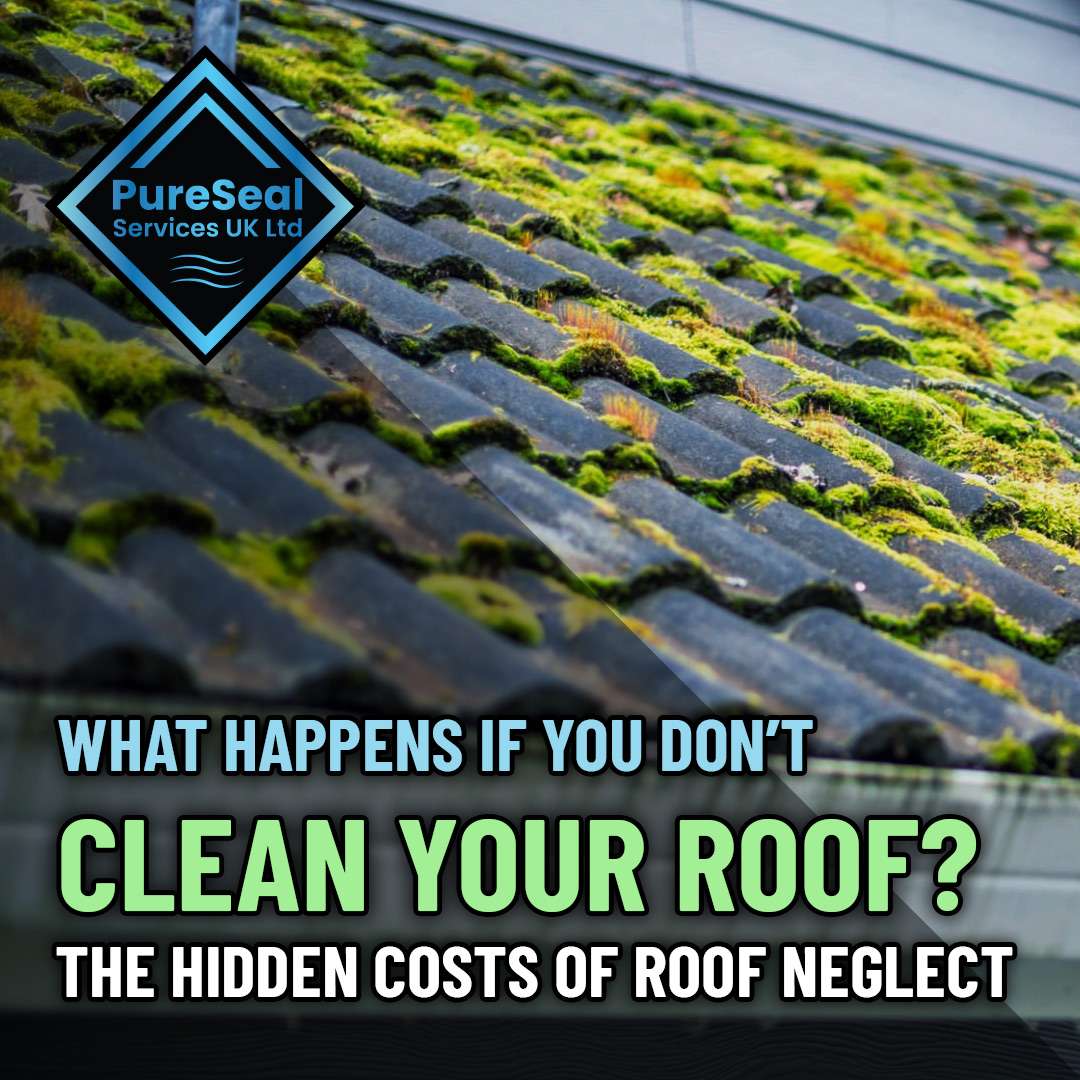
What Happens If You Don’t Clean Your Roof? The Hidden Costs of Roof Neglect
What Happens If You Don’t Clean Your Roof?
Introduction: Why Roof Cleaning Matters
Roof cleaning often feels like one of those chores that can be postponed indefinitely. It’s out of sight, rarely causes immediate problems, and might seem unnecessary — especially if the roof still looks “fine.”
However, neglecting roof cleaning for years can lead to serious and expensive consequences. Moss, algae, lichen, and debris don’t just spoil the roof’s appearance — they trap moisture, accelerate material decay, and can even cause structural damage.
By the time visible leaks or damp patches appear inside, the damage is often far more extensive and costly to repair than the price of regular maintenance.
This guide explores what happens if you don’t clean your roof, covering everything from biological growth and material deterioration to financial and health impacts. It also includes tables and examples to illustrate how neglect can silently damage one of your home’s most important assets.
Biological Growth and Moisture Retention
The first and most common consequence of not cleaning a roof is the gradual spread of moss, algae, and lichen. These growths thrive in the UK’s damp climate — especially on shaded or north-facing roof slopes.
How Moss and Algae Develop
-
They germinate from airborne spores that settle on damp surfaces.
-
Organic debris (like fallen leaves or dust) provides nutrients for growth.
-
Shaded areas retain moisture longer, creating perfect conditions.
Over time, a thin green film becomes thicker mats of moss, which hold significant amounts of water against the surface.
Why That’s a Problem
Moss behaves like a sponge. It absorbs and retains water for days after rainfall. That constant dampness can:
-
Prevent tiles from drying properly.
-
Cause the freeze–thaw cycle to crack tiles during cold weather.
-
Lift and separate overlapping tiles, allowing water to creep underneath.
-
Promote timber rot in battens and rafters below the roof surface.
Once moisture gets beneath the roof covering, it can lead to leaks, mould, and internal dampness — problems that are much more expensive to fix than occasional cleaning.
Material Degradation and Roof Damage
Ignoring your roof for years allows not just biological growth but also physical degradation. The effects are often slow but steady.
Surface Erosion and Granule Loss
Many roofs, especially asphalt or concrete types, have protective surface layers. Without cleaning:
-
Moss and lichen roots can etch into these layers.
-
Rainwater can wash away surface granules, exposing the softer underlayers.
-
The roof loses UV resistance, making it more vulnerable to sunlight and heat.
The more surface material that’s lost, the faster the roof deteriorates.
Cracking, Spalling, and Tile Movement
When moisture repeatedly freezes and thaws within small cracks, tiles begin to split or flake. This is called spalling. It not only weakens the tiles but can create tiny entry points for water.
Moss also physically lifts tiles as it grows, disturbing their position. Even a few millimetres of movement can break the seal between overlapping tiles, leading to leaks in heavy rain.
Damage to Underlayment and Timber
The underlayment (felt or membrane) beneath the tiles acts as a second barrier against water. When moisture seeps through from above, it weakens this layer over time.
Eventually, the roof deck and wooden rafters can start to rot, leading to sagging, mould, and compromised structural strength. These problems are rarely visible until major damage has occurred.
Accelerated Aging and Early Failure
A neglected roof can lose up to ten years of its expected lifespan. A well-maintained roof might last 25–30 years, but moss-covered and moisture-saturated roofs often need replacing after just 15–20 years.
Increased Repair and Replacement Costs
One of the biggest consequences of not cleaning your roof is financial. Neglect leads to cumulative damage — and with it, increasing costs.
Typical Repair Costs
| Type of Repair | Description | Approximate Cost (UK) |
|---|---|---|
| Replace a few tiles | Fix broken or slipped tiles | £50–£200 |
| Flashing repair | Reseal or replace metal flashings | £100–£400 |
| Leak repair and ceiling patch | Stop leak and fix interior damage | £250–£600 |
| Replace underlayment / felt | Localised section replacement | £400–£1,000 |
| Full roof replacement | For widespread damage | £5,000–£15,000+ |
Regular cleaning — typically every 3 to 5 years at £400–£700 per visit — is minimal compared to the cost of premature roof replacement or extensive water damage repair.
Hidden or Secondary Costs
-
Gutter damage: Clogged gutters from moss runoff can overflow, soaking fascias and walls.
-
Interior damp: Moisture entering loft insulation reduces thermal performance and can cause black mould.
-
Insurance implications: Insurers may deny water-damage claims caused by neglect or “wear and tear.”
-
Reduced property value: A visibly dirty roof suggests poor maintenance and deters potential buyers.
Gutter Blockages and Drainage Failures
Even if the roof surface itself remains intact, debris build-up can wreak havoc on drainage systems.
How It Happens
Moss, leaves, and lichen fragments naturally detach over time and wash into the gutters. If not removed:
-
Gutters clog and overflow, spilling water down walls and windows.
-
Standing water causes fascias and soffits to rot.
-
Overflowing gutters saturate the base of walls, leading to rising damp.
The Domino Effect
When gutters and downpipes are blocked, rainwater can’t drain away efficiently. This increases roof weight, puts pressure on tiles, and can lead to more leaks or even sagging sections under excessive load.
A full gutter clean costs roughly £100–£150, a fraction of the repair bill for water-damaged walls or ceilings.
Aesthetic and Property Value Impacts
A dirty, moss-covered roof doesn’t just harm the structure — it also diminishes your home’s appearance and perceived value.
Visual Decline
Over time, a neglected roof develops:
-
Dark streaks and stains caused by algae.
-
Green moss patches that stand out against the tiles.
-
A generally dull, uneven colour due to dirt and weathering.
This can make even a well-kept property look older and less cared for.
Impact on Sale or Rental Value
Estate agents often mention roof condition in listings and valuations. A roof covered in moss and algae suggests potential maintenance issues, reducing buyer confidence.
A clean roof, by contrast, signals that the property has been looked after — and can improve curb appeal significantly.
Neighbourhood Perception
In areas with strict homeowner associations or aesthetic guidelines, visibly dirty roofs can also breach local standards or attract complaints, leading to pressure to undertake cleaning anyway.
Health, Safety, and Environmental Issues
The effects of roof neglect can extend beyond aesthetics and finances. It can affect your home’s environment and even your family’s health.
Damp and Mould Indoors
Leaky or damp roofs can cause condensation and mould inside loft spaces. Over time, this can spread to ceilings and walls, leading to black mould growth — a known trigger for respiratory problems and allergies.
Weakened Roof Structure
Persistent moisture in timber components can cause them to rot or attract wood-boring insects. A structurally weakened roof not only risks collapse but may also make walking on it for inspections or repairs unsafe.
Pests and Wildlife Intrusion
Thick moss and debris can attract birds and insects looking for nesting spots. Birds may dislodge tiles or block gutters further, while insects can infiltrate insulation or timber.
Environmental Impact
When a neglected roof finally requires heavy-duty cleaning, stronger chemicals and more water are often necessary to restore it. This increases the environmental impact compared to regular, mild maintenance.
Additionally, runoff from degraded organic matter can stain paths, patios, and driveways, requiring even more cleaning downstream.
Timeline of Deterioration
To illustrate how neglect accumulates, here’s what typically happens over time when a roof isn’t cleaned:
| Years Without Cleaning | Typical Visible Condition | Underlying Effects | Estimated Repair Cost |
|---|---|---|---|
| 0–2 years | Slight dirt, minor moss patches | None significant | £0–£100 (optional inspection) |
| 3–5 years | Noticeable moss, dark streaks | Moisture retention begins | £200–£500 |
| 6–10 years | Widespread moss, lifting tiles | Tile damage, leaks starting | £500–£1,500 |
| 11–15 years | Broken tiles, water ingress | Underlayment decay, wood rot | £1,500–£5,000 |
| 16–20 years | Sagging roof, major leaks | Structural failure, replacement needed | £5,000–£15,000+ |
Even a modest annual inspection and clean can prevent this escalation, saving thousands over the roof’s lifetime.
Energy Efficiency and Insulation Effects
A neglected roof can also increase household energy costs. When moisture seeps into insulation layers, their performance drops drastically.
Damp insulation loses much of its thermal resistance, forcing heating systems to work harder in winter. Similarly, moss-covered roofs can trap heat in summer, increasing indoor temperatures and energy use for cooling or ventilation.
Over years, this energy inefficiency could easily add hundreds of pounds to household bills — another hidden cost of inaction.
Structural and Safety Risks During Extreme Weather
When storms or heavy rainfall hit, a neglected roof is much more vulnerable than a maintained one.
Wind Damage
Moss and waterlogged tiles weigh more, increasing strain during high winds. Loose or lifted tiles are more likely to dislodge and fall, posing safety hazards to people and property below.
Freeze–Thaw Cycles
During freezing weather, water trapped in moss or small cracks expands, widening gaps and causing tiles to shift. This process repeats each winter, gradually worsening the damage.
Water Backup and Ponding
Clogged gutters and valleys prevent water from draining quickly during storms. Standing water can pool on flat or low-pitched sections, seeping into seams and flashings.
Fire Risk
In dry summer months, thick organic buildup can become flammable, especially near chimneys or vents. While rare, debris accumulation has contributed to roof fires in some cases.
Comparing Preventive Maintenance vs Neglect
To highlight the financial and structural trade-off, consider the following comparison over a 20-year period for an average UK home.
| Approach | Routine Maintenance | Likely Repair/Replacement | Estimated 20-Year Total |
|---|---|---|---|
| Regular cleaning every 5 years | £600 × 4 cleans = £2,400 | £1,000 (minor repairs) | ~£3,400 |
| No cleaning or maintenance | £0 (initially) | £6,000–£12,000 for premature roof replacement + £1,000–£3,000 internal repairs | ~£8,000–£15,000+ |
By spending a few hundred pounds every few years, homeowners can save thousands later while keeping their home structurally sound and visually appealing.
Preventive Steps Without Full Cleaning
If you’re hesitant about full-scale cleaning, you can take smaller, low-risk steps to reduce buildup and moisture retention.
Trim Overhanging Branches
Cutting back nearby trees increases sunlight and airflow, helping the roof dry faster and reducing moss growth.
Keep Gutters Clear
Regularly clearing gutters and downpipes prevents blockages, overflow, and moisture accumulation at roof edges.
Spot-Treat Moss
Using a mild biocide or moss inhibitor every 1–2 years can prevent large infestations without requiring pressure washing.
Install Copper or Zinc Strips
Fitting metal strips along ridge lines allows rainwater to wash down trace metals that naturally inhibit moss and algae growth.
Schedule Annual Roof Inspections
Having a professional roofer or maintenance specialist check your roof once a year helps identify minor issues before they escalate.
Real-World Examples
-
Detached family home: After 10 years of neglect, heavy moss growth caused cracks in several clay tiles. The resulting leaks led to £1,200 in interior ceiling repairs and £700 in roof work — a total of £1,900 that could have been avoided with one £500 soft wash.
-
Semi-detached house: A homeowner ignored moss buildup for nearly 15 years. Water seeped into the underlayment, forcing a complete roof replacement at £8,000.
-
Bungalow with trees nearby: Regular gutter overflow soaked external walls, leading to rising damp repairs costing over £2,000.
-
Listed property: Over-cleaning caused aesthetic damage to historic tiles, but lack of earlier maintenance had made heavy cleaning unavoidable — demonstrating the importance of timely, gentle upkeep.
Summary: The Real Cost of Doing Nothing
Failing to clean your roof doesn’t just make it look untidy — it sets off a chain reaction of deterioration, expense, and risk.
Here’s a quick recap of what can happen:
-
Moss, algae, and lichen trap moisture, accelerating wear.
-
Tiles crack or shift, leading to leaks and water ingress.
-
Underlayment and timber begin to rot.
-
Gutters clog and overflow, damaging walls and fascias.
-
Property value and appearance decline.
-
Energy efficiency decreases due to damp insulation.
-
Repair and replacement costs escalate dramatically.
Regular cleaning — even every few years — is a small investment compared to the financial and structural fallout of neglect.
A clean, well-maintained roof not only protects your home but also maintains its value, efficiency, and safety for decades to come.
DIY Roof Cleaning vs Professional Cleaning
Many homeowners consider cleaning their roof themselves to save money. While light maintenance can be done safely, full roof cleaning is rarely a DIY-friendly task.
DIY Roof Cleaning Risks
-
Safety: Roofs are slippery, especially when wet or covered in moss. Falls are a serious risk.
-
Equipment: Domestic pressure washers can damage tiles or strip protective coatings.
-
Chemicals: Using the wrong cleaning agents may corrode metal flashings or harm nearby plants.
-
Incomplete cleaning: Moss and algae often return quickly if spores aren’t fully killed.
Why Hire a Professional
Professional roof cleaners use soft washing systems with controlled pressure and eco-friendly biocides that safely remove growths without damaging tiles. They also inspect flashing, gutters, and seals during cleaning — preventing small issues from becoming major repairs.
Ultimately, professional cleaning isn’t just safer — it delivers longer-lasting results and protects your roof’s lifespan.
How Often Should You Clean Your Roof?
The ideal cleaning frequency depends on your property’s location, roofing material, and surrounding environment.
| Environment | Typical Cleaning Frequency | Notes |
|---|---|---|
| Urban areas | Every 4–6 years | Less moss, but more pollution buildup |
| Coastal regions | Every 3–4 years | Salt and wind erosion accelerate wear |
| Rural or shaded homes | Every 2–3 years | High moss and lichen growth |
| Heavily wooded areas | Every 1–2 years | Constant debris and moisture retention |
If your roof develops dark streaks, visible moss, or blocked gutters between cleanings, it’s a sign maintenance is overdue.
Routine inspections each spring and autumn help catch problems early and keep cleaning intervals predictable.
The Role of Weather in Roof Deterioration
The UK’s ever-changing weather is one of the biggest contributors to roof wear — particularly when the surface isn’t kept clean.
-
Rain and humidity encourage moss and algae to thrive.
-
Frost and ice cause water to expand within cracks, breaking tiles and mortar joints.
-
UV radiation from sunlight weakens materials exposed by moss removal or surface erosion.
-
Wind and storms can lift loosened tiles or strip away deteriorated flashing.
A clean, well-maintained roof sheds water efficiently and withstands these forces far better. When combined with regular cleaning and minor repairs, your roof becomes far more resilient to Britain’s unpredictable climate.
Roof Cleaning and Home Insurance
Many homeowners don’t realise that insurance policies may not cover damage caused by neglect.
If a claim arises from roof leaks, damp, or water ingress and the insurer finds that moss buildup or blocked gutters were a contributing factor, the payout may be reduced — or rejected entirely.
Regular roof cleaning helps demonstrate responsible maintenance, making it easier to claim for legitimate storm or accidental damage later.
Keeping dated invoices, inspection reports, and before/after photos provides proof that you’ve taken reasonable care of your property.
For landlords, maintaining the roof is also a legal responsibility under the Landlord and Tenant Act 1985, which requires homes to be safe and weatherproof.
Sustainable Roof Care and Eco-Friendly Cleaning
Modern roof cleaning doesn’t have to harm the environment. In fact, many professionals now use biodegradable cleaning agents that kill moss and algae without toxic runoff.
Eco-Friendly Maintenance Tips
-
Choose soft washing over high-pressure washing to reduce water waste.
-
Opt for biocides certified for environmental safety, especially if you have a rainwater harvesting system.
-
Dispose of moss and debris responsibly — composting where possible.
-
Install copper or zinc strips to prevent regrowth naturally.
Sustainable cleaning practices protect not only your roof but also nearby gardens, drainage systems, and local waterways — ensuring that home maintenance supports a healthier ecosystem.
Tags: Exterior cleaning, gutter cleaning, window cleaning, ressure washing, Patio cleaning, Driveway cleaning, Roof Cleaning
 Artificial and Sports Surfaces
 Awnings / Canopies / Gazebos
 Block Paving
 Brickwork
 Composite Surfaces
 Decking / Timber
 Granite
 Imprinted Concrete
 Internal Masonry
 Limestone
 Marble
 Metal Cladding
 Polished or Honed Stone
 Porcelain
 Render
 Resin Bond
 Road and Rail Signs
 Roof Tiles / Slates
 Sandstone
 Slate
Slate Solar Panels and Glass
 Stone Sills and Pier Caps
 Tarmac and Asphalt
 Gutters & UPVC
 Acid Damage
 Biofilm
 Bitumen
 Blood
Blood Carbon
 Concrete / Grout / Mortar
 Copper Oxide
 Efflorescence
 Egg
Egg Failed Sealer
 Fire Damage
 Fuel / Oil
 Graffiti
 Grease / Fat / Cooking Oil
 Lawn Fertiliser
 Lead Carbonate
 Lead Oxide
 Paint Splashes
 Rust
Rust Tar & Glue
 Tannin Removers
 Traffic Film Removers
 Trapped Moisture / Sealer Repairs
 Urine Neutralisers